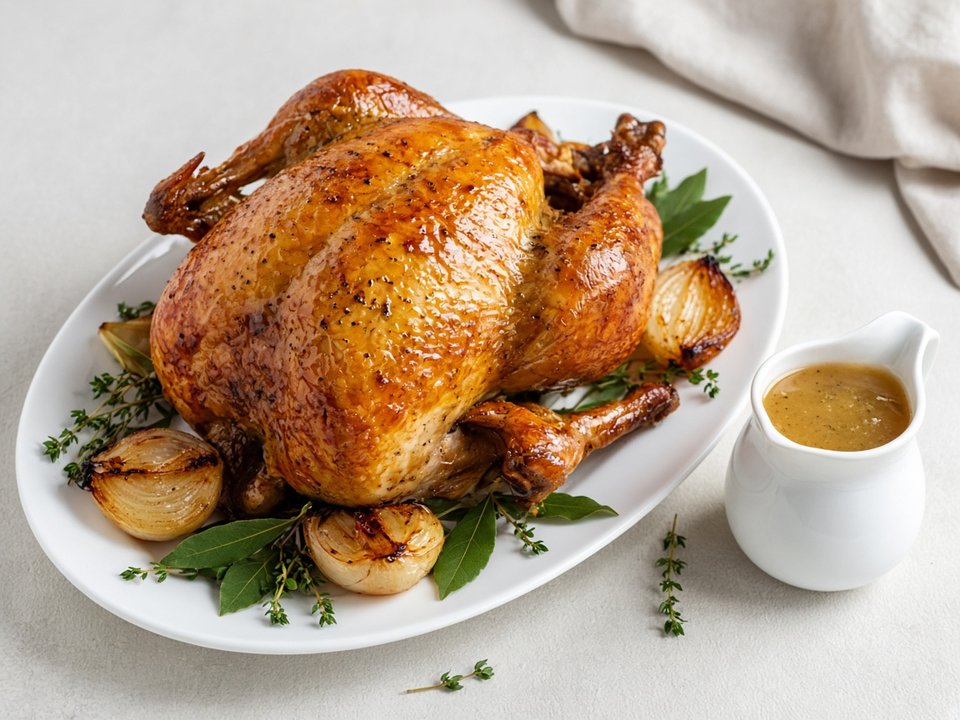
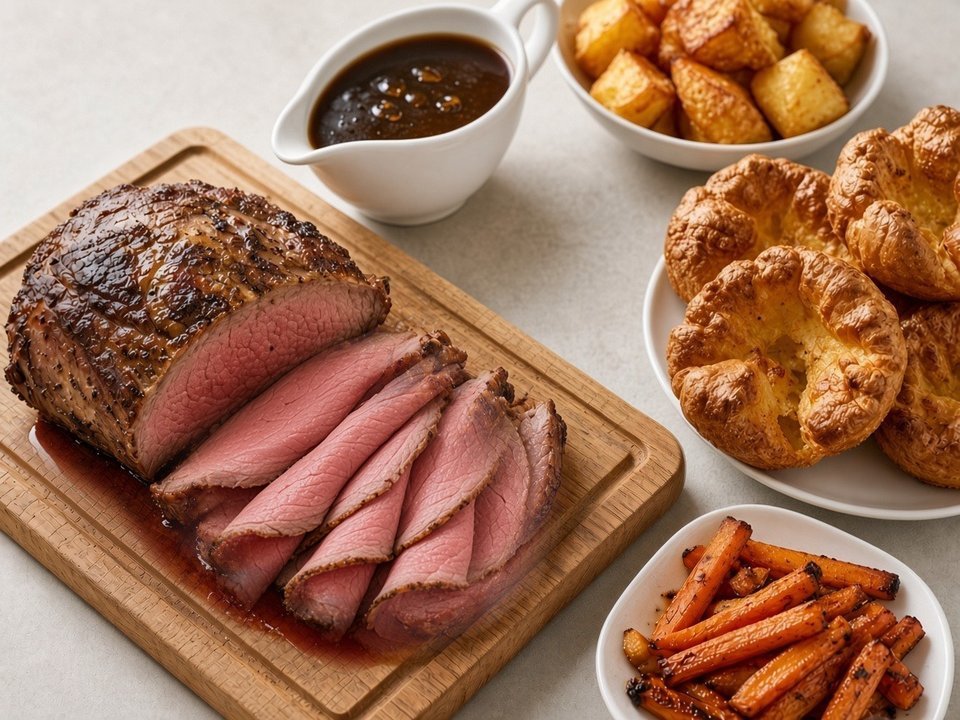
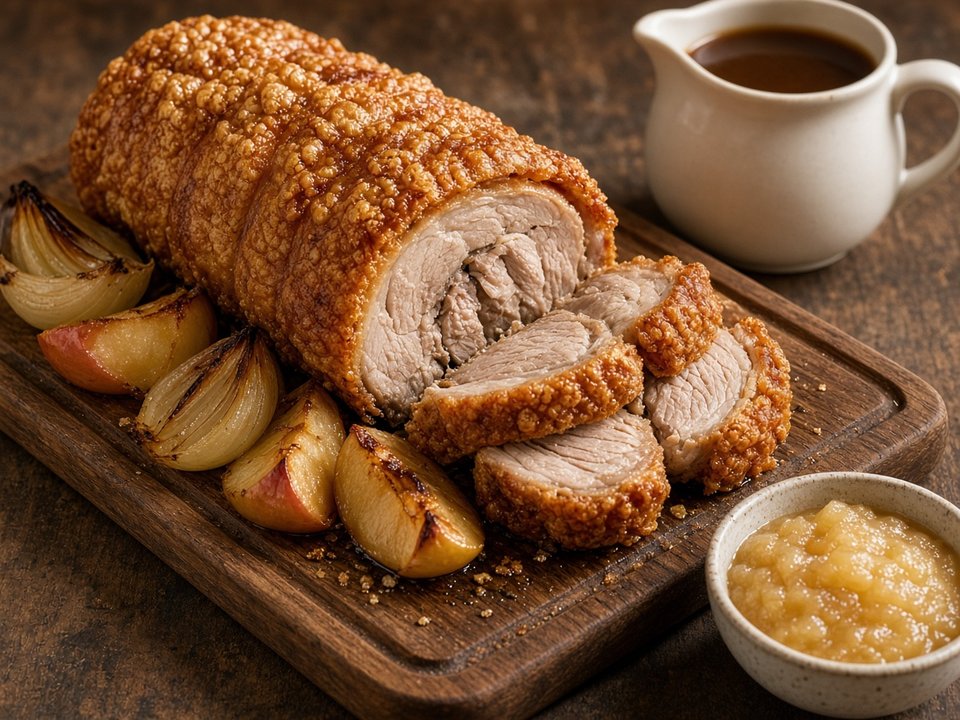
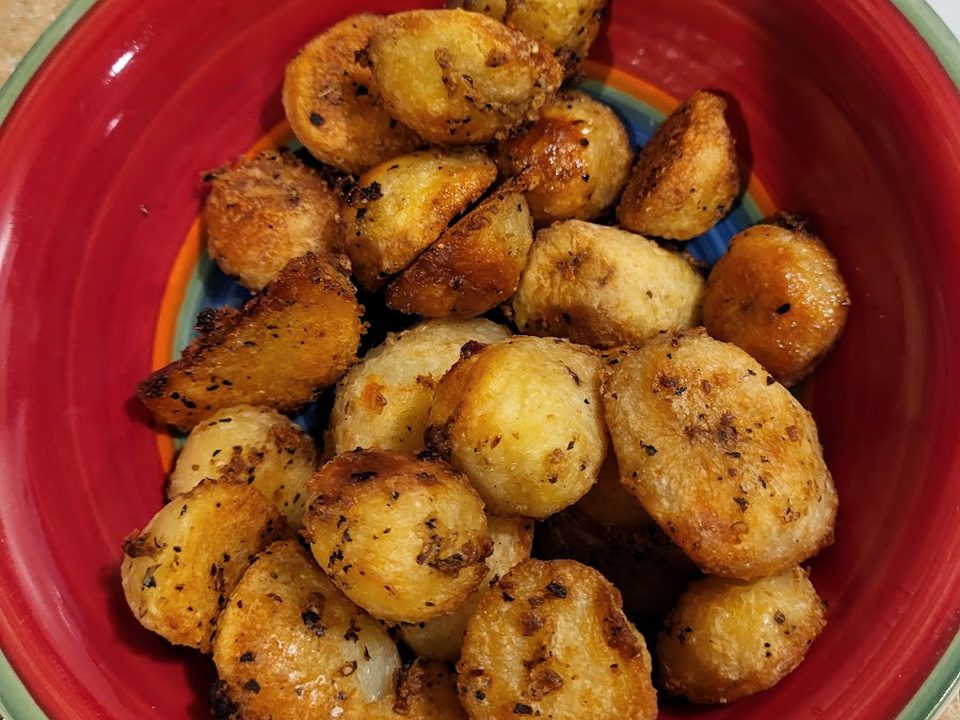
Tins, racks and lids · photos link to similar products on Amazon (affiliate links)
A roasting tin is rectangular or oval, with sides shallow enough to let the oven heat reach the joint but deep enough to hold the juices. It should be heavy enough not to buckle or scorch when you make the gravy in it on top of the stove, and a good rack or trivet keeps the meat from stewing in its own juices.
Types of roasting tin
Tin tiles link to similar products on Amazon (affiliate links). As an Amazon Associate I earn from qualifying purchases.
Rectangular, with sides about 5 to 8 cm deep: shallow enough for the oven heat to reach the meat, deep enough to hold the juices and fat. The everyday tin for chicken, joints and vegetables.
Buying
Heavy stainless steel, or heavy anodised aluminium, with an outward-turned rim to grip. It must be flameproof if you make the gravy in it on the hob.
A tin with a wire rack or trivet that lifts the meat out of the fat and juices so it roasts all round instead of stewing underneath. V-shaped racks cradle a bird.
Buying
A rack that sits firmly and has handles makes lifting a heavy turkey much safer. A bed of thickly sliced onion, carrot and celery does the same job and flavours the gravy.
A deep tin with a domed lid, sometimes with a steam vent: the meat roasts in its own steam, which keeps a large bird moist and the oven cleaner. Take the lid off for the last 30 to 45 minutes so the skin browns.
Buying
Enamelled steel roasters are light and good value; stainless steel ones last longer. Check that the lid handle does not stay too hot to touch, and that the roaster fits your oven with the lid on.
Smaller, shallower tins and baking trays for roast potatoes, vegetables and Yorkshire puddings, which crisp better in a tin of their own with space around them.
Buying
Thick enough not to twist in a hot oven; a dark, heavy tray browns best.
Which size?
Roasting
Weight
Tin
Note
Chicken
1.5–2 kg
about 30 × 25 cm
Feeds 4–6
Joint of beef, lamb or pork
1.5–2.5 kg
about 35 × 25 cm
Room for vegetables around it
Large chicken or 2 smaller birds
2.5–3 kg
about 38 × 28 cm
Turkey
4–6 kg
about 40 × 30 cm
Measure your oven first
Large turkey
6–8 kg
about 45 × 35 cm
Check it fits your oven
Sizes vary from maker to maker: measure your oven shelf, leave a few centimetres all round, and allow about 5 cm (2 in) between the meat and the sides of the tin.
Materials
Stainless steel
Good
Heavy, does not react with wine or fruit in the gravy, goes on the hob and in the dishwasher. The best all-rounder.
Watch
Juices stick and brown fast: that is good for gravy, but soak it afterwards.
Heavy aluminium & anodised
Good
Light for its size and spreads the heat well, so the juices brown evenly.
Watch
Plain aluminium reacts with acidic food; thin tins warp on the hob.
Enamelled steel & cast iron
Good
Enamelled steel roasters are light and good value; enamelled cast iron is heavy, holds the heat and goes to the table.
Watch
Enamel can chip; check it is flameproof before you put it on the hob.
Non-stick
Good
Easy to clean, and roast potatoes release cleanly.
Watch
No metal tools or carving in the tin, and fewer browned bits for the gravy.
Foil trays
Good
Handy for a one-off big bird when you have no tin large enough.
Watch
Flimsy: always stand them on a baking sheet to lift them, and make the gravy in a pan.
Using a roasting tin
Measure the oven firstThe tin needs a few centimetres of space all round for the hot air to move, and the door must still close. Big turkey tins do not fit every oven.
Leave a little space round the meatAbout 5 cm (2 in) between the joint and the sides. Too big a tin and the juices spread thin and burn; too small and the meat steams.
Lift it out of the fatA rack, a trivet or a bed of vegetables keeps the meat from stewing in its juices.
Make the gravy in the tinSpoon off the clear fat, set the tin over a medium heat on the hob and scrape up the browned bits with stock or wine. This is why the tin must be heavy and flameproof.
Rest the meatLift it on to a warm board, cover loosely with foil and rest it for 15 to 30 minutes (a turkey up to an hour) while you make the gravy.
Use a probe thermometerThe surest test: 75°C in the thickest part of a chicken or turkey thigh; see the recipe for beef and lamb.
This page used to be a 2002 Amazon review of the Cuisinart non-stick extra large roaster with cover (46 × 33 cm, domed lid with a steam vent, lift-out rack). The reviewer liked the rack and the easy clean-up; the one complaint was a lid handle that stayed hot long after it came out of the oven. It is no longer sold, but the lesson stands: check the handles.