Kohlrabi
Click to other information on this page
Selection
Storage
Nutritional information
Preparation
Microwave cooking
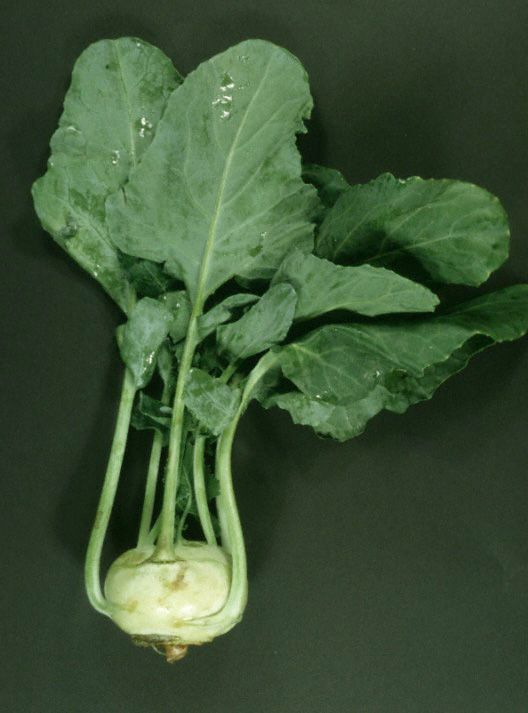
The kohlrabi is a member of the cabbage (crucifer or mustard) family. The part that can be eaten is the enlarged stem from which the leaves develop. Kohlrabi may be white, green or purple in color. Leaves of young plants may be used like spinach, or mustard greens. Steamed or boiled in its skin then peeled and diced or sliced Kohlrabi can be served with lemon, butter and parsley, or with a cheese sauce and gratinated.
Selection - Look for kohlrabi bulbs that appear fresh and that are less than three inches in diameter. Leaf stems should be succulent and tender. Large kohlrabi can be woody and tough.
Storage - With the leaf stems removed, kohlrabi can be stored in the refrigerator for several weeks. Storage life can be extended if kohlrabies are placed in sealed plastic bags.
Nutrition Information - Kohlrabi is a good source of vitamin C and potassium. It is low in both sodium and calories. One cup diced and cooked kohlrabi contains only 40 calories and 140% of the RDA for vitamin C.
Preparation - Small kohlrabi bulbs which are young and tender generally do not require peeling. Medium to larger sizes should be peeled to remove the protective outer skin. The crisp flesh can be served raw in salads, as a relish, or as a crunchy accompaniment to dips. The bulb can be sliced, cut into quarters, cubes or julienne strips and steamed until crisp -- tender. Kohlrabi bulbs can be hollowed out and stuffed with a vegetable or meat filling.
Microwave Instructions - Trim root ends and stems. Cut about four to five medium Kohlrabi (two pounds) into 1/4" slices. Place in a 2-quart covered casserole with 1/4 cup water. Microwave on high until tender (10-15 minutes) stirring every four minutes. Let stand five minutes.