

Kitchen tools & utensils
Kitchen Tools
Whisks, spoons, forks, bakeware and the rest of the kit that does the work: what each one is for and what to look for when you buy it.
- 28 tools explained
- A starter kit
- Shop A–Z
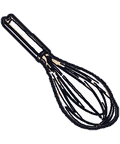
 Shop similar balloon whisk on Amazon (opens in a new tab)
 Shop similar metal spoons on Amazon (opens in a new tab)
 Shop similar sandwich (sponge) tins on Amazon (opens in a new tab)
The right tools make cooking easier, and the best of them last a lifetime. Start with a few good basics, add to them as your cooking grows, and use our guide to choose each one.
Find a tool
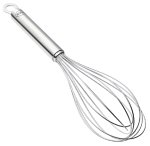 Beat, whip & blendWhisks8 tools: Classic whisk, balloon whisk, flat whisk, ball whisk…
 Stir, serve, lift & skimSpoons, Ladles & Spatulas7 tools: Wooden spoons, metal spoons, spatulas, turner…
 Forks and pointy thingsForks, Skewers & Needles5 tools: Two-pronged fork, skewers, trussing needle, dipping fork…
 Tins, sheets & racksBakeware8 tools: Baking sheets and trays, sandwich (sponge) tins, deep cake tins, springform tins…
- Shop indexKitchen Shop A–Z90 kinds of kitchen kit, from baking sheets to zesters.
 Next doorKitchen KnivesChef’s, paring, carving and the rest, and how to keep them sharp.
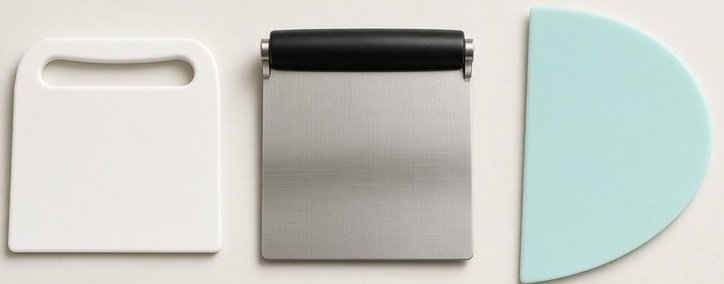 Bread-making toolsBench scraper (dough scraper)Scrape, cut, lift and shape dough; choose a bench scraper or a flexible bowl scraper.
A starter kit
Tool photos link to similar products on Amazon (affiliate links). As an Amazon Associate I earn from qualifying purchases.
- Shop similar classic whisk on Amazon (opens in a new tab)
Classic whiskSauces, batters, custards.
Shop similar wooden spoons on Amazon (opens in a new tab) Wooden spoonsStirring anything, in any pan.
- Shop similar metal spoons on Amazon (opens in a new tab)
Metal spoonsBasting, serving, draining.
 Shop similar turner or fish slice on Amazon (opens in a new tab)
Turner or fish slicePancakes, fish, fried eggs.
- Shop similar ladle on Amazon (opens in a new tab)
LadleSoups, stews and stock.
- Shop similar balloon whisk on Amazon (opens in a new tab)
Balloon whiskEgg whites and cream.
 Shop similar baking sheets and trays on Amazon (opens in a new tab)
Baking sheets and traysBiscuits, roasting, crisp pastry.
- Shop similar sandwich (sponge) tins on Amazon (opens in a new tab)
Sandwich (sponge) tinsA pair for sponges.
 Shop similar loaf tins on Amazon (opens in a new tab)
Loaf tinsBread, teabreads, meatloaf.
- Shop similar springform tins on Amazon (opens in a new tab)
Springform tinsCheesecakes and tortes.
BuyingChoosing kitchen tools
- One good tool beats a set of flimsy ones. Buy the few you use every day first and add others as you need them.
- Match the tool to the pan. Stainless steel lasts for years; use wood, silicone or nylon on non-stick and enamelled pans.
- Check the heat rating of silicone and nylon tools before you use them in a hot pan or for frying.
- Hold it before you buy if you can: a comfortable handle and good balance matter more than looks.
- Read the care label. Wood, fluid-filled ice cream scoops and some coated tins are hand-wash only.
Clean & safeCare
- Raw meat, fish and eggs: wash any tool that has touched them in hot soapy water before you use it for anything else.
- Dry metal tins and tools thoroughly, ideally in the cooling oven, so they do not rust.
- Non-stick: no metal tools or scourers. A soft sponge keeps the coating working for longer.
- Replace silicone or plastic tools that are cracked, melted or flaking.
- Kitchen safety in general: see kitchen health and safety.
Put them to work

Photo: Ruth Hartnup from Vancouver, Canada, Wikimedia Commons, CC BY 2.0 (cropped)
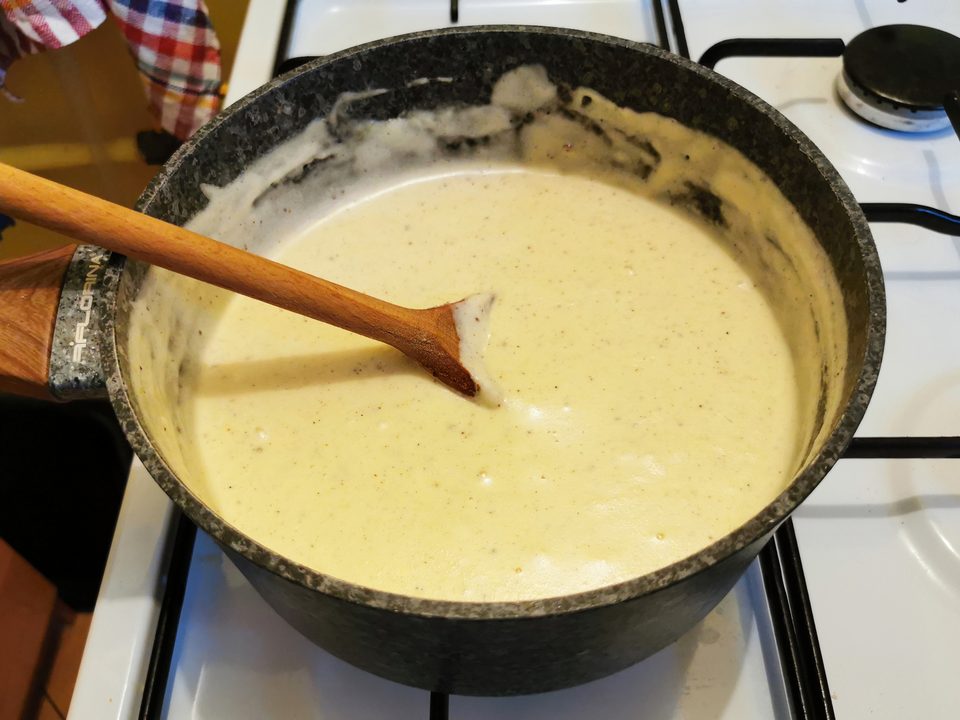
Photo: Jacek Halicki, Wikimedia Commons, CC BY-SA 4.0 (cropped)

Photo: Gordonplant, Wikimedia Commons, CC BY 2.0 (cropped)


Rewritten and updated 1 November 2026. Products checked on Amazon.co.uk on 1 November 2026.