
Index of Variety Names
Click on name for more information.
[A] Abbondosa - Abbuoto - Aboto - Abourion - Agiorgitiko - Aglianico - Agliatica - Aidani - Airen - Albalonga - Albana - Albariño - Albarola - Albillo - Aleatico - Alfrocheiro - Alphonse Lavalee - Alexandrian Moschato - Alicante - Alicante Bouschet - Alicante Ganzin - Aligoté - Altesse - Altruga - Alvarinho - Amigne - Amorgiano - Ancellotta - Ansonica - Aragonez - Aramon - Arbois - Aribona - Arinto - Arneis - Arrufiac - Arvine - Asprinio Bianco - Assyrtiko - Athiri - Aubin - Aubun - Aucarot - Aunis - Auxerrois - Auxerrois Blanc - Auxerrois Gris - Avello - Avola - Axina - Azal (Branco)
[B] Babeasca Neagra - Bacchus - Baga - Barbarossa - Barbaroux - Barbera - Barbesina - Baroque - Bassanino - Bastardo - Batiki - Baxter's Sherry - Bellone - Bergeron - Bernarde - Biancame - Bianco di Nizza - Biancolella - Biancone - Bical - Biturica - Black Cluster - Black Hamburg - Black Portugal - Black Prince - Black Riesling - Blanc de Valdigne - Blanquette - Blauburger - Blaufrankisch - Blauer Portugieser - Blue Imperial - Bobal - Bombino Bianco - Bombino Nero - Bonamico - Bonarda - Bonarda (Piemontese) - Bonarda Novarese - Bondola - Bonvedro - Bonvino Nero - Bordo - Bosco - Bouchet - Bouchy - Bourboulenc - Bouvier - Bovale Piccolo - Brachetto - Braquet - Braucol - Breton - Breval - Brocol - Brown Muscat - Brugnola - Brunello - Burger - Burgundy - Buzzetto
[C] Cabernet Franc - Cabernet Gros - Cabernet Severnyi - Caccione Nero - Cagnina - Canina (Nera) - Calabrese - Calcatella - Callet - Canaiolo (Nero) - Canaiolo Romano - Caninu - Cannonau - Cape Riesling - Carignan - Carignane - Carina - Carinena - Carmenère - Carmina - Carmine - Carnelian - Carola - Carricante - Castelão Francês - Catanese Bianco - Catarrato Bianco - Cecubo - Cencibel - Cenicero - Centurion - Cerceal - Cesanese - César - Chalosse - Charbono - Charbonneau - Charmont - Chasan - Chasselas - Chasselas Doré - Chauché Gris - Chenin Noir - Ciliegiolo - Cinsault - Cinsaut - Clairette - Clevner - Clare Riesling - Coda di Volpe - Colombard - Colorino - Cometta - Completer - Comtessa - Corbeau Noir - Cornalin - Cortese - Corvina - Corvinone - Côt - Counoise - Courbu - Courtiller Musque - Crato Branco - Criolla Chica - Criolla Grande - Croatina - Crouchen - Cserszegi Fuszeres
[D] Dalniewostoznyd Ramning - Deckrot - Debina - Dimiat - Dinka - Diolinoir - Dolcetto - Doña Blanco - Doña Branca - Doradillo - Dornfelder - Douce Noir - Dunkelfelder - Duras - Durella - Durello - Durif - Durize
[E] Early Burgundy - Ehrenfelser - Elbling - Ellanico - Ellenico - Emerald Riesling - Erbaluce - Ermitage - Esgana (Cão) - Espadeiro - Ezerjó
[F] Faber - Färbertraube - Falanghina - False Carignan - Favorito - Fegeri - Fendant - Fer - Fernão Pires - Feteasca Alba - Feteasca Neagra - Feteasca Regala - Fetiaska - Fiano - Fié - Findling - Fogoneu - Folle Blanche - Folle Noire - Forastera - Fortana - Fra Germano - Fragola - Francavilla - Freiburger - Freisa - Freisamer - (French) Colombard - Fromentot - Frontignac - Frühburgunder - Frühroter Veltliner - Fumin - Furmint
[G] Gaglioppo - Gamaret - Gamay - Gamay Beaujolais - Gamay de Bouze - Gamay Noir - Gamza - Garganega - Garnacha - Garnacha Rosa - Garnacha Tintorera - Giacomino - Girò - Gliata - Godello - Golden Chasselas - Goldmuskateller - Goldriesling - Gouais (Blanc) - Graciano - Gragnano - Grasa de Cotnari - Grauer Burgunder - Grey Grenache - Grey Riesling - Grec Rouge - Greco Bianco - Greco Nero - Green Hungarian - Grenache - Grenache Gris - Grignolino - Grillo - Grolleau - Gropello - Groslot - Guarnaccia - Grüner Veltliner - Gutedel - Gwäss - Gwaess
[H] Hamburg Moschato - Hanepoot - Heida (Païen) - Himbertscha - Humagne - Humagne Rouge - Huxelrebe
[I] Imperial Blue - Impigno - Inzolia - Irsai Olivér - Italian Riesling
[J] Jacquère - Jaen - Juan Ibáñez - Juhfark - Jurançon
[K] Kadarka - Kékfrankos - Kerner - Kleinberger Riesling - Klevner - Knipperle - Kolor - Kotsifali - Krassato
[L] Lafnetscha - Lagorthi - Lagrein - Lambrusco - Laski Rizling - Leányka - Lefkas - Lemberger - Len de l'El - Lexia - Liatiko - Limberger - Limnio - Listan - Loureira - Loureiro - Loureiro Tinto - Lumassina
[M] Macabeo - Maccabeo - Maceratino - Madea - Madeleine Angevine - Mainriesling - Madeleine Sylvaner - Malaga Rose - Malagonsia - Malbec - Mali Plavac - Malvasia - Malvasier - Malvoisie - Mammolo - Mandelaria - Manduria - Manseng - Mansois - Manto Negro - Maria Gomes - Marsanne - Marzemino - Mataosso - Mataro - Mauzac - Mavro - Mavrodaphne - Mazuelo - Melnik - Melon de Bourgogne - Mencía - Menu Pineau - Merlot Blanc - Merwal - Mesenicola (Black) - Meunier - Michele Pallieri - Millers Burgundy - Milloccio - Mission - Michurinetz - Molette - Molinara - Monastrell - Monbadon - Mondeuse - Monemvasia - Monica - Montepulciano (d'Abruzzo) - Montils - Morbidella - Morellino - Moristel - Morrastel - Moscadelletto - Moscato di Canelli - Moscato Giallo - Moscatel de Alejandria - Moscatel de Austria - Moscophilero - Mosler - Mostosa - Mourisco Preto - Mourvèdre - Müllerebe - Müller-Thurgau - Muscadel - Muscadelle - Muscadelle de Bordelais - Muscadet de Bourgogne - Muscardin - Muscat Blanc - Muscat Frontignon - Muscat Gordo Blanco - Muscat Hamburg - Muscat Lunel - Muscat of Alexandria - Muscat Ottonel - Muskateller - Muskat-Sylvaner
[N] Napa Gamay - Nasco (Bianco) - Negra - Negrara - Negrette - Negroamaro - Negoska - Nerello - Nero d'Avola - Nessun - Neuburger - Nieddera - Nielluccio - Noblessa - Nobling - Nocera Bianca - Nosiola - Nuragus
[O] Obaideh - Oeillade - Okanagan Riesling - Olasz Riesling - Olivella - Olivese - Ondenc - Opthalmo - Optima - Orange Muscat - Orangeriesling - Oraniensteiner - Orion Gris - Ortega - Ortruga - Ottavianello - Osteiner
[P] Paarl Riesling - Pagadebit (Gentile) - Pagadebito - Pais - Pallieri - Palomino - Pambakina - Parellada - Parraleta - Pascale di Cagliari - Pearl of Zala - Pedernã - Pedro Ximénez - Pelaverga (Piccolo) - Pere'e Pallummo - Perlan - Perle de Csaba - Peloursin - Perricone - Periquita - Petite Arvine - Petite Pineau - Petit Rouge - Petite Sirah - Petit Verdot - Picardan (Blanc) - Picardan (Noir) - Picapoll - Piquepoul (Blanc) - Piquepoul (Noir) - Piedirosso - Pignatello - Pignoletto - Pignola - Pignolo - Pineau d'Aunis - Pinenc - Pinotage - Pinot Beurot - Pinot Bianco - Pinot Blanc - Pinot Blanco - Pinot Grigio - Pinot Gris - Pinot Meunier - Pinot Nero - Pinot Noir - Pinot St. George - Plavac Mali - Pocalza - Pontac - Portugal Malbec - Portugieser - Premetta - Pressac - Prie Blanc - Primaticcio - Primitivo (di Gioia) - Procanico - Prosecco - Prugnolo Gentile - Pully 1-33 - Putscher - Putzscheere
[R] Rabigate - Rabiosa - Rabo de Ovelha - Raboso - Ragusana - Ramisco - Räuschling - Red Malaga - Refosco - Reichensteiner - Rèze - Ribolla Gialla - Ribolla Nera - Rieslaner - Riesling Renano - Rhoditis - Rivaner - Rkatsiteli - Robola - Roditis - Roche - Rolle - Romain - Romorantin - Rondinella - Rondo - Rossese - Rossignola - Roter Veltliner - Rotberger - Rotburger - Rotgipfler - Rouge de Fully - Rouge du Pays - Rouchet - Roupiero - Roussanne - Roussette - Royalty - Rubired - Ruby Cabernet - Ruchè - Rufete - Ruländer
[S] Sacy de Lyon - Sagrantino - Samtrot - Sangiovese - Sangiovese Grosso - Sangioveto - Saperavi (Charni) - Saperavi Severnyi - Sauvignon Gris - Sauvignon Vert - Savagnin - Savatiano - Scheurebe - Schiava - Schiava Grossa - Schioppettino - Schoneberger - Schwarzriesling - Sciacarello - Scorzamara - Scorza Amara - Sercial - Serprina - Sereksia (Blanc) - Sereksia (Noire) - Shiroka Melniska Losa - Siegerrebe - Silvaner - Sipon - Souzão - South African Riesling - Spätrot - Stavroto - St. Émilion - St. George - St. Laurent - Sultanina - Suputinski - Sylvaner - Symphonie - Symphony
[T] Tacelenghe - Taddone - Tamaioasa Romaneasca - Tamares - Tamarez - Taminga - Tannat - Tarrango - Tazzelenghe - Teinturier - Temosci - Tempranillo - Terrano - Teroldego - Terret Noir - Thompson Seedless - Tindillaro - Tinta Amarela - Tinta Barroca - Tinta Negramole - Tinta del Pais - Tinta Pinheira - Tinta Roriz - Tinta de Toro - Tinto Cão - Tinto Fino - Tocai Friulano - Tokay - Tokay d'Alsace - Torbato - Torrontés - Tourbat - Touriga - Touriga Nacional - Trajadura - Traminer - Trebbiano - Trebbiano d'Abruzzo - Treixadura - Tresallier - Tressot - Trincadeira - Trollinger - Trousseau - Trousseau Gris - Tullilah
[U] Ughetta - Ugni Blanc - Ulliade - Uva Barile - Uva dell'Isola - Uva Fosca - Uva Francese - Uva Grilli - Uva Nera - Uva d'Oro - Uva Rara - Uva Stretta - Uva Tedesca
[V] Vaccarèse - Vaccume - Valdepeñas - Valdiguié - Veltliner - Verdeca - Verdejo - Verdelho - Verdicchio - Verdello - Verdiso - Verduzzo - Vermentino - Vernaccia - Vernatsch - Vernesina - Vertzami - Vespolina - Vidure - Vilana - Viognier - Vitovska - Viura - Vranac
[W] Walsh Riesling - Welschriesling - Weissburgunder - Weisser Gutedel - Weisser Silvaner - White Moschato - White Pinot - Wildbacher - Wuerzburg
[X] Xeres - Xynisteri - Xynomavro
[Z] Zierfandler - Zilavka - Zirone - Zweigelt - Zweigeltrebe
ABBUOTO: Red wine variety found in central Italy. Has synonym names of Aboto and Cecubo. Used to make a deeply colored, rustic, dry wine blend with moderate aging ability of up to about 8 years or so.
ABOURION: Minor grape now rarely grown in SW. France. Used to make a red wine and thought to be the grape called Early Burgundy in California and Australia. In the latter country it has the occasional alias names Burgundy or Black Cluster.
AGIORGITIKO: aka St. George. Red-wine grape native to Greece. Used to produce intense, fruity wine in dry and sweet versions. Also blended with Cabernet Sauvignon to create a wine capable of aging well.
AGLIANICO: Red-wine grapevine cultivated in Basilicata and Campania regions of Italy. In the latter province it has the alias names Agliatica, Ellenico, Ellanico, Gnanico and Uva Nera. Of extremely ancient origin, it is responsible for some of the better sturdy red wines of southern Italy - (eg: "Aglianico del Vulture"). Appears to have been used to produce Falurnum, a well-documented favorite wine of the Romans. The name "Aglianico" is reported to be late 15th century corruption of the italian word "ellenico", meaning "hellenic", presumably acknowledging the original home of this variety. The grape is also used to make good bronze-colored rosé-style wine.
AIDANI: White wine grape found mainly in the western islands off the Greek mainland. Also grown extensively on the island of Rhodes. Used as part of a white wine blend that includes the Assyrtiko and Athiri grape wine.
AIREN: Semi-classic white wine grape with the unique distinction of being the most widely planted vine variety in Spain. Highly resistant to drought, it is grown at an extraordinary low vine density per acre as low bushes. Its wines are used for distilling into brandy and also blending with deep-red grape wines to create lighter colored versions. Increasingly popular as a dry, crisp white wine made to be drunk as fresh as possible.
ALBALONGA: Grape resulting from a cross between Riesling and a Sylvaner clone. Limited growths in Rheinhessen region of Germany. Used to create good "Auslese" style white wines in better years.
ALBANA: White wine grape of ancient origin widely planted in the Emilia region of Italy. Produced as several variations of dry, semi-dry and sweet (dolce) wine of which the latter is regarded by many as the most successful.
ALBARIÑO: (a.k.a Alvarinho where grown in Portugal). White wine grape variety, used to create a serious varietal wine with pleasant citrus fruit aroma, widely grown in regions of N.W. Spain and also in northern Portugal. Thought by some to be a Riesling clone originating from the Alsace region of France.
ALBAROLA: White wine producing variety grown in N.W Italy. Used to make a blend that includes Bosco, and other grape varieties, called "Cinqueterre". Has several synonym names including Calcatella and Temosci.
ALBILLO: Small-berried table and white wine grape mainly grown in the Castile region of Spain. Often used to produce mediocre, glycerin-rich, sweet wines. However, old vine grapes have been successfully used by a Ribera del Duero winery to create an appealingly complex, aromatic wine. The grape is also widely grown in several South American regions, presumably due to colonial influence.
ALEATICO: Minor red grape commonly grown in central and southern Italy. Related to the Muscat variety, with strong aroma of that grape, it is grown extensively in the Abruzzo and Apulia regions. Some plantings are also found in the warmer regions of California and Australia.
ALEXANDRIAN MOSCHATO: Greek name for the Muscat of Alexandria grape. (see below).
ALFROCHEIRO: Variety used for red wine production in the Dão DOC, Beiras region of Portugal. Can be found in blends also containing Jaen, Tinta Roriz, Touriga Nacional and Tinta Pinheira.
ALICANTE BOUSCHET: Minor grape originating from a 19th century vinifera cross using the Aramon and ancient Teinturier native vine, resulting in a variety possessing the pink flesh and deep red coloring characteristics of its ancient ancestor. This in turn was crossed with the Grenache to give the named grape - (which should not be confused with "Alicante" the old name for Grenache presumably derived from the city in Spain). Widely grown in France, California and Spain. In the latter country it is known as Garnacha Tintorera. In the cool Champagne region of France it is the main grape used to make the sweet "vin mousseux" - (sparkling wine). Often also confusingly known as "Alicante" for short - (see above). Reduced acreages can also be found in Australia. Portugal retains a limited acreage of 100 year old vines used for producing an interesting wine named "Mouchão" that requires 10 years aging for best results. Historically the canned juice has been used by many amateur winemakers for fermenting homemade wines.
ALICANTE GANZIN: Major vitis vinifera teinturier red wine grape used as one of the original parents of several crosses bred for deeply colored blending wines. Its offspring derivative crosses are mainly found in California.
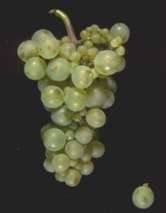 ALIGOTÉ:
Semi-classic grape widely grown in temperate regions of France, California
and Eastern Europe. Ripens early with good productivity. Tendency to acidity
in cooler years. Used to make a superior white wine, with little or no
aging ability and best drunk young, for blending or as a good dry wine
in the better vintage years in Burgundy, France. Successfully used in
the cooler western coastal regions of N. America.
ALIGOTÉ:
Semi-classic grape widely grown in temperate regions of France, California
and Eastern Europe. Ripens early with good productivity. Tendency to acidity
in cooler years. Used to make a superior white wine, with little or no
aging ability and best drunk young, for blending or as a good dry wine
in the better vintage years in Burgundy, France. Successfully used in
the cooler western coastal regions of N. America.
ALTESSE: Semi-classic grape grown in the Savoie region of France. Used with another local grape, the Molette, to create a blend known as "Seyssell" white wine made to be drunk as young as possible. Also used for the superior "Roussette de Savoie" white wine blend created with Mondeuse grape wine. Once thought to have origins in Cyprus, the grape is now suspected of being related to, if not actually being, the Furmint grape of Hungary.
AMIGNE: Vigorous minor grape of ancient origin grown in the Valais district of Switzerland. Used to make an occasionally delicate, perfumed sweet white wine. The dry wine versions are considered to be somewhat ponderous by some.
AMORGIANO: Alternative name for the Mandelaria red wine grape, widely grown on the Greek mainland, when found on the island of Rhodes - (see below).
ANCELLOTTA: Grape grown mainly in central Italy (Emilia) and often used for blending with Lambrusco red wine to produce a sweet (amabile) version.
ARAMON: Minor grape of mediocre quality widely grown in the Languedoc-Roussillon region of France and mainly used to make a "stretch" wine for blending with better varieties in order to make some of the more notorious styles of "vin de table" wine associated with the Midi. There are two mutations also found there, Aramon Gris and Aramon Blanc , neither being significant.
ARBOIS: Fairly widely grown white-wine grape in the Loire region of France. Used in some blends labeled "Touraine". Also known as Menu Pineau or Petit Pineau.
ARINTO: (aka Pedernã). Moderately vigorous vine producing a white-wine grape. Widely grown in Portugal and used in the production of "vinho-verde" wines, along with others such as the Trajadura. Recommended rootstock is the 1103-P for good phylloxera and moderate nematode resistance, plus drought tolerance. Suitable for mildly chalky-soils.
ARNEIS: Minor grape grown in Piedmont region of Italy. Used to make an aromatic white wine - (e.g: "Roero Arneis", "Langhe Arneis") - lacking sufficient acidity, when fully ripened, to age well . Some regard it as reminiscent of wines made from the french Viognier grape grown in the northern Rhone region. Others find Pinot Gris of the U.S. west coast, (see below), similarities in the fruity flavor of the wine when made in the style of "Tokay d'Alsace".
ARRUFIAC: Currently unpopular white-wine grape once widely grown in Armagnac region of France. (No other information available on this grape yet).
ARVINE: (aka Petite Arvine). Minor, but of ancient origin, grape grown in the Swiss Valais district. Used to create dry white wine that is fragrant, full-bodied and faintly spicy. Thought to have been known to the Romans who occupied the region.
ASPRINIO BIANCO: White wine grape found in the Campania region of Italy. Used to produce a light, crisply acidic wine for very early consumption. Has several synonym names including Asprino, Olivese and Ragusana.
ASSYRTIKO: Widely grown in Greece this white-wine grape is usually found as a 3-way blend with Aidani and Athiri grape white-wines in order to create popular styles. Also used as the base wine, along with Roditis grape-wine, in the well-known "Retsina" blends flavored with pine resin.
ATHIRI: Commonly found on the western islands off the Greek mainland and the island of Rhodes. Usually used in a white wine blend along with the Aidani and Assyrtiko grape-wines.
AUBIN: (No information on this grape other than it was grown in the Moselle river area of France).
AUBUN: Lesser grape grown in the Southern Rhone region of France where it is used to make a red wine subsequently used in blends throughout the region.
![[Image: Auxerrois]](gif/grapepics/auxerrois.jpg)
|
AUXERROIS BLANC: Local name for white wine grape grown in the northeast Moselle and Alsace regions of France. Used to produce mildly acidic wines that add a honied intensity to blends with the Pinot Blanc in the better vintage years.
AZAL: Grape cépage found in northern Portugal and used for early consumption "vinho verde" wines. The white wine version carries the extension "branco", the red is "tinto"; as in "Azal (Branco/Tinto)".
BABEASCA NEAGRA: Reputedly ancient variety grown in Moldavia and other southern regions of Romania. Used to produce a well-regarded light red wine.
BACCHUS: White wine grape cross derived from Müller-Thurgau, Riesling and Sylvaner. Found in many English, German and Western Canadian vineyards because of its adaptability to a wide range of climates. Tends to be low in acidity and so is mainly vinified to be a sweet wine with Muscat-like or occasional delicate Sylvaner flavors because of its ability to reach "Auslese" style or even higher sugar levels in good years. Commonly blended with lesser grapewines in the Rheinhessen region of Germany to create "QBA" type village wines. Its popularity is only exceeded by the Kerner or Ehrenfelser varieties. (NB: An almost forgotten early 19th century American hybrid also bears the Bacchus name but is not related in any way to the above variety).
BAGA: Red wine grape widely grown in the Bairada DOC, Beiras region of Portugal. Produces acidic, tannic wines capable of aging well; especially the "garrafeira" (special reserve) versions.
BARBAROSSA: Red wine variety found in Emilia-Romagna, Italy, France and surrounding Balkan region. Has many synonym names including Barbaroux, Malaga Rose and Grec Rouge. Used to make an aromatic, robust varietal wine with moderate aging potential.
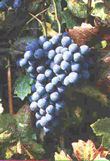 BARBERA:
Semi-classic grape commonly grown in the Piedmont region and most of northern
Italy. Now thought by some to be identical with the
Perricone, or Pignatello, grape of Sardinia.
Was probably imported into the U.S.A. late in the 19th century. Usually
produces an intense red wine with deep color, low tannins and high acid
and is used in California to provide "backbone" for so-called "jug" wines.
Century-old vines still exist in many regional vineyards and allow production
of long-aging, robust red wines with intense fruit and enhanced tannic
content. Plantings in North America are mostly confined to the warm western
coastal regions.
BARBERA:
Semi-classic grape commonly grown in the Piedmont region and most of northern
Italy. Now thought by some to be identical with the
Perricone, or Pignatello, grape of Sardinia.
Was probably imported into the U.S.A. late in the 19th century. Usually
produces an intense red wine with deep color, low tannins and high acid
and is used in California to provide "backbone" for so-called "jug" wines.
Century-old vines still exist in many regional vineyards and allow production
of long-aging, robust red wines with intense fruit and enhanced tannic
content. Plantings in North America are mostly confined to the warm western
coastal regions.
BAROQUE: White-wine grape found mainly in the Landes region, (S.W. France), adjoining the Madiran A.O.C of Armagnac. Used to create "Tursan" local varietal wine.
BATIKI: (No information at present on this white-wine grape widely grown in Greece).
BELLONE: White-wine grape used as a component in an esteemed multi-wine blend called "Velletri Bianco". Wines from good vintages considered to have excellent aging ability. Mostly found in the Castelli Romani region, Latium province of Italy.
BERNARDE: (No details as yet other than it is a white wine variety grown in the Valais district of Switzerland and has the premier synonym name Prie Blanc).
BIANCAME: Ancient variety grown in Italy and used for white wine production. Has alias name Morbidella. (No other details as yet).
BIANCOLELLA: White wine variety mostly found in Campania region of Italy. Used to produce aromatic yet acidic dry/sweet still, sparkling varietal wines, and blends in combination with such varieties as Forastera all for early consumption.
BIANCONE: Minor grape grown in Italy and Australia. Listed as an alias name for the Trebbiano (below) in some databases. May be a synonym name for the variety Mostosa found in the former country. In Australia it is also known under the alias name of White Grenache.
BICAL: Variety used for white wine production in the Beiras district of Portugal. Can be found as a crisp, mildly aromatic varietal but most often is used in sparkling wine blends.
BLACK RIESLING: Alias name for Pinot Meunier. (See below).
BLANC DE VALDIGNE: Indigenous variety grown in the Val d'Aosta region of Italy. Used to create a white wine varietal reportedly possessed of a mildly aromatic fragrance and, in some cases spritzy, delicately crisp flavor. Made as a dry wine for early consumption near the villages of Morgex and La Salle in high ski country.
![[Image: Blauburger]](gif/grapepics/blauburger.jpg)
|
BLAUBURGER: Crossing of Blauer Portugieser and Blaufränkisch (by the Bundeslehr- und Versuchsanstalt für Wein- und Obstbau Klosterneuburg (NÖ) in 1923). Cultivated only in Austria, especially in the Weinviertel, some in Burgenland.
![[Image: Blaufraenkischer]](gif/grapepics/blaufraenk.jpg)
|
BLAUER PORTUGIESER: (aka Portugieser, see below.)
BOBAL: Red wine grape extensively grown in Spain. Produces deeply colored wine suitable for blending.
BOMBINO BIANCO: (a.k.a Trebbiano d'Abruzzo in the Abruzzo). Widely grown in the Apulia region of southern Italy. Used as a blending white wine or, in the Abruzzo region, as a local "vino di tavola" that reportedly will age well for up to 6 years. A mutation grown in Apulia is called Bombino Nero.
BOMBINO NERO: (See Bombino Bianca above).
BONAMICO: Red wine grape variety found in central Italy and Sardinia that is used for wine, raisin and rootstock production. Synonym names include Canaiolo Romano (ie. possibly related to the variety Canaiolo (Nero) below), Giacomino, Pascale di Cagliari (alias name in Sardinia), and several others.
BONARDA: (see Croatina below).
BONARDA (PIEMONTESE): Minor red grape grown in Piedmont region of Italy. Makes fruity red wine of mild intensity when blended with wine from Barbera grape.
BONARDA NOVARESE: Alternate name for Uva Rara grape. (See below).
BONDOLA: Relatively rare indigenous red wine grape of southern Switzerland.
BONVEDRO: Minor grape grown in Italy and Australia. In the latter country it is also known under the alias name of False Carignan.
BONVINO NERO: (See Cesanese below).
BORDO: Synonym name for the Cabernet Franc grape when grown in NE. Italy.
BOSCO: White wine variety mainly found in the Liguria region of Italy. Has synonym name Madea. Used to make the mildly aromatic, dry blend known as "Cinqueterre" that includes the grape varieties Albarola and Vermentino. Some consider the current versions of the wines to be less than ideal.
BOUCHET: Alternate name for the Cabernet Franc grape when grown in certain cru areas of the Bordeaux region. Conversely, in Australia, it is used as an alias name for the Cabernet Sauvignon grape.
BOUCHY: Local name for the Cabernet Franc grape grown in the Pyrenees region of France. Makes one of four wines blended to produce a full-bodied red wine called "Madiran". The others are Courbu, Pinenc and Tannat.
BOURBOULENC: Minor white wine producing variety, grown in southern Rhone region of France, sometimes used in local white wine blends to help create acidic balance. Has the synonym names Malvoisie in the Languedoc region of France and Blanquette in Australia. Ripens in October and susceptible to rot. Has synonym name (or possible clonal relationship to) Picardan (Blanc), a variety that has similar characteristics and is also condemned by some as capable only of mediocre white varietal wine production.
BOUVIER: Minor native grape grown in Austria. Produces soft, fragrant white wines. Most of the crop is processed into a grape juice called "Traubenmost" and also made into a sweet wine called "Sturm" that is drunk very young in the manner of "nouveau" beaujolais. The grape is also extensively grown in Hungary.
BOVALE PICCOLO: Red wine grape grown in central Sardinia. Used to make aromatic dry varietal, and rosés, (also blended wines), for early consumption. Has several synonym names.
BRACHETTO: Minor grape grown in the Piedmont region of Italy. Used to make spritzy, light red dessert wines with fruity, strawberry aroma. Best when young and served chilled. Known to be the same grape as the French Braquet
BRAQUET: (see also Brachetto above). Red-wine grape grown in the Provence region of France where, as the main ingredient, along with some Cinsaut, it is used to produce one of the better rosé wine blends found in the Bellet area of the Cote d'Azur.
BURGER: Thought to be identical with the obscure french grape known as Monbadon, this white wine grape is mostly to be found planted in the Central Valley of California, USA and used for blending. However, recent DNA study at Univ. College at Davis, California, indicates that the parents of this cultivar are Ugni Blanc and Folle Blanche.
BUZZETTO: Variety mainly restricted to the Quiliano DOC in Liguria, Italy. Used to make a fresh, crisply acidic white wine considered by some to be a perfect match for local cuisine "Pesto" dishes. Listed as a Trebbiano sub-variety in some databases. May have the synonym names Lumassina and Mataosso.
CABERNET GROS: Australian synonym name for the Trousseau grape of France.
CABERNET SEVERNYI: Hybrid red wine V. Amurensis hybrid cross variety created in Russia to withstand cold climatic conditions. Small commercial/nursery acreages currently grown in Nova Scotia (Canada). Vigorous growth when rigorous cluster thinning techniques used on the secondary clusters of this prolific producer. Early budding occurs late May and the cultivar has the unusual characteristic of early closedown in anticipation of first frost causing fruit to fall off the vine within a few days. Susceptible to fungus diseases Aspergillus, Powdery Mildew and Penicilium. Hardy to -20 deg. F. with tendency to high acids in cool years. Reported to be a female pollinate and so needs planting in alternate rows with other varieties. Creates red wine with excellent color and fragant, heavy aroma recommended for blending with lighter wines. Reportedly similar in many ways to the Michurinetz grape cross - (see below) - currently grown on limited acreages in the Finger Lakes region of Western New York State (USA) and Nova Scotia, Canada.
CALABRESE: Alternate name for the Nero d'Avola grape. (See below).
CALLET: Native red-wine grape found on the island of Majorca, along with two others indigenous to the island - Fogoneu and Manto Negro. Used to produce a popular strong, spicy blend - having some aging ability - with the latter grapewine.
CANAIOLO (NERO): Minor grape grown in the Tuscany region of northern Italy. Red wine from this variety is often used for blending with Sangiovese Grosso in some of the Chianti range of red wines. Is also an ingredient in other local blends. Has many synonym names including Caccione (Nero), Tindillaro and Uva Fosca.
CAPE RIESLING: Not related to the Riesling grape cépage in any way. Is actually the Crouchen varietal now sparsely grown in the Pyrenees region of France and is thought to have been translocated to South Africa in the mid-19th century where the grape has been subsequently also known as the South African Riesling, or Paarl Riesling, presumably due to an identification error. This same grape is similarly misidentified as the Clare Riesling in Australia. The misnamed Cape Riesling can legally be sold under a "Riesling" non-varietal white wine blend label and is known to have good bottle-aging potential. (The true, german Riesling grape is locally known as the Weisser Riesling, or White Riesling, in South Africa).
CARIGNAN: (aka Carinena and Mazuelo in Spain, Gragnano in Italy, Carignane in California). Normally ripens in late season around the end of September. Semi-classic grape commonly used for making red wines in Southern France and Spain. It is also successfully grown in California's Central Valley, often ending up in generic blends and "jug" wines, although some old plantings allow small lots of premium extract wine to be made. Blended with other varieties such as Cinsaut, Grenache, Mourvèdre and Syrah, it has been used to create red wines in California similar to the famed Chateauneuf-du-Pape blend of the southern Rhone region of France. In Australia it has the occasional alias name Black Portugal.
CARIGNANE: Californian synonym name for Carignan grape. (See above).
CARINA: Variety developed in Australia and used to produce dried grapes.
CARINENA: Spanish synonym name for the Carignan grape. (See above).
![[Image: Carmenere]](gif/grapepics/Carmenere.gif)
|
CARMINA: Developed at the Gweilerhof Research Institute, Germany, this cultivar is a cross between the Portugieser and Spätburgunder varieties. It is mainly used as a teinturier-style colorant grape.
CARMINE: Red wine grape cross derived from same parents and by same oenologist as Carnelian below and similar in most respects. Claimed to be very similar to Merlot yet somewhat more cold- hardy when grown in cool climates. Mainly used to make a "stretch" blending wine for lower-priced varietal wines in California and elsewhere.
CARNELIAN: Released in the early 1970's, this red wine grape was created by Dr. H. P. Olmo, a U. Davis oenologist, some 30 years earlier and derived from crossing Grenache, Cabernet Sauvignon and Carignan. Currently grown in Central California and, more successfully, in Texas.
CARRICANTE: White wine variety mainly found in the Etna DOC region of Sicily. Synonym names are Catanese Bianco and Nocera Bianca. (No other details as yet).
CASTELÃO FRANCÊS: Red-wine grape grown in the Ribatejo and other regions of southern Portugal. Has synonym name of Periquita where grown in the Estremadura region nearby and (reportedly) Trincadeira in the Alentejo region. Used to make a popular, robust, varietal wine.
CATARRATO BIANCO: White wine grape native to Sicily where it is found widely grown along the western coast. Usually blended with Grillo and the Inzolia grape-wines to create versions of historically interesting "Marsala" wine in several dry, or sweet dessert, styles.
CENICERO: Red-wine grape local to the Rioja Alta region of Spain. Used to make good regional varietal wine.
CENTURION: Red grape cross with same parents as Carnelian above and created by same viticulturist. Used for blending with lesser wines to improve perceived quality.
CERCEAL: White-wine grape grown in Portugal. The Sercial grape grown on the island of Madeira is identical and is the corrupted english synonym name.
CESANESE: (aka Bonvino Nero). Red wine grape of ancient origin mostly found in the Latium region of central Italy.
CÉSAR: (a.k.a Romain). Red-wine grape grown in area close to Chablis region of Northern Burgundy, France. Mainly blended with Pinot Noir to create a light red wine known as "Bourgogne Irancy".
CHARBONO: Red-wine creating grape grown on small acreages in California. The name there is thought to be an early Italian immigrant corruption of Charbonneau, a french synonym for the Douce Noir grape variety still found in the Savoie region of France that has many synonym names, including Corbeau Noir. Some strongly believe that these varieties share a clonal relationship to the Dolcetto variety widely grown in northern Italy. Others argue that the relationship is to the Barbera variety of Italy. The vine bears small berries that are used to make a very dark red wine that, when subjected to extended skin contact during fermentation, is flavorful and quite tannic.
CHARMONT: White wine variety with Chasselas X Chardonnay pedigree grown in the Valais district of Switzerland. Has synonym name Pully 1-33.
CHASAN: ("sha-sawn"). Wine grape cross derived from the Chardonnay and Listan varieties. Developed by the U. of Montpellier in France. Claimed to produce a wine with varietal similarities to the Chardonnay parent, including such flavors as honied floral aroma and crisp acidity.
CHASSELAS: Minor grape grown in Switzerland, France, Germany and New Zealand. Recent research indicates that the Viognier grape may be clonally related. Widely grown in the cantons of the first country where it has several regional synonym names, the main one being Fendant in the Vaud and Valais districts. It is also known as Perlan in the Mandement district. Mostly vinified to be a full, dry and fruity white wine. Also suitable as a Table grape. In France it is mostly grown in the Loire region where it is converted into a blend with Sauvignon Blanc called "Pouilly-sur-Loire" and in the Savoy region where it is treated in the Swiss manner. German growers of the Baden region know it under the name Gutedel. In New Zealand it is mainly made into popular sweet white wines. Californian and Australian growers know this variety under the alias names of Chasselas Dore or Golden Chasselas.
CHAUCHÉ GRIS: Mutation of the Trousseau vinifera grape grown in France. Currently known in California as Grey Riesling and mainly used in a white-wine blend that also contains some Chenin Blanc and Sylvaner varietals.
CILIEGIOLO: Red-wine grape used as a component in a multi-wine blend known as "Velletri Rosso". Wines from good vintages are known to have excellent aging ability. Mainly grown in the Castelli Romani region, Latium province of Italy.
CINSAUT: (a.k.a Cinsault). Semi-classic grape widely grown in southern France, Italy and also in the Lebanon. Has many aliases. In the southern Rhone region it has the alias name Picardan (Noir). In Apulia, Italy it has the synonym name of Ottavianello. Used as blend component in many red or rosé wines. Transplanted to South Africa, where it was erroneously thought to be a Rhone Hermitage grape, and now a widely grown variety making a popular red wine in that country, and often blended with Cabernet Sauvignon. It has also been used to create the hybrid grape species known as Pinotage. Also grown in Australia under several alias names that include Black Prince, Blue Imperial, Oeillade and Ulliade.
CLAIRETTE: Minor grape grown in the south of France and used with the Muscat grape to create a sparkling dry or semi-dry white wine blend. Best known product, known as "Clairette de Die", comes from the eastern Rhone region of France. Considerable plantings are found in Australia where it is also confusingly known under the alias misname of Blanquette which name in turn is more commonly used elsewhere as an alias for the Jaen grape variety mainly grown in Spain.
CODA DI VOLPE: White-wine grape grown in Campania, Italy, especially near Naples, and used as a blending wine in the "Lachryma Christi del Vesuvio" white version along with Verdeca, Greco di Bianca and Falanghina.
COLOMBARD: Better known as French Colombard in North America. Old vine grapes are crushed by some northern Californian producers and made into a fruity white wine of interesting character in both dry and sweet versions. Mainly grown in California to provide backbone, due to its natural acidic character, for white "jug" wine blends. Still grown in France where it is used for white wine blends known as "Bordeaux Blanc" and is also used for distilling into brandy. Also widely grown in South Africa.
COLORINO: Variety occasionally used in a light-bodied blend, based on Sangiovese, with other red wines of Tuscany, Italy. The grape has several synonym names. (No other details as yet).
COMETTA: Red wine variety grown in central Italy. Used as an ingredient in sweet wine blends. (No other details as yet).
COMPLETER: (a.k.a Lafnetscha). White-wine grape native to Switzerland and used in the Grisons canton region to make aromatic wine blends with some aging ability.
COMTESSA: Cool climate cultivar derived from the Traminer and Madeleine Angevine varieties. Claimed to produce fruity white wines similar to those of White Riesling. Has good winter hardiness and bunchrot resistance. Ripens at the same time as Chardonnay and White Riesling in the Finger Lakes region of New York State.
CORNALIN: (a.k.a Rouge du Pays). Vigorous ancient variety indigenous to Switzerland and used to produce rich, plummy, concentrated red wine claimed by some to be reminiscent of french central Rhone versions and often requires similar aging.
CORTESE: ("cor-teh-zeh") Minor grape grown in the Piedmont region of Italy and used to make the "Gavi" - (e.g: Cortese di Gavi), white wines.
CORVINA: (a.k.a Corvina Veronese). Used with several other grapes to create the light red regional blends known as "Bardolino" and "Valpolicella" that have a mild fruity flavor with hints of almond. The blends include Corvinone, Rondinella, Molinara (and Rossignola for the latter wine). Mainly grown in the Veneto region of northeast Italy.
CORVINONE: Was long regarded as a clone of Corvina but is a grape variety of its own. Produces a wine with similar characteristics but of somewhat lesser quality. Mainly grown in the Veneto region of Italy and used to create the "Valpolicella" and "Bardolino" blends, along with the Molinara, Rondinella and Corvina grape wines.
CÔT: Synonym name in the Bordeaux region of France for Malbec variety. (See below). Also has alias name of Pressac in the same region.
COUNOISE: Semi-classic grape grown in the southern Rhone and Pyrenees regions of France and used in the red wine blends of Chateauneuf-du-Pape or Banyuls, and other local wines of those regions to create aroma and acidic freshness. Thought by some to be of unknown Spanish grape origin.
COURBU: Minor grape used to create a red wine blend known as "Madiran", found in the Pyrenees region of France. The other wines in the blend are made from the Bouchy, Pinenc and Tannat grapes.
COURTILLER MUSQUE: Thought to be one of the parents of Goldriesling below. (No other details as yet).
CRIOLLA CHICA: Argentine synonym for the Pais grape grown in Chile. The mutation known as Criolla Grande is used to make a generally mediocre white wine.
CRIOLLA GRANDE: (See Criolla Chica above).
CROATINA: Minor grape grown in the Piedmont, (Piemonte), region of Italy. The Bonarda of the "Colli Piacentini" and "Oltrepo Pavese" is actually this grape.
CROUCHEN: (aka Cruchen) White-wine grape translocated from France to Australia and South Africa. In Australia it has been historically known as Clare Riesling presumably because of an identification error. See Cape Riesling above for main information.
CSERSZEGI FUSZERES: Hungarian cross derived from Irsai Olivér and Traminer varieties. Used to create a grapey white wine laden with floral aromas reminiscent of Muscat.
DALNIEWOSTOZNYD RAMNING: Usually referred to as "Dalni Ramning" by growers. Is severe cold resistant (-30 deg. F.) variety, weak in growth, that ripens very early (mid-August) in Minnesota. Berries are very attractive to birds. (No other information on this grape at present).
DEBINA: White wine grape found widely grown in N.W. Greece and Albania. Mainly used to produce a sparkling, fresh young wine.
DECKROT: Developed at the Freiburg Research Institute, Germany, this is a red-fleshed teinturier cultivar derived from a Pinot Gris and Teinturier cross.
DIMIAT: White wine grape widely grown in Bulgaria. Used mainly to produce sweet wines for early consumption.
DINKA: Widely planted white wine grape to be found in Hungary.
DIOLINOIR: (No details yet other than the variety is reported to be a red wine producing grape widely grown in the Valais region of Switzerland).
DOLCETTO: Well-known grape widely grown in Piedmont region of Italy. Usually made into fast maturing, fruity and robust dark red wine with faintly bitter flavor. May be identical with the Douce Noir grape of the Savoie region of France and the variety known as Charbono in California.
DOÑA BLANCO: White wine variety grown in N.W Spain. Found in the El Bierzo region between Leon and Galicia. Known as Doña Branca where grown in Portugal. Is reported by some to be a clone, or synonym name, of the Tamares variety. (No clarifying details available as yet).
DORADILLO: Australian alias name for the Jaen variety used for red wine production in central Spain and also Portugal. The grape is also confusingly known as the Blanquette in the Hunter Valley.
DORNFELDER: Recent vine cross gaining wide popularity in Germany. Creates red wines from grapes that have every important red-wine variety suitable for central Europe in their geneology, ie. one parent is the hybrid cross result of Trollinger and Frühburgunder and the other parent hybrid was the result from crossing Portugieser and Lemberger. Mainly grown in the Rheinhessen and Pfalz regions, it is increasingly available as a bottled varietal with aging potential.
DUNKELFELDER: Developed at the Freiburg Research Institute, Germany, this is a red-fleshed teinturier cultivar derived from the Portugieser and Färbertraube varieties.
DURAS: Minor grape grown in the area well to the southeast of Bordeaux. Used to create red and rose' blended wines along with wine made from the Negrette, Syrah and Gamay Noir grapes.
DURELLO: Is alias name for Nosiola variety grown in the Veneto region of Italy. Used there to make still and sparkling dry white wines of crisply acidic character. Other synonym names are Cagnina, Durella and Rabiosa.
DURIF: (aka Duriff). Minor grape grown in France, California and Australia. A recent, (9/1997), DNA analysis report shows this variety likely to be a cross between Peloursin and Syrah. Is definitely one of the grapes known as the Petite Sirah variety extensively planted in California although other analysis has shown that in vineyards with the most reliable planting records it may only be one of three distinct varieties known collectively as "Petite Sirah". Also old plantings of Durif are currently (1997) found, and used to produce popular wine, in the Rutherglen (N.E Victoria) region of Australia. (For more information see "Petite Sirah" below).
DURIZE: (No details as yet other than it is a red wine producing variety, possibly indigenous, grown in the Valais district of Switzerland and having the synonym name of Rouge de Fully).
EARLY BURGUNDY: (See Abourion above).
EHRENFELSER: Grape resulting from the crossing of Riesling and a Sylvaner clone. Many consider it second only to the Kerner grape-cross as a frost-resistant Riesling type substitute for the better known Müller-Thurgau grape widely grown in Germany and elsewhere. Mild acid content discourages aging. Claimed to have excellent Riesling grape similarities in taste etc. Moderately large acreages can now be found in the Okanagan region of western Canada where, according to local lore, it was originally planted in the late 1970's in lieu of a shortage of select clone Riesling cuttings. Subsequently the vine proved so adaptable and successful that it now, (1990's), constitutes British Columbia's 5th largest white variety crop.
![[Image: Elbling]](gif/grapepics/elbling.jpg)
|
EMERALD RIESLING: White wine hybrid variety developed by H. C. Olmo of UC Davis from a crossing of Muscadelle de Bordelais and (White) Riesling. Probably the most successful of the attempts to breed high quality/quantity white wine grapes for specific use in California.
ERBALUCE: Minor grape grown in the Piedmont region of Italy and used to make dry white wine. Better known for the full-bodied, sweet wine versions made with dried grapes, (i.e: Passito). Also a fortified version with 16% alcohol, (i.e: Liquoroso).
ERMITAGE: Synonym name for the white-wine Marsanne grape where grown in Switzerland.
ESGANA (CÃO): Synonym for the Sercial grape widely grown on the island of Madeira and known as Cerceal where grown in Portugal.
ESPADEIRO: Red-wine grape grown in northern Portugal and also in bordering Galicia, Spain. Mostly used in "vinho verde", young wines for early drinking.
EZERJÓ: White wine grape widely planted in Hungary and mainly used to produce dry wines.
FABER: (aka Faberrebe). Derived from the crossing of the Weissburgunder and Müller-Thurgau with the aim of achieving frost resistance. High acid grape used for blending in the Rheinhessen region of Germany.
FALANGHINA: White wine grape found in the Campania region of Italy. Wine made from the ancestor of this grape was known to the Romans. Makes a popular, fruity, varietal and is also used as a blending wine, along with Coda di Volpe and others in the popular "Lachryma Christi del Vesuvio" wine.
FAVORITO: Minor grape grown in the Piedmont region in Italy and having pleasant citric flavors. Mainly used in white wine blends.
FENDANT: Synonym name for the Chasselas grape where grown in the Vaud and Valais districts of Switzerland.
FER: Also known as Fer Servadou, Brocol, Braucol, Mansois and Pinenc. The name apparently refers to the iron-hard woodiness of the vine. Grown to a limited extent in southwest France and used to impart color, intensity and aroma to regional red wine blends. The variety grown in Argentina and called by this name is now thought to be a clone of Malbec.
FERNÃO PIRES: White wine variety widely grown in the Ribatejo and other regions of Portugal. Used to make aromatic and somewhat spicy-tasting dry, sweet and sparkling wines. Has synonym name of Maria Gomes in Bairrada.
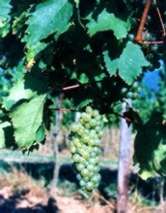 FETEASCA:
(a.k.a Fetiaska). Several varieties are grown.
The Feteasca Alba, is reportedly a Romanian developed
variety seemingly most favored in that countries provinces of Moldavia
and Transylvania where it is mainly used to produce dry or semi-dry white
wines, although the Cotnari region is famous for semi-sweet and sweet
wine versions. The widely grown Feteasca Regala
is reportedly a crossing of the "Alba" version with an un-named variety
and is used to produce fresh, crisp, flavorsome white wines. They are
also widely planted in Bulgaria and Hungary. In the latter country the
"Alba" variety is better known as the Leányka.
The selected variant used to produce red wines is the Feteasca
Neagra, reputedly indigenous to Romania. It is mainly grown in several
areas of central and southern Moldavia and also in Muntenia province.
Usually vinified to produce dry or semi-dry deep red wines with a flavor
described as "blackcurrant", requiring some aging.
FETEASCA:
(a.k.a Fetiaska). Several varieties are grown.
The Feteasca Alba, is reportedly a Romanian developed
variety seemingly most favored in that countries provinces of Moldavia
and Transylvania where it is mainly used to produce dry or semi-dry white
wines, although the Cotnari region is famous for semi-sweet and sweet
wine versions. The widely grown Feteasca Regala
is reportedly a crossing of the "Alba" version with an un-named variety
and is used to produce fresh, crisp, flavorsome white wines. They are
also widely planted in Bulgaria and Hungary. In the latter country the
"Alba" variety is better known as the Leányka.
The selected variant used to produce red wines is the Feteasca
Neagra, reputedly indigenous to Romania. It is mainly grown in several
areas of central and southern Moldavia and also in Muntenia province.
Usually vinified to produce dry or semi-dry deep red wines with a flavor
described as "blackcurrant", requiring some aging.
FETIASKA: (See Feteasca above).
FIANO: Minor, but of ancient origin, grape grown in Campania region of southern Italy. Makes balanced, elegant white wine with attractive nut-like hints in the aroma.
FIÉ: White wine grape of ancient origin once widely grown in the Loire region of France. Now thought by some to be the ancestor of the Sauvignon cépage variety. Current remaining acreage is used to create wine for blending with Sauvignon Blanc grapewine in order to further enrich the latter wine.
FINDLING: A mutated version of the Müller-Thurgau grape. (See below).
FOGONEU: Native red-wine grape indigenous to the island of Majorca along with two others named Callet and Manto Negro. (No other details yet).
FOLLE BLANCHE: Minor white wine grape once used in the distilled wines of the Cognac region of France. Small acreages still remain in the western Loire region that are used to produce an often light, sharply acidic wine called "Gros Plant du Pays Nantais" locally claimed to be a useful foodmatch alternative to Muscadet de Bourgogne. Also grown in the S. Rhone region where it has the synonym name Piquepoul (Blanc).
FORASTERA: Variety used for white wine production found mainly in the Ischia, Campania DOC of Italy. Used to produce a dry, fresh wine reputed to be a good accompaniment for regional fish-based meals. Has the synonym name Uva dell'Isola. Often blended with the wine made from the Biancolella grape to create "Ischia Bianco" a light wine best drunk as young as possible.
FORTANA: Red wine variety grown in Emilia-Romagna region of Italy. Used to make a full-bodied, crisply acidic varietal wine. Has several alias names including Brugnola and Uva d'Oro.
FRANCAVILLA: Variety used for white wine production in Apulia, Italy. Found in a blend with Impigno wine. (No other details as yet).
FREISA: Minor grape grown in Piedmont region of Italy and used to make both dry and spumante-style sweet red wines.
FREISAMER: (No details as yet other than it is a white wine producing variety grown in the Valais district of Switzerland derived from a Silvaner X Pinot Gris cross and has the synonym name Freiburger).
FRÜHBURGUNDER: Thought to be a mutation of Spätburgunder. (See below).
![[Image: Frueroter Veltliner]](gif/grapepics/fruehrotervelt.jpg)
|
FRÜHROTER VELTLINER: (a.k.a Malvasier). White wine producing variety grown in Austria. Despite the first glance similarity in the synonym name spelling the grape is reportedly not related in any way to the Malvasia cépage.
FUMIN: Limited amounts of this indigenous variety grown in Valle d'Aosta region of N.W. Italy. Used in good light bodied red blend, with other local varieties, reportedly needing moderate aging (3-5 years) to be at its best. (No other details as yet).
![[Image: Furmint]](gif/grapepics/furmint.jpg)
|
FURMINT: Widely grown grape in Hungary and used to make the ultra-sweet "Tokaji" white wines. Also grown in Austria where it is known as the white-wine grape Mosler. Smaller plantings are found in Slovenia (former Yugoslavia) where it is known as the Sipon grape.
GAGLIOPPO: Red-wine grape used to produce strong, young-drinking, wines in the Calabria region of Southern Italy.
GAMARET: Vigorous red wine grape cultivar grown in Switzerland. Derived from a cross of Gamay Beaujolais and Reichensteiner. Makes a spicy, tannic, structured wine suitable for blends.
GAMAY: At least three different vitis vinifera grape species are permitted to use the term "Gamay" as their lable-specified variety in the U.S.A. The Gamay Noir, Gamay Beaujolais and Napa Gamay. At one time or another, each one were thought to be the true Pinot Noir of Burgundy, before it was discovered that many cepage clones existed.
GAMAY BEAUJOLAIS: The Gamay Beaujolais grape is a widely grown, early-ripening clone of Pinot Noir that can do well in the temperate climates of the northwest U.S. and if picked promptly will produce a good red wine.
GAMAY DE BOUZE: (see Teinturier below).
GAMAY NOIR: The Gamay Noir grape is a clone of Pinot Noir. The version thought to be responsible for the Beaujolais wines of France is the Gamay Noir à Jus Blanc, as distinct from other Gamay teinturiers - (i.e: Gamay vine mutations of ancient origin noted for their deep red coloring capacity in blends). In the Beaujolais region growers use a variety of clones that include numbers 222, 358, 509, 656 grafted to suitable rootstocks such as Vialla for granitic soils, the standard lime resistant versions such as 161-49C and the American 420A. Its maturation before Pinot Noir makes it suitable for cooler climates. High yields and disease control require intensive attention.
GAMZA: The Gamza grape, currently widely grown in northern Bulgaria, is identical with the Kadarka of Hungary. Capable of producing an excellent red wine of full-bodied, tannic content suitable for aging.
GARGANEGA: White wine grape widely grown in the Veneto region of NE. Italy. It makes the base wine of the well-known "Soave" blend along with up to 30% of Trebbiano derived wine and is also a major portion of the popular "Gambellara" wine blend. At its best this grape will give a good, rather delicate, wine laden with aromatic hints of lemon and almonds.
GARNACHA: Alternate name for Grenache grape in Spain. (See below)
GARNACHA TINTORERA: (See Alicante Bouschet above).
GIRÒ: Old variety used for red wine production in S.W. Sardinia. High alcohol potential makes it suitable for unfortified Port-style sweet wines best consumed within 2-3 years of release. Has several alias names including Gliata and Zirone.
GODELLO: White wine variety grown in the Rias Baixas and El Bierzo/Valdeorras regions of N.W Spain between Galicia and Leon. Used to make a well-regarded varietal wine with fragrant aromas described as "apples and mangoes", plus good acidity levels and complexity.
GOLDEN CHASSELAS: Known under the name Chasselas Doré in France where it is mainly grown as a table grape. Highly respected in Switzerland where it has a long history as the Chasselas in the Savoie region. The mis-named grape grown in California under this name is actually the Palomino and bears no relationship.
GOLDMUSKATELLER: White-wine grape used to produce dry and dessert wines, best consumed early, in the Alto Adige region of N.E. Italy. Noted for its pleasant aromatic qualities. Has synonym name of Moscato Giallo.
GOLDRIESLING: Supposedly ancient grape producing mainly mediocre white wines. Listed by some as a cross between Riesling and Courtiller Musque. Mostly grown on small acreages to be found in former East Germany or northern Austria.
GOUAIS (BLANC): (a.k.a Gwäss or Gwaess). Obscure, heavy bearing, white wine variety historically used to produce a light neutral wine for blending, or distillation for use in brandy-type fortified wines, in France. Presently only found in Australia, France and Switzerland. Reportedly planted in Australia around 1874. At least one producer in Rutherglen, N.E Victoria (and also one each in Bordeaux, France and the Valais, Switzerland) currently (1997) makes wine from this grape.
GRACIANO: Late-budding red-wine grape found in the Rioja region of Spain. Sensitive to diseases such as "Downy Mildew". Has the alias name of Xeres in California and Morrastel in France. Confusingly is also an Australian synonym for the Mourvedre hot climate grape. (See below).
GRAGNANO: Italian synonym name for the Carignan grape. (See above).
GRASA DE COTNARI: Variety claimed as grown in Romania for 500 years since the days of Stephen the Great. Used to create a late harvest white wine from botrytis affected grapes with sugar content commonly exceeding 240 grams/litre.
GRAUER BURGUNDER: Alternate name for the Pinot Gris grape in both Austria and Germany. (See below).
GREY RIESLING: (aka Chauché Gris. See above).
GRECO BIANCO; (See Greco Nero below).
GRECO NERO: White wine grape of ancient origin, probably Greek, grown extensively in southern Italy. A sub-variety is known as the Greco Bianco. Both varieties are used to produce dry, (eg: "Greco di Tufo"), and sweet wines from semi-dried grapes, the Nero grape being the preferred source.
GRENACHE: Also confusingly known under the synonym names Alicante in the south of France and Guarnaccia in the Ischia DOC, Campania, Italy. It should not be confused with the shortened name for the late nineteenth century cross Alicante Bouschet. Grenache is currently widely grown in Spain, (where it is known under the name Garnacha), the south of France and also in California. Is now believed to be descended from the grape named Cannonau, an ancient variety widely grown in Sardinia. It is the main grape used in the red wine blend known as Chateauneuf-du-Pape and, along with the Mourvèdre, Cinsaut and some others, makes good wine blends under the appellation "Cotes du Rhone Villages". In the warmer regions of California the Grenache grape tends to produce pale red wines that are mainly useful for blends. Older vines give juice that produces a creditable varietal. Often "hot" due to high alcohol content and with a distinctive orange colored tint. Also used to make some of the better rosé wines of Provence in southern France.
GRENACHE GRIS: Thought to be a mutated version of Grenache. Used to produce undistinguished white wines in southern France. Has premier synonym name Garnacha Rosa in Spain. Also known as Grey Grenache. Is one of the parent varieties used to create the cross named Symphony mainly grown in California. (See below).
GRIGNOLINO: Commonly grown grape in the Piedmont region of Italy. Makes light red color wine with very fruity aroma and strong acid/tannins.
GRILLO: Widely grown white-wine grape variety in Sicily, where it is mainly used in the blend known as "Marsala" dry and sweet wines. The other grape-wines are derived from the Catarrato Bianco and Inzolia grapes also common to Sicily's west coast.
GROLLEAU: Widely grown grape in the temperate regions of France. Also known as the Groslot. Used as a blend with Gamay Noir and Cabernet Franc to create a somewhat rustic dry and semi-sweet Anjou rose' wine in the Loire region.
GROPELLO: Synonym for the Rossignola red wine variety. Is used for creating the Valtenesi Rosso wine blend found in Brescia DOC, Lombardy, Italy that competes well with the better known Valpolicella and Bardolino wines of the Veneto DOC. As a varietal it is made as a dry, medium-bodied wine with a nut-like finish that ages well for up to 5 years in good vintages.
GROSLOT: (see Grolleau above).
![[Image: Gruener Veltliner]](gif/grunvelt.jpg)
|
GRÜNER VELTLINER: Widely grown in Austria. Is white-wine grape used to create the famous same name fresh, fruity young wines. Also known as (Green) Veltliner. Ripening around mid-late October, it is commonly consumed very young yet has very good aging potential (up to 15 years) when made from the finest vintage year grapes.
GUTEDEL: aka Weisser Gutedel. Is the german synonym name for the french Chasselas grape when grown in the Baden region of Germany.
GWÄSS: (a.k.a Gwaess). Indigenous white wine grape of Switzerland now rarely found. Synonym name in France and Australia is Gouais Blanc.
HAMBURG MOSCHATO: Muscat cépage table-grape widely grown in Greece. Also used for making a mild blending wine. (See also Muscat Hamburg below).
HEIDA (PAÏEN): White wine grape found in the Valais district of Switzerland. Of ancient origin it is thought to be identical to the Savagnin grape of French Savoie.
HIMBERTSCA: (No details as yet other than it is a white wine producing variety probably indigenous to the Valais district of Switzerland).
HUMAGNE: White wine grape grown in the Valais district of Switzerland. Not related to the Humagne Rouge cultivar as far as is known.
HUMAGNE ROUGE: Red wine grape of ancient origin indigenous to Switzerland. Can yield rich, plummy wines similar to those of Cornalin.
HUXELREBE: Grape created by crossing the Chasselas and a Muscat variety that contributes its ubiquitous aroma to wines made from the grape. Grown mostly in the Rheinhessen region of Germany and used mainly for sweet white wines of no particular distinction that can qualify for "Auslese" Prädikat standards in better vintages.
IMPIGNO: Variety used for white wine production near Brindisi in Apulia, Italy. Usually blended with Francavilla wine to make a crisp tablewine that matches local seafood dishes. Also grown in Argentina where it has the alias name Nessun. (No other details as yet).
INZOLIA: Extensive plantings of this variety are found on the west coast of Sicily where it is made into a wine commonly blended with the Grillo and Catarrato Bianco grape wines in order to create the famous dry and sweet "Marsala" white wines of historical significance. The grape is also found in Tuscany region of Italy where it is known by the alias name Ansonica.
IRSAI OLIVÉR: Hungarian tablegrape cross variety developed in early 1930's. Used to produce grapey white wines with Muscat aromatic reminders. (No other details as yet).
ITALIAN RIESLING: (aka Riesling Italico in Italy). Also known as the Welschriesling in Austria, Laski Rizling in Slovenia, (i.e: former Yugoslavia), and Olasz Rizling in Hungary. Origins of this grape appear to be obscure, although Romania has been suggested. In the best vintage years of Austria it will allow production of white "Auslese" Prädikat wines to TBA levels, with greater acidity than the german Riesling, but without the same potential for long life.
JACQUÈRE: White-wine grape found in the Savoie region of France and used as blending wine for delicate product.
JAEN: Red wine grape widely grown in central Spain and also in Portugal. This variety is also found in Australia under the alias name Doradillo and Blanquette.
JUHFARK: Ancient white wine grape currently restricted to the region north of Balaton, Hungary.
JURANÇON: (aka Folle Noire on the Cote d'Azur). Minor grape grown in the Cahors area east of Bordeaux in France. Used to create local blend, along with Malbec and Merlot, that is a well-regarded robust red wine with pronounced aroma. Alone, the grape yields a full, hard and dark-red wine. It is also grown in Provence where it it used in a blend, along with Cinsault and Grenache, to produce one of the favored red wines.
KADARKA: Native grape grown in Hungary. Used to make "Egri Bikaver", that countries best-known dry red wine blend. Currently the wine is a round, medium-bodied effort that ages fairly well, although the main ingredient is now the grape known as Blaufränkisch, thought to be a Gamay clone. Traditionally the wine was stronger and darker due to high Kardarka content, more deserving of its name "bikaver", which translates as "bulls blood". The grape is also currently widely grown in Bulgaria where it is known as the Gamza grape.
KERNER: Moderately hardy grape developed from a cross between the Riesling and Trollinger varieties by the Wurttemburg State Wine Institute of Germany. The latter grape is better known as the Schiava Grossa where grown in the Alto Adige region of Italy. Used to produce a Riesling-like white wine said to often reach "Auslese" Pradikat quality. Regarded by many as having superior characteristics to the Bacchus or Optima grapes. Currently, 1997, recommended for good site locations in southern Michigan and other suitable cool-climate regions where it usually fully ripens in mid-season.
KLEINBERGER RIESLING: White-wine varietal, thought to be from a minor grape originating from Germany, currently produced in California. (No other information available at present).
KLEVNER: (aka Clevner). Alternative name in the Alsace region of France for the Savagnin grape.
KNIPPERLE: Minor grape found mainly in the Alsace region of France. Used in generic blend "Vin d'Alsace" white wines along with others, such as Räuschling grapewine.
KOLOR: Developed at the Freiburg Research Institute, Germany, this red-fleshed grape cultivar was derived from a Pinot Noir and Teinturier cross. As far as is known it is used solely to produce a colorant wine in the manner of the latter variety.
KOTSIFALI: Robust red-wine grape found mainly on the island of Crete.
KRASSATO: Red-wine grape common to central Greece. Usually blended with two other grape wines, the Stavroto and Xynomavro.
LAGORTHI: White wine variety indigenous to Greece. (No other details yet).
![[Image: Lagreiner]](gif/grapepics/_lagr.jpg)
|
LAGREIN: Red wine variety found in Trentino-Alto Adige region of Italy. Used to make varietal and rosé wines (in the latter case called Lagrein Kretzer) of good character that can age well if from Bolzano region superior vintage years.
LAMBRUSCO: Red-wine grape cépage widely planted in Emilia region of central Italy. Produces a number of wine styles depending on the characteristics of the sub-variety, but mostly as dry or off-dry wines. When blended with wine made from the Ancellotta grape it produces a somewhat sweet, (ie: amabile), wine.
LASKI RIZLING: Local name in Slovenia (former Yugoslavia) for the Welschriesling grape.
LEÁNYKA: Native, but well-known grape grown in Hungary. In Romania and Bulgaria an identical grape is known as the Feteasca. Used to make mildly intense semi-dry popular white wine.
LEFKAS: Grape variety indigenous to Cyprus. Used to produce local red-wine blend.
LEN DE L'EL: Minor local grape grown in the area southeast of Bordeaux in the Gaillac region of France. Used, along with Mauzac, to create sweet and sparkling white wine blends.
LIATIKO: Red-wine grape found in Crete and used either as a single variety or in a blend with Mandelaria grape-wine.
LIMBERGER: (see Blaufränkisch above). Also known as the Blauer Limberger or Lemberger . The latter name is used for the grape where found in Washington state in the U.S., which has sizable plantings of this variety at last report and it is currently recommended for the Finger Lakes region on New York State as a cold-hardy winegrape showing good yields and ripening in early to mid-October. Frequently used for blending with Pinot Noir. Wines made from this grape grown in N.W. America are described as being "Merlot-like with mild tannins and having a dark chocolate/raspberry flavor". Wines made from this grape reportedly have low levels of histamines. It is the normally higher amounts of this compound found in many other red wines that can cause allergy headaches in some people.
LIMNIO: Red-wine grape found mainly in the Aegean Island of Lemnos and also in N.E. Greece. Used to create acidic, robust wines with good aging potential.
LISTAN: Red wine grape now sparsely grown in France. Known as Palomino in Spain and South Africa. Used mainly to produce fortified wines in those countries. Also grown in Australia where it is found in mixed growth vineyards along with the Pedro Ximénez grape. Known to be one of the parents of the Chasan grape cross).
LOUREIRO: White-wine grape grown widely in northern Portugal and known across the border in Galicia, Spain as the Loureira. Mainly used for "vinho verde" wines designed for early drinking.
MACERATINO: Grown mainly in the Marches region of Italy, this white wine variety is used to make a delicately flavored blend with Trebbiano grapewine. Has several alias names including Aribona and Uva Stretta.
MACABEO: (aka Maccabeo). Widely grown in the Rioja region of north-eastern Spain and the Languedoc region of France, this grape is used to make mildly acidic and young white wines suitable for early consumption or incorporation into suitable blends. Also known in Spain by an alias name of Viura.
MADELEINE ANGEVINE: Cool region table grape cross used for white table wine production in the United Kingdom and Germany.
MADELEINE SYLVANER: Vinifera grape suitable for winemaking. Ripens early. (No other details available as yet).
MALAGONSIA: White-wine grape widely grown in northern Greece.
![[Image: Malbec]](gif/grapepics/Malbec.gif)
|
MALBEC: Semi-classic grape grown in the Bordeaux region of France and in other areas under the name Côt or Pressac and in the Alsace has the local name Auxerrois. Has an extensive listing, currently more than fifty, of synonym grapenames. Also grown in the cooler regions of California. The vine is widely planted in Argentina where it seems to have found a natural home, being used to produce very popular varietal wines. It is now thought that the variety known as Fer in that country is a clone. As a varietal it creates a rather inky red, intense wine, so it is also commonly used in blends, such as with Merlot and Cabernet Sauvignon to create the renowned red French Bordeaux "claret" blend. In California and other areas it is increasingly being used for the same blending purpose.
MALVASIA: Semi-classic grape cépage of ancient, probably Greek, origin. Widely grown in Italy as distinctive area sub-varieties, such as Malvasia di Candia, Malvasia Istriana etc. Used to produce dry and sweet white, and light red, wines with high alcohol content and residual sugar. Is one of two whitewine grapes allowable in Chianti Classico wine production. Also widely grown in Portugal and the island of Madeira where the important winename Malmsey is an English word corruption of Malvasia.
MALVOISIE: Minor grape found mainly in Corsica. Used to produce local, high-alcohol wines blended from grapes of mainly Spanish origin such as the Grenache and others. It has the local alias name of Fromentot where grown in the Ancenis region of France. The grape variety called Malvoisie in the Languedoc region of France is actually the Bourboulenc.
MAMMOLO: Mainly grown in Chianti DOC region of Tuscany, Italy. Red wine producing variety used in the various blends of the area. Has synonym name of Fegeri. (No other details as yet).
MANDELARIA: (a.k.a Amorgiano). Red-wine grape widely grown on the Eastern Mediterranean islands of Crete, Rhodes and Santorini.
MANDURIA: Alternate name for the Primitivo (di Gioia) grape now known to be the Zinfandel of California.
MANSENG: Appears as two clones, Gros Manseng and Petit Manseng, mainly to be found in the western regions of the Pyrenees area of southwest France. Used for producing both dry and sweet white wines.
MANTO NEGRO: Native red-wine grape indigenous to the island of Majorca along with two others, Callet and Fogoneu. Used to make a strong, spicy wine with some aging ability. Currently most plantings occur on the Balearic Islands.
MARIA GOMES: Synonym name for the Fernão Pires white wine variety where found in the Bairrada region of Portugal. There it is used to make an agreeable white wine with apple and apricot fruit flavor reminders.
MARSANNE: Semi-classic grape used in the traditional white wine blends of the French Hermitage-Rhone region. With long barrel-aging in the past, these wines used to require about ten years in the bottle before drinking. The other grape wine used in the blend was the Roussanne. Also found on small acreages in Australia and Switzerland. In the latter country it has the synonym name Ermitage.
MARZEMINO: Grape variety used to make a red varietal reminiscent of Gamay type wine but with almond-taste undertones. Mainly restricted to the Trentino-Alto Adige region of Italy. Synonym names include Bassanino and Uva Tedesca. (No other details as yet).
MATARO: New World alias name for the Mourvedre grape variety. (See below).
MAUZAC: Minor grape mainly grown in the Gaillac region southeast of Bordeaux in France. Used, with Len de l'El to create mildly sweet and sparkling white blended wines. It is also known in other regions under the local synonym name of Blanquette; (not to be confused with a similarly named grape grown in certain regions of Australia).
MAVRO: Grape variety common to Greece and Cyprus. Used to produce an unremarkable dark red varietal wine or, on Cyprus, a dry red blend with Opthalmo grapewine having limited aging ability.
MAVRODAPHNE: Red-wine grape widely grown in the Patras region on the north coast of the Peloponnese in southern Greece and either used to make a dry wine suitable for blending purposes, or, as also on the island of Rhodes, to make a moderately sweet, portlike, dessert wine.
MAZUELO: Alternate name for Carignan grape in Spain. (See above).
MELON DE BOURGOGNE: Identical to the Muscadet de Bourgogne grape. (See below).
MENCÍA: Light red wine variety widely grown in Galicia, N.W Spain. Has the synonym names Negra and Loureiro Tinto. Some insist the variety is a clone of Cabernet Franc. (No other details as yet).
MERLOT BLANC: Obscure, low prestige french cultivar used for white-wine blends. Currently thought to be unrelated in any way to the Merlot red-wine cépage.
MERWAL: White-wine grape found in the Bakaa Valley of Lebanon. Said to resemble Semillon when made into a dry wine. Used by Chateau Musar for blending with Obaideh grapewine to create an oaked wine capable of aging for between 5-10 years.
MESENICOLA (BLACK): (Information is incomplete on this red-wine grape grown in Greece).
MEUNIER: (muh-ny-ay) Alternate name for Pinot Meunier. (See below).
MICHELE PALLIERI: (a.k.a Pallieri). Table grape derived from the vinifera crosses (also tablegrapes) Alphonse Lavallee and Red Malaga. Currently known to be grown in Chile and Venezuela. Care needs to be taken when choosing a suitable rootstock - (eg. the Alphonse Lavalee variety has been found to be incompatible with a Ramsey rootstock grafting by South African growers).
MILLERS BURGUNDY: Alias name for the Pinot Meunier grape of France where grown in Australia. Also has synonym names of Schwarzriesling and Black Riesling. Is a Pinot Noir clone widely grown for use in Champagne-style sparkling wine blends; probably imported from Germany where it is known as the Müllerebe grape.
MILLOCCIO: Minor grape mainly grown in Corsica and used in local high-alcohol wine blends along with Malvoisie and Sciacarello red wine grapes.
MISSION: Earliest grape planted in 17th century in what is now the state of California, where it is currently (1997) used to make several styles of wine - "Criolla" a tablewine, "Angelica", a very long-aged (50+ years) french Ratafia-like fortified wine and some late-harvest wines aged for 20+ years that are made from sun-dried grapes. Thought to have arrived in the America's by Spanish conquistadores importation. Known to be identical with the Pais grape widely grown in Chile and thought to originate from the Monica grape of Spain and Sardinia.
MICHURINETZ: East European extreme-winter hardy grape of astonishing vigor derived from numerous varieties of european vinifera, plus amurensis rootstock. The name is apparently an anglicized version of "Miczurinoweic". Currently planted on limited commercial/nursery acreage in the Finger Lakes region of W. New York (USA), Nova Scotia (Canada), British Columbia (Canada) and more widely in eastern Europe. Requires drastic cluster thinning of secondary late clusters and side shoots. Early shutdown prior to anticipated first frost can occur as much as a month before and results in fruit fall within days. Susceptible to fungus diseases Aspergillus, Powdery Mildew etc. Winter hardy to -20 deg. F. this variety usually buds in late May. Capable of producing fine red Cabernet Sauvignon style wine in N. America when mature although currently, 1997/98, receiving mixed reviews because of tendency toward high acid and low sugar in less than good years. Regarded as quite similar to the Russian hybrid Cabernet Severnyi grapecross listed above.
MOLETTE: Minor grape grown in the Savoie region of France. Used to blend with a wine made from the Altesse grape to create a white wine called "Seyssell", often spritzy and crackling in nature due to incomplete fermentation when bottled.
MOLINARA: Acidic red wine grape mostly grown in the Veneto region of Italy and used to create the "Valpolicella" and "Bardolino" blends, along with the Rondinella and Corvina grape wines.
MONASTRELL: (aka Morrastel). Recent DNA evidence (3/98) suggests that the library varieties from UC Davis, California and Montpellier, France used in the tests are identical to Moristel and have no relationship to Mourvèdre.
MONDEUSE: (aka Mondeuse Noir). Minor grape grown in the Savoie region of France. Usually blended with wine made from the Altesse grape to make the white wine known as "Roussette de Savoie". Some authorities consider the grape to be identical to the Refosco grape of Italy. Also recently identified as extensively present in many vineyard plantings of vines known as Petite Sirah in California. Considerable acreages are also found in Australia where the grape is incorrectly known as Refosco.
MONEMVASIA: Greek name for the Malvasia white-wine grape renowned for making fortified Madeira wines on the island of that name. In Greece is often blended with Mandelaria grape-wine to give a strong, aromatic drink.
MONICA: Minor grape native to Sardinia. Made into both a dry, red wine and also a sweet, spicy red wine. Thought by some to be the antecedent of the Mission grape of early California fame.
MONTEPULCIANO (D'ABRUZZO): Important grape mostly found growing in central and southern Italy. Usually made into a blend with Sangiovese in order to produce a fruity, round, yet balanced red wine with attractive aroma that reportedly can improve with up to 6 years aging. Also used to produce a popular rosé named "Cerasuolo".
MONTILS: White wine grape mainly used in the production of brandy-type fortified wines in Bordeaux, France, or the Rutherglen, N.E Victoria region of Australia. Synonyms are Aucarot and Chalosse.
MORISTEL: Red-wine producing grape grown in the Somontano region adjoining the central Pyrenees area of Spain. In southern Aragon it has the synonym name Juan Ibáñez. It produces light ruby red, floral, mildly tannic wine commonly used as a blending ingredient with uniquely regional native specialties such as Parraleta grapewine.
MOSCADELLETTO: Medieval Tuscan grape variety still grown in minute commercial quantity. Used in producing a somewhat rustic, amber-colored "frizzante" series of sweet wines in the Montalcino DOC of Tuscany, Italy.
MOSCATEL DE ALEJANDRIA: Alternative name for Muscat of Alexandria grape when grown in Spain and Portugal.
MOSCATO DI CANELLI (see Muscat Blanc below).
MOSCOPHILERO: White-wine grape widely grown in the Peloponnese region of southern Greece and usually vinified to give a light, aromatic, dry varietal wine.
MOSLER: Austrian growers name for the hungarian Furmint grape.
MOSTOSA: Rare white wine variety currently only found in the Emilia-Romagna region of Italy. Has several synonym names including Pagadebito, Pagadebit (Gentile), Uva Barile and Vaccume. Used to make dry and sweet varietal wines of delicate style. May be a synonym name for the variety Biancone.
MOURISCO PRETO: Red-wine grape grape grown in Australia and used to produce Port-type fortified wines.
MOURVÈDRE: Robust mediterranean hot climate grape variety widely grown in the southern Rhone region of France and mainly used to introduce color and body to the red wine blends. Normally ripens in mid-October, ie. a week or so after Carignan. Select limited plantings occur in California where the variety is often called the Mataro, a relationship recently confirmed (3/98) by DNA analysis at UC Davis, and are used to produce a wine that sometimes develops the "green tea-like" herbal character that Rhone region french growers refer to as "animalé". Common aliases, probably due to early mis-identification, in Australia are Mataro, Morrastel and Graciano. The cultivar known as Monastrell that is grown in Spain and previously thought to be identical is not related.
MÜLLEREBE: Translates as "Millers Grape". Alias name for the Pinot Meunier grape of France. (See below).
![[Image: Mueller-Thurgau]](gif/grapepics/muellerthurg.jpg)
|
![[Image: Muscadelle]](gif/grapepics/Muscadelle.gif)
|
MUSCADELLE: (aka Muscadelle de Bordelais). Semi-classic grape grown in the Gaillac region of France, about 100 miles southeast of Bordeaux, and used in local white sweet wine blends. Incorrectly called Sauvignon Vert in California. Australian winemakers use it to produce a suberb sweet dessert wine known as "Liqueur Tokay of Australia".
MUSCADET DE BOURGOGNE: (aka Melon de Bourgogne). Productive cool-climate grape widely grown on the Atlantic seaboard of the Loire region of France. The juice goes into the making of the dry, tart white wine that is famous as "Muscadet de Sevres et Maine" or is distilled. The wine is light and fresh with distinctive fruit in good vintage years and best consumed while young. Also found in California because recent research indicates some plantings of this cultivar may have been mis-named Pinot Blanc. Confusion with Chardonnay sometimes results because the latter grape has several synonyms that include the word "Melon".
MUSCARDIN: Minor grape grown in the southern Rhone region of France and used to create color and body in red wine blends.
![[Image: Gelber Muskateller]](gif/grapepics/gelbermuskat.jpg)
|
MUSCAT BLANC: (aka Muskateller in Austria and Germany, Brown Muscat and Frontignac in Australia, Muscat Lunel in Hungary, Muscadel in South Africa, Muscat Frontignan in France and in Italy as the Moscato di Canelli). Members of the Muscat Blanc à Petite Grains cépage family. Used mainly for making semi-sweet and sweet dessert wines. May be the oldest known grape, having a documented history of growth around the Mediterranean for many centuries. Should not be confused with the Muscat of Alexandria, the grape with a similar ancient history of growth around the Mediterranean.
MUSCAT FRONTIGNAN: (see Muscat Blanc above).
MUSCAT HAMBURG: (a.k.a Black Hamburg). White wine variety also suitable as a table grape. Generally considered to produce aromatic mediocre wines mostly suitable for blending although some rosés are produced. Mainly found in Greece (see Moschato Hamburg), and also in Tianjin, China where it is blended with Sylvaner and Welschriesling to make a semi-dry wine known as "Dynasty".
MUSCAT OF ALEXANDRIA: (aka Muscat Gordo Blanco or Lexia in Australia and Hanepoot in South Africa). Ancient grape species suitable for similar Mediterranean growing climates as the Muscat Blanc above. Makes sweet wines that are usually judged of inferior quality compared to those of the Muscat Blanc cépage varieties. The main use in California is for producing raisins. Also widely grown in Spain, where it is called Moscatel de Alejandria, and Portugal where winemakers in the latter country use it to make "Moscatel de Setubal" sweet wine.
![[Image: Muskat-Ottonel]](gif/grapepics/muskatott.jpg)
|
MUSCAT OTTONEL: Mid-19th century cross thought to be between the Chasselas and a Muscat varietal grape. Fairly widely grown in the cooler regions of central and eastern Europe where it is best utilized as a late harvest white wine. Promising results from trials of the clone NY 62.122.1 are reported in the Finger Lakes region of Western N.Y. where it reportedly has similar cold hardiness characteristics to those of the Gewürtraminer. Moderately resistant to bunchrot it usually ripens in early-mid September.
NAPA GAMAY: The Napa Gamay as grown in California is for the most part identical with the Valdeguié grape grown in France. However some vineyards in the state are now suspected of containing considerable amounts of the true Beaujolais Gamay Noir à jus Blanc varietal clone previously mistakenly thought to be Napa Gamay.
NASCO (BIANCO): Ancient variety grown and used for dry and sweet white wines in S.W. Sardinia. Moderate ageing potential.
NEGOSKA: Red wine grape common to Macedonia, N.E. and Central Greece. Usually used as a wine that is blended with Xynomavro grape-wine.
NEGRARA: Red wine producing variety grown in the Trentino-Alto Adige and Veneto regions of Italy. Best known for its inclusion in Bardolino DOC wine blends. Has several synonym names but is of little interest as a varietal wine.
NEGRETTE: Minor grape grown in the region about 100 miles southeast of Bordeaux, France. Used for red wine and rose' blends along with Gamay Noir, Syrah and Duras grapes. The grape is thought by some to be known as Pinot St. George in California.
NEGROAMARO: Widely grown in the Apulia (Puglia) region of southern Italy this grape is used to produce the base wine of the "Salice di Salento" and other red wine blends of good repute and aging potential.
NERELLO: Grape that is currently grown extensively in Sicily where it is used as a constituent of red wine blends. Considered by some to be slightly inferior to the Nero d'Avola in taste and aging ability.
NERO D'AVOLA: aka Calabrese. Used as one of the wines blended into a well-regarded Sicilan red wine with complex aromas capable of aging well.
![[Image: Neuburger]](gif/grapepics/neuburger.jpg)
|
NEUBURGER: Minor grape of unknown origin thought by some to be a cross between Sylvaner and Pinot Blanc. Suitable for growing in a wide range of soils including heavy or chalky areas but prefers granite content. Shows a tendency towards Coulure, ie. poor fruit set with immature berries falling off after veraison (blossoming). Widely grown in sections of the Burgenland, the Thermenregion and Wachau region, and other areas, of Austria producing soft, full-bodied wines with nutlike aroma.
NIEDDERA: Red wine variety grown in western Sardinia. Used to make dry, fruity wine with some aging ability. (No other details yet).
NIELLUCCIO: Red-wine grape used in a Corsican blend including Cinsault, Grenache and Sciacarello produced in the Calvi region.
NOBLESSA: Low vigor cultivar resulting from a cross between Madeleine Angevine and Silvaner. Has moderate cold hardiness and is resistant to many diseases. Early September ripening. Claimed to produce good quality white wine.
NOBLING: (No details as yet other than it is grown in the Valais district of Switzerland and is a white wine producing variety cross with Silvaner X Chasselas parentage created at Freiburg, Germany.)
NOSIOLA: White-wine grape used to produce local, early drinking, light wines in the Trentino-Alto Aldige and Veneto regions of N.E. Italy. Has several synonym names including Durello, Rabiosa, Cagnina and Durella.
NURAGUS: Indigenous grapevine variety grown in S.W. Sardinia. Has several synonym names including Abbondosa and Axina. Used mainly as a dry varietal wine suitable for seafood dish accompaniment.
OBAIDEH: White-wine grape grown in the Bakaa Valley of Lebanon. Claimed by some to be the ancestor of the Chardonnay grape. Used by Chateau Musar as a blending wine with Merwal to create an oaked wine capable of aging for 5-10 years.
OLIVELLA: Red-wine grape grown in Campania, Italy and used in the "Lachryma Christi del Vesuvio" Neapolitan area red wine blend along with the Piedirosso and Aglianico grapewines.
ONDENC: White-wine cultivar grown in France. Translocated to Australia where it is known under the alias names of Sercial and Irvines White.
OPTHALMO: Red-wine grape common to Greece and Cyprus. Used to produce a Rosé as a varietal or, on Cyprus, as the lighter component in a blend with Mavro grapewine having limited aging ability.
OPTIMA: Recent crossing of Riesling and Sylvaner grape with the Müller-Thurgau. Widely grown in the Mosel-Saar-Ruwer region of Germany and used for blending purposes in the white wines of the region.
ORANGERIESLING: (No information available at present on this grape grown in Austria).
ORANIENSTEINER: (No information on this grape at present other than it is a white wine producing variety).
ORTEGA: Grape cross between Müller-Thurgau and Siegerrebe varieties. Used for white wine blending in the Rheinhessen region of Germany. Produces flavorful wines that have earned the Prädikat rating in good vintages. Ripens early-mid September. Cold-hardy and has good resemblance to the Riesling grape with which it is often blended in order to enhance flavor in poor vintages.
ORTRUGA: White wine grape found in the Emilia-Romagna region of Italy. Used to make a light, dry or sweet wine varietal/blend usually drunk when young. Has several synonym names including Altruga, Barbesino and Vernesina.
OSTEINER: (No information on this grape as yet other than it is a white cultivar).
PAIS: Widely grown in Chile, this grape is identical with the Mission grape of California and Mexico and the Criolla Chica of the Argentine.
PALOMINO: Red wine grape, mostly used for Sherry-type fortified wines, widely grown in Spain and South Africa. Identical to the Listan variety found in France. Also found in Australia and California where it is also used mainly to produce fortified wines. The grape was once thought to be the Golden Chasselas, a table grape, where grown in California. The wine-must has tendency to oxidise quickly, a characteristic that can be ignored when used for sherry production.
PAMBAKINA: Red-wine grape indigenous to Cyprus. Used to produce dry varietal wine.
PARELLADA: Red-wine grape found in the Penedés region of Spain and used to make popular red and rosé cava wines.
PARRALETA: Rare native red wine grape still grown in the Central Pyrenees region of Somontano, Spain. Traditionally used to make a varietal wine or blend with Moristel grapewine; having intense color, high phenol, acidity and potential alcohol content. Noted for aromatic flavors. The vine is vigorous with medium productivity, giving round mid-sized berries in small medium-compact bunches. Reportedly there are no known synonyms or record of plantings elsewhere.
PEDRO XIMÉNEZ: Red wine variety found in Australia and used, along with Palomino, to produce fortified wines. Has occasionally used alias name of Baxter's Sherry.
PELAVERGA (PICCOLO): Red wine variety grown in the Verduna DOC, Piedmont region of Italy. Also known as Carola, Fra Germano and Taddone. Ripens in early October. (No other details as yet).
PELOURSIN: Almost extinct French red-wine grape recently identified as one of the varieties whose DNA is known to be present in the Petite Sirah grape(s) of California and part of some subject controversy.
PERLAN: Synonym name in the Mandement district of Switzerland for the Chasselas grape.
PERLE DE CSABA: (aka Pearl of Zala). Vinifera derived grape propagated mainly for table use. Very early ripening, (usually late August), it has a light Muscat flavor. Mainly grown in the N.W. regions of the USA and in British Columbia, Canada. Also one of the parent varieties of the Queen of the Vineyard cross that ripens around mid-September and is a useful tablegrape.
PERIQUITA: Alias name for Castelão Francês grape where grown in the Estremadura region of Portugal. Makes popular, robust red wine.
PETIT ROUGE: Red wine grape sparsely grown in the Valle d'Aosta region of N.E Italy. Reportedly capable of aging well, developing fine aromas and balanced flavors. Has synonym name Orion Gris.
PETITE SIRAH: Widely grown grape variety in California that a recent DNA analysis report, (9/1997), has shown as likely to be derived from the Peloursin and Syrah parent cultivars found in the Rhone region. Is a chance seedling or selection recorded in the early 1880's and subsequently named Durif in honor of the finder. Other grapes known to be present in some Petite Sirah vineyards are the Mondeuse and Trousseau. Traditional Californian blends under the name of Petite Sirah are also known to have contained a proportion of Barbera or Zinfandel grapewine. Suffice to say that, whatever the provenance of the grapevine(s) currently known as Petite Sirah, they produce dark red, tannic wines in the warmer regions of California, used mainly as backbone for Central Valley "jug" wines. In the cooler northern regions, where many very old vines still exist, it is often made into a robust, balanced red wine of considerable popularity.
![[Image: Petit Verdot]](gif/grapepics/PetitVerdot.gif)
|
PICARDAN (NOIR): Synonym name for Cinsaut variety where grown in the southern Rhone region of France. Occasionally used in red wine blends but finding less favor in the last decades of the 20th century.
PICARDAN (BLANC): Listed as a synonym name, by the international grape variety database at Geisenheim, Germany, for the Bourboulenc white wine producing variety grown in the southern Rhone and Provence regions of France. (No other details as yet).
PIQUEPOUL (BLANC): Synonym name for Folle Blanche variety where grown in the Languedoc region of France. Used for creating vinosity and freshness in the regional wine blends. In Spain the variety has the name Picapoll. Also has synonym names Avello and Picpoule Blanc.
PIQUEPOUL (NOIR): (No details as yet).
PIEDIROSSO: Red-wine grape grown in Campania, Italy. Reportedly has synonym name Pere'e Pallummo. Used as a blending wine in the Naples area product known as "Lacryma Christi del Vesuvio" along with Olivella and Aglianico grapewines.
PIGNOLETTO: White wine producing variety found in Northern and Central Italy. Has several synonym names including Pignola and Uva Grilli. Used to make dry wines said to have a resemblance to Riesling Italico, and some sweet/sparkling varietals.
PIGNOLO: (aka Pignul). Red wine producing variety found in Friuli. The wine is of cherry-red color, rather robust and ages well.
PINEAU D'AUNIS: (a.k.a Aunis). Ancient and increasingly rare variety used to create good rosé and red wines in the Touraine and Anjou-Saumur AOC's of the Loire region in France. Has the synonym name Chenin Noir in California.
PINENC: Minor grape grown in the Pyrenees region of France and one of the grapes used to create a red wine blend known as "Madiran". The grape is also known as Fer, (or Fer Servadou) and also, in other regions of France, is named Brocol or Braucol. The other grapewines in the "Madiran" blend are the Bouchy, Courbu and Tannat grapes. In Argentina the grape known as Fer is thought to be a clone of the Malbec grape.
PINOTAGE: Grape widely grown and successful in South Africa. Reportedly also cultivated in nearby Zimbabwe. Derived from the crossing of a Pinot Noir clone and Cinsaut. Used to make a popular, hearty red wine that ages well - (and often requires it). Currently sparsely grown in New Zealand in declining quantities. Reportedly also used on some small acreages for evaluation purposes in California although prospects for acceptance there appear bleak.
PINOT BIANCO: Italian version of the grape known as Pinot Blanc. Grown mainly in the Trentino and Fruili regions of Italy. Usually made into a fresh, fruity white wine.
![[Image: Weissburgunder]](gif/grapepics/weissburg.jpg)
|
PINOT GRIGIO: ("pee-nOH gree-zOH") Synonym name of the Pinot Gris where grown in Italy. Planted extensively in the Venezia and Alto-Adige regions where it can produce crisp, dry wines with good acid "bite". (Also see below).
![[Image: Rulaender]](gif/grapepics/rulaender.jpg)
|
PINOT MEUNIER: (pee-noh muh-ny-ay) (aka Meunier). Clone of Pinot Noir cépage. Is late-budding and matures earlier than Pinot Noir with larger clusters. Widely grown in the Champagne (Aube) region of France. Used in a blend with Chardonnay to make "Blanc de Noir" style sparkling wines. In the Finger Lakes region of New York state it has the alias name Black Riesling. Where grown in Germany it has the alias name Müllerebe. A mutation of this grape known as the Samtrot, notable for characteristics closer to Pinot Noir clones, is also cultivated in certain N. American vineyards and Germany. Also grown in Australia where it shares the name Meunier with other aliases such as Millers Burgundy and Schwarzriesling.
PINOT NERO: Clone of Pinot Noir, used to make light red wines from grapes mainly found in the Friuli-Venezia-Giulia region of Italy.
PINOT ST. GEORGE: Grape found on small acreages in California and now thought to be identical to the Negrette of southern France. (See above).
PONTAC: A red-wine grape variety that behaves as a teinturier colorant and originally native to south-west France but, at last report, now only to be found on small acreages in the Constantia region of South Africa. Used by a few wineries to produce the historically interesting "Constantia" sweet wine blend with wines made from Orange Muscat grapes.
PORTUGAL MALBEC: (See Tinta Amarela below).
![[Image: Blauer Portugieser]](gif/grapepics/portugieser.jpg)
|
PORTUGIESER: Also known as the Blau Portugieser in Austria where it is grown and used to make a somewhat bland, dark red, medium-bodied wine.
PREMETTA: Indigenous variety grown in the Valle d'Aosta region of Italy where it is used to make a light red varietal wine. Has synonym name Primaticcio.
PRIMITIVO (DI GIOIA): Minor variety mainly confined to Apulia in southern Italy where it is used to produce a heavy, robust portlike red wine made from raisined grapes. A recent Italian report tentatively links this grape to some mutated members of the Vranac variety grown in Montenegro, part of what remains of former Yugoslavia. There is also another clonal contender. The widely grown Plavac Mali cépage, also known as Mali Plavac, variety found in Dalmatia - (a province of Croatia, also part of the former Yugoslavia) - contains several mutated varieties. According to a recent report, (7/98), one or more of these appear to share some DNA characteristics with Primitivo indicating a possible parental *or* offspring relationship. In California, where it is now believed to have been translocated via purchase from a historically interesting plant and seed merchant on Long Island in New York State during the mid-19th century, - (see "A History of Wine in America" by Thomas Pinney, 1989) - it is famous as one of that states most popular winegrape varieties - Zinfandel.
![[Image: Prosecco]](gif/grapepics/prosecco.jpg)
|
PRUGNOLO GENTILE: Alternative name for Sangiovese Grosso grape. (See below).
PUTZSCHEERE: (a.k.a Putscher). Wine/table grape native to Hungary and also grown in other countries of eastern Europe under many synonyms. Also found in California where it has the alias name Green Hungarian. Used to produce a bland white wine mainly used for blending.
QUEEN OF THE VINEYARD: (See Perle de Csaba above).
RABIOSA: Synonym name for Nosiola variety.
RABO DE OVELHA: Variety used for white wine production throughout Portugal. Can be found in several blends, including some in the Bucelas DOC, Extremadura region of Portugal where the Arinto grapewine is the main ingredient of a blend that also includes Esgana Cão grapewine.
RABOSO: Red-wine grape used to produce young-drinking local wines in the Piave region near Venice, Italy. (No other details yet).
RAMISCO: Unique to Portugal, this red-wine producing variety is grown in the Colares region on the Atlantic coast not far from Lisbon. Used to make an intense, tannic wine with prominent spicelike aroma and taste components. Claimed to need ten or more years of cellaring for maximum enjoyment.
RÄUSCHLING: Ancient minor grape still sparsely grown in the Alsace region of France. Used occasionally in the "Vin d'Alsace" generic white wine blends along with other wines made from the Knipperle, Chasselas, and Müller-Thurgau grapes. Also grown within the environs of Zurich canton, Switzerland and used to produce a discreetly fruity, elegantly acidic white varietal wine.
REFOSCO: Ancient native grape grown in Friuli-Venezia-Giuia region of Italy. Has many synonym names in Italy and surrounding countries, including Canina (Nera) and Terrano. The Refosco dal peduncolo rosso clone is regarded the best one. Made into what is often considered to be a robust, very intense red wine with moderate complexity that can match the heartiest meal course. According to Pliny the Elder the favorite wine of Livia, second wife of Augustus Caesar, was created from this grape. Limited plantings are also to be found in the cooler coastal regions of Australia and California. Some think the Savoie region Mondeuse variety of France is identical.
REICHENSTEINER: White-wine grape mainly grown on small acreages in Germany, England and New Zealand. Derived from the Müller-Thurgau cross and a couple of modern table-grape crosses. Used, among other things, to produce wine of mediocre complexity useful for blending etc.
RÈZE: Ancient indigenous variety once common in the Valais region of Switzerland. Thought to have been Roman in origin. Now almost unknown due to its excessive acidity, other than as "Vin du Glacier Gletscherwein" the extraordinarily old, oxidized wooded white offered in minute amounts to special visitors.
RIBOLLA GIALLA: Indigenous to the Friuli-Venezia Guilia region of N.E. Italy, this white wine grape is mainly used as a varietal or in blends suitable for early consumption. Thought by some to be identical with the Robola variety of Greece. Is also known under the synonym name of Avola. Has good varietal citrus aroma/character flavor with short term aging ability in good vintage years.
RIBOLLA NERA: Ancient indigenous variety grown in the Friuli-Venezia Guilia region of Italy. Has synonym names Pocalza and Schioppettino. Used to create a popular varietal red wine with some aging ability that some liken to certain lesser Syrah's of the Rhone region of France.
RIESLANER: Riesling X Silvaner cross variety. Has two synonym names - Mainriesling and Wuerzburg. Grown in Ungstein region of the Pfalz, Germany, for limited amounts of Beerenauslese (BA) quality sweet white wine production.
RIESLING RENANO: Alternative name used in Italy for the German Riesling grape.
RIVANER: Alternative name for the Müller-Thurgau grape cross currently widely grown in Luxembourg.
RKATSITELI...(pronounced "ar-kat-si-TEL-lee"): Widely grown in eastern Europe, this ancient vinifera reputedly originated in the Caucasus Mountains bordering Armenia and Turkey. Planted on small acreages in Australia and the Eastern U.S., mainly in the Finger Lakes region of New York state. Makes noticably acidic, balanced white wine with flavors somewhat reminiscent of an aromatic Gewürztraminer and (Johannisberg) Riesling blend.
ROBOLA: White-wine grape used to create strong, citrus flavored dry wines found mainly on the islands, (e.g: Cephalonia), off the west coast of Greece. Probably known/grown in Italy as the Ribolla Gialla.
RODITIS: (aka Rhoditis). White-wine grape widely grown in central Greece. Usually blended with the Savatiano and Assyrtiko grape-wines in order to create "Retsina", the ubiquitous resinated wine associated with Greece.
ROLLE: White-wine grape mainly grown in the Provence region of France. Thought to have originated from an ancient grape imported by the first Phocean Greek settlers around 500 BC, the grape is used to create a crisp, almost pungent white wine mostly consumed in the Bellet area of the Cote d'Azur.
ROMORANTIN: Rare grape, introduced in the 16th century, grown near Chambord in the Loire et Cher region of France and used to produce local dry, white "Cour Cheverny" wine blend.
RONDINELLA: Red wine grape mainly grown in the Veneto region of Italy and used in blends such as "Valpolicella" and "Bardolino". The main grape used for these blends is the Corvina.
RONDO: Winter hardy red wine vitis vinifera hybrid cross created at Geisenheim, Germany between St. Laurent and an unnamed vinifera/amurensis cultivar. Used to create a vinous, full-bodied, color stable wine of neutral character suitable for blend-enhancing purposes.
ROSSESE: Ancient grape variety found in the Liguria region of Italy. Has synonym name of Bianco di Nizza. Makes good value light red wine best drunk when newly released.
ROSSIGNOLA: Better known under its synonym name of Gropello, this variety is grown in the Lombardy and the Veneto regions of Italy. Optional ingredient in Valpolicella red wine blends along with Corvina and Rondinella.
![[Image: Roter Veltliner]](gif/grapepics/rotervelt.jpg)
|
ROTER VELTLINER: Minor variety grown on limited acreages in Austria. Used to make a white varietal wine possessing good acidity and aging potential. Not related in any way to the Grüener Veltliner variety.
ROTBERGER: Result of a cross with the Trollinger variety. Used to produce fruity, early maturing light red wines in cool-climate areas. Has no relationship with the Rotburger variety bearing nearly similar name.
ROTBURGER: (see Zweigelt below).
ROTGIPFLER: Austrian white-wine grape blended with Spätrot grape wine to give a superior zesty, intensely fruity wine.
ROUPIERO: White-wine grape mainly grown in east-central Portugal and used in Portwine production.
ROUSSANNE: Also known as Bergeron in the french Savoie region. Semi-classic grape grown in the Hermitage-Rhone and southern Cotes du Rhone region of France. Still occasionally incorporated into white wine blends, (e.g: with the Marsanne grape wine), because of its acidity and aroma but finding less and less favor.
ROUSSETTE: Also known as Altesse. (See above).
ROYALTY: Red wine grape cross derived from Alicante Ganzin and Trousseau varieties. Mainly confined to the Central Valley of California as declining acreages. Has similar characteristics to Rubired cross. (See below).
RUBIRED: Teinturier derived red wine grape cross from Alicante Ganzin and Tinta Cao grape varieties. Mainly grown in California and Australia where it is used as a blended "stretch" wine. Regarded as superior to Royalty, (see above).
RUBY CABERNET: Red-wine grape cross originating from Carignan and Cabernet Sauvignon parentage. Bred for use in the hot San Joaquin Valley region of California by Dr. H.P. Olmo, a UC Davis researcher, this variety may lack the characteristic flavor of its parent yet have its aroma. Variable production depending on location. Color is stable and the grape shows above-average acidity. Susceptible to leafroll and fanleaf virus attack it shows better promise in cooler coastal regions. Also found on small acreages in South Africa, Chile, Argentina and Australia. Currently used in jug-wines as "backbone" ingredient.
RUCHÈ: Also known as the Rouchet or Roche. Minor grape grown in Piedmont region of Italy and used to make the aromatic "Ruchè di Castagnole Monferrato" varietal wine.
RUFETE: (pronounced "roo-FEH-teh"). Rare red-wine grape found in the Spain-Portugal border region just south of Salamanca. Generally used as a light Portwine blending wine because of its easy oxidation, this grape reportedly can also produce a deeply colored, candied berry fruit-laden, fleshy varietal suitable for youthful drinking.
RULÄNDER: (see Pinot Gris above).
SAGRANTINO: Red-wine grape used to make "Montefalco" sweet local wines in Umbria, Italy. (No other details known as yet).
SAMTROT: Mutated version of the Pinot Meunier grape. Grown in British Columbia, Canada and other N. American vineyards where it reportedly is used to create a varietal wine closer in style to classic Pinot Noir than does the Pinot Meunier. Limited acreages also (1997) found in Germany.
SANGIOVESE: ("sahn-joe-veh-zeh") Semi-classic grape grown in the Tuscany region of Italy. Used to produce the Chianti and other Tuscan red wines. Has many clonal versions, two of which seem to predominate. The Sangiovese Grosso clone Brunello variety is used for the dark red, traditionally powerful and slow-maturing "Brunello di Montalcino" wine. The other is the Sangiovese Piccolo, also known under the historical synonym name Sangioveto, used for standard Chianti Classico DOC wines. Old vine derived wine is often used in the better versions, needing several years aging to reach peak. A third clone, Morellino, is used in a popular wine blend with the same name found in the southern part of the province. Recent efforts in California with clones of this variety are very promising, producing medium-bodied reds with rich cherry or plumlike flavors and aromas.
SANGIOVESE GROSSO: (see Sangiovese above). Also known as the Prugnolo Gentile grape. Blended with Canaiolo (Nero) grape wine, it is the basic format used for all contemporary Chianti wines.
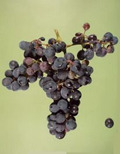 SAPERAVI
(CHARNI): Red wine, acidic, teinturier-type grape variety capable
of high sugar content widely grown in the winemaking regions of eastern
Europe. In cool climates is mostly used as a blending wine. Small acreages
are found in the Finger Lakes region of New York state in the U.S.A where
at least one winery creates a blend with Sereksia (Noire)
wine and called "Black Russian". Also at least one winery in N.E Victoria,
Australia, produces wine from this variety. Several of the most promising
crossings with classic grape or cold-climate resistant rootstock varieties,
eg. Saperavi Severnyi, have been made available
by eastern European research institutes since 1947.
SAPERAVI
(CHARNI): Red wine, acidic, teinturier-type grape variety capable
of high sugar content widely grown in the winemaking regions of eastern
Europe. In cool climates is mostly used as a blending wine. Small acreages
are found in the Finger Lakes region of New York state in the U.S.A where
at least one winery creates a blend with Sereksia (Noire)
wine and called "Black Russian". Also at least one winery in N.E Victoria,
Australia, produces wine from this variety. Several of the most promising
crossings with classic grape or cold-climate resistant rootstock varieties,
eg. Saperavi Severnyi, have been made available
by eastern European research institutes since 1947.
SAPERAVI SEVERNYI: Cold hardy white wine producing grape hybrid developed in Russia from V. Amurensis and other hybrids. Limited acreages currently grown in Nova Scotia, Canada. Widely grown in the CIS (former Soviet Union). (No other details as yet).
SAUVIGNON GRIS: Thought to be a mutated member of the Sauvignon cépage family, the vine is low-yielding and the grape acidic yet capable of high sugar content. Currently undergoing something of a revival in the region east of Graves near Bordeaux, France. The white wine has a herbaceous taste similar to that of its grape cousin, the Sauvignon Blanc, and is noted by some as reminding them of "crushed blackberry leaves". The wine is mostly used for blending purposes with its cousin's wine in order to give a unique varietal aroma and taste.
SAUVIGNON VERT: Alternative name for the Tocai Friulano grape of northern Italy. In California the grape known as Sauvignon Vert is probably a Muscadelle varietal clone.
SAVAGNIN (BLANC): Semi-classic grape used to create the celebrated "Vin jaune" of the Jura region of France. Is one of the few wines in which maderization is desirable and acquired with long bottle-aging. Thought by some to be clonally related to the Traminer variety still grown in that area of Europe. Sometimes called Klevner in the Alsace region of France. Known as the Heida (Paën) in Switzerland.
SAVATIANO: White-wine grape widely grown in central Greece. Usually found as part of a blend with Rhoditis and Assyrtiko grape-wines to create one of the resin flavored wines called "Retsina" so associated with Greece.
![[Image: Scheurebe]](gif/grapepics/scheurebe.jpg)
|
SCHEUREBE: Grape variety developed from a cross between Sylvaner and Riesling. Extensively planted in the Rheinhessen, Rheinfalz and Franconia regions of Germany. Currently, 1997, recommended for planting in S.W. Michigan and the N.W. USA. Cold-hardy vines that ripen at the end of the season. If fruit is not able to mature, the wine quality will be of poor quality with an aroma described as similar to "cat urine". Used to produce full-bodied, aromatic white wines that can reach "Auslese" Prädikat standard in the better vintages.
SCHIAVA: Minor grape found in the Trentino region of Italy. Used for making full-bodied fruity, mellow red wines best served chilled and considered good value in better vintage years. In alto Adige the variety is called Vernatsch.
SCHIAVA GROSSA: Known as Trollinger in south Germany. A variant found in the Trentino-Aldo region of Italy is known as Schiava Gentile.
SCHONEBERGER: (No information on this grape yet other than it is a white cultivar).
SCIACARELLO: Minor grape grown mainly in Corsica. Used in rustic red wine blends of local character along with Malvoisie and others.
SCHWARZRIESLING: Alias name for the Pinot Meunier grape of France where grown in Australia. Also known as Millers Burgundy. (See above).
SCORZA AMARA: Variety used for red wine production in the Emilia-Romagna region of Italy. Has synonym name of Scorzamara. Reportedly a clonal relative of the Lambrusco grape.
SERCIAL: Corrupted english name of the portuguese Cerceal grape when grown on the island of Madeira. Mainly used in fortified wines. Other synonyms include Esgana Cão on the Portuguese mainland.
SEREKSIA (BLANC): Rare eastern European white-wine mutant variety thought to originate from the Danube river basin region. In the Finger Lakes region of New York State grapevine plantings on small acreages are used to produce a sweet - (9.2% residual sugar) - fruit flavored white wine blend, along with the variety Rkatsiteli, called "White Russian".
SEREKSIA (NOIRE): The traditional Sereksia (Noire) red-wine grape is apparently only widely grown in Moldova, an area once part of Moldavia - (a province of Romania) - bordering the Black Sea. Also can be found on limited acreages in the Finger Lakes region of New York State where this grape is successfully used to create an aromatic, fruity red wine blend - (called "Black Russian") - with Saperavi (Charni) grapewine and having excellent aging potential.
SHIROKA MELNISKA LOSA: (a.k.a Melnik). Variety indigenous to Bulgaria. Used to create an intense red wine varietal capable of some aging. (No other details as yet).
SIEGERREBE: ("see-geh-RAY-buh"). Early ripening (late August) grape derived from cross between Gewürztraminer and the Madeleine Angevine table grape. Grown in limited amounts in Germany and used as small percentage amounts in blends. Successful in short growing season areas of the Pacific Northwest of N. America and Finger Lakes region of New York State. Very attractive to birds.
SOUZÃO: Red wine Port-grape variety widely grown in the Douro region of Portugal. Also found in California and Australia for use in fortified Port-type wine.
SPÄTROT: (aka Zierfandler). White wine grape widely grown in Austria and often blended with the Rotgipfler grape derived wine to make the popular "Gumpoldskirchen" village wines. Good ageing potential.
STAVROTO: Red-wine grape mainly grown in the central regions of Greece. Mostly used for blending with the Krassato and Xynomavro grape-wines.
ST. ÉMILION: Has no relationship to the Bordeaux region of France. Is the Cognac region, (and Australian), alias name for the Ugni Blanc variety. In France the grape is mainly fermented to produce wine used for distilling into the fortified wine known as "cognac brandy". Alone, it creates a thin, low-sugar wine in cool temperate regions and must be distilled in order to concentrate the alcohol content.
ST. GEORGE: (See Agiorgitiko above).
![[Image: St. Laurent]](gif/grapepics/stlaurent.jpg)
|
ST. LAURENT: Minor grape thought by some to be related to Pinot Noir. Grown in Austria and Canada the grape is robust and resists many diseases. Early budding, it ripens in mid-late September. Used to produce a rich-looking red wine with pronounced fruity, flowery aromas. It is one of the parents used to create the cold-resistant Rondo hybrid cultivar, (see above), developed in Germany.
SULTANINA: Known as Thompson Seedless in California. (See below).
SUPUTINSKI: Cold hardy to -40 deg. F., this variety is reportedly a female pollinate and where grown in Ontario or Nova Scotia (Canada) is planted in alternate rows with other cultivars. The acidic wines are currently only recommended for blends. (No other details as yet).
![[Image: Silvaner]](gif/grapepics/silvaner.jpg)
|
SYLVANER: (a.k.a Silvaner). Widely grown in the Alsace region of France, Germany and Central Europe. Suited to temperate zones, the vine is high-yielding and the grape produces an "easy" white wine with lightly spicy, floral flavors and mild intensity. Once very popular in California, it seems to have fallen victim to changing fashion in recent years and been replaced by (Johannisberg) Riesling in current taste. Belief that it had been crossed with the latter grape to yield the Müller-Thurgau variety is now in doubt. It is still believed to be involved as one parent in the creation of another crossed version called Scheurebe as well as several other crossings of a similar nature - (e.g: Bacchus, Optima).
SYMPHONY: White wine grape-cross derived from Muscat of Alexandria and Grenache Gris created by a Univ. Davis viticulturist. May be the variety grown in the Alsace region of France known as Symphonie. The grape is mainly found in the Central Valley of California and used for blending purposes in the creation of sweet and sparkling wines.
TAMAIOASA ROMANEASCA: Variety claimed to produce high quality aromatic white wines in Romania. Suitably aged sweet or semi-sweet wines are described as having complex flavors reminiscent of frankincense and honey. Attractive when young if the must has had extended cold skin contact before pressing and fermentation.
TAMARES: White wine grape widely grown in the El Bierzo region of N.W Spain. Known as Tamarez or Crato Branco where grown in Portugal. Mostly used to make the young Vinho Verde wines of the regions. Also found as local, acidic, varietal wines capable of some aging. Has many synonym names in both countries and is the subject of considerable confusion as a result. The Doña Blanco variety found in the same region of Spain is thought by some to be a clone or, by others, to have a synonym name.
TAMINGA: White wine grape bred in Australia specifically for hot climate regions.
TANNAT: Deeply colored and tannic minor grape grown in the Pyrenees region of France. One of four grapes whose wine is blended to make the full-bodied red wine known as "Madiran". The others are Bouchy, Courbu and Pinenc.
TARRANGO: Hot region red-wine grape variety cross quite popular in, and confined to, Australia. Reportedly derived from Touriga and Sultanina grapes and possessed of low tannins and some acidity. Considered by some to be Australia's equivalent to Californias Petite Sirah as an underestimated "quaffing" wine although in no way related.
TAZZELENGHE: Red wine producing variety found in N.E Italy. Has synonym name Tacelenghe. Used for making a tannic varietal with moderate aging ability and also used in blends that include some Merlot and Cabernet Sauvignon.
TEINTURIER: Also known as Teinturier du Cher. Of ancient origin, it is genetically present in the majority of varieties grown in order to add deeper redness, due to its pink flesh, to blends. In the late 20th century the name has come to be used as a generic term in France for all pink-fleshed varieties. Best known offspring is Alicante Bouschet. Many Gamay cépage teinturiers are thought to be derived from Gamay de Bouze.
TEMPRANILLO: Fine winegrape used in best quality red wines of Spain. Also known under the alias name of Cencibel in La Mancha. Has several other mutated versions such as the Tinto Fino of the Zamora region, Tinta del Pais of the Ribero del Duero and Tinta de Toro in the Toro region. In Portugal the grape is known as the (Tinta) Roriz and Aragonez. Large acreages are grown in Argentina. Also found in the Central Valley of California where it is known as Valdepeñas and mainly used to make grapejuice much favored by home-winemakers sold under the "Valdepenas" name in N. America.
TEROLDEGO: (aka Teroldego Rotaliano). Red-wine grape grown in the Trentino-Alto-Adige region of Italy. Used to produce an agreeable, deep red, blackberry flavored varietal wine with good aging potential. Usually drunk young.
TERRET NOIR: Minor grape grown in the southern Rhone region of France. Still allowed in local red wine blends in order to enhance acidity as far as is known but finding less favor as the decades advance. Also grown in Australia where it is known under the alias name of Claret.
THOMPSON SEEDLESS: Grape grown in enormous quantities in the Central Valley of California, U.S.A. Used to produce a very neutral white wine for stretching blends consisting of select varietals in order to create the so-called "jug" wines made by the bulk producers. Most of the crop goes towards dried grapes, an apt product for the grape known to the rest of the world as the Sultanina.
TINTA AMARELA: Variety grown in Portugal and used mainly as a secondary ingredient in fortified Port wines as an aroma enhancer. Also grown in Australia where it is known under the alias name Portugal Malbec.
TINTA BARROCA: Red wine Portgrape variety grown in the Douro region of Portugal. In the Stellenbosch region of South Africa it is used as a blending wine, along with Souzão, to produce fortified Port-style wines. Also used alone for good varietal still wines.
TINTA MADEIRA: Australian alias name for home growths of the Tinta Negramole variety associated with the island of Madeira and regarded as the premier grape used in the production of fine Madeira fortified wines.
TINTA NEGRAMOLE: Variety grown on the island of Madeira and currently mainly used for secondary blends of Madeira fortified wines in amounts not to exceed 15% volume of the blend.
TINTA PINHEIRA: Variety used for red wine production in the Dão DOC, Beiras region of Portugal. Can be found in blends also containing Jaen, Alfrocheiro, Touriga Nacional and Tinta Roriz wines.
TINTA DE TORO: Red wine producing grape variety grown in the Zamora region of NNW Spain. Reportedly a mutation of Tempranillo with higher tannin content than the parent grape. Used to make a popular varietal wine of high alcohol (>13%) content.
TINTO CÃO: Variety grown in Portugal and elsewhere. Regarded as one of the premier red wine grapes suitable for use in the production of fine Port wines.
TINTO FINO: Clonal version of Tempranillo variety found in the Ribera del Duero DO east of Valladolid, Spain.
TOCAI FRIULANO: Widely grown in the Fruili region of Italy. Also to be found in Argentina. Thought to be identical with the Sauvignon Vert grape grown in Chile. Used to produce lightbodied white wines with flowery and nut-like flavors and should be drunk when young.
TOKAY D'ALSACE: Alternate name for Pinot Gris grape - see above.
TORRONTÉS: Fragrant white-wine grape cépage widely grown in Argentina; and also in Chile where it is known as Moscatel de Austria. Thought to have been imported early in the 20th century by Basque winemakers from Spain where it is currently grown in Galicia on the border with northern Portugal. Mainly used in the production of South American fortified Brandy and as a dry table wine with good acid content somewhat reminiscent of a Traminer wine.
TOURBAT: Variety of disputed origin currently mainly grown in Sardinia where it has the alias name Torbato. Also known elsewhere as Caninu. Regarded as capable of producing a fragrant, crisp, well-balanced white varietal wine.TOURIGA NACIONAL: Classic red wine grape used for still and Port wine production. Extensively grown in the Douro and Dão regions of Portugal, and other hot climate regions of the world. Regarded as the premier grape for use in fortified Port wines. In Australia this grape is known under the alias name of Touriga and is known to be one parent to the Tarrango grape cross. Small acreages are also found in California, South Africa and South America.
![[Image: Roter Traminer]](gif/grapepics/RedTraminer.jpg)
|
TRAMINER: Parent grape of the popular Gewürztraminer clone. Still grown in France and in California but almost everywhere has been replaced by its much more intense and aromatic offspring clone. This name is still used in Australia as an alias name for Gewürztraminer and itself is also known there under the alias name of Sauvignon Rose, (and should not to be confused with an identical alias used in France for a member of the Sauvignon Blanc cépage).
TREBBIANO: Alternate name for Ugni Blanc grape - see below. Has many mutations/sub-varieties such as Procanico where found in Tuscany and Umbria, Italy.
TREBBIANO d'ABRUZZO: Alternate name in certain regions of Italy for the Bombino Bianco grape. (See above).
TREIXADURA: White-wine grape widely grown in Spain. The grape is known as the Trajadura in Portugal. Mainly used as a component wine in "vinho verde" style low-alcohol, (7-9%), blends in addition to wines from such grapes as Arinto, Azal (Branco), Esgana (Cão), Loureiro, and Rabigate, all to be consumed as young as possible.
TRESALLIER: (aka Sacy de Lyon). White-wine grape unique to the Saint Pourcain region of France. Mainly used as 50% of an unusual blend that also includes Sauvignon Blanc, Chardonnay and Aligoté wines.
TRINCADEIRA: Red wine variety grown in the Alentejo region of Portugal and used to make a somewhat spicy varietal wine. Reportedly is a synonym name for the Castelão Francês variety.
TROLLINGER: German name for the Schiava red wine grape originating in the Tyrol region of Italy. A cross resulting from this grape carries the name Rotberger and is used to produce similar light red wines.
TROUSSEAU: Has the synonym name Tressot where grown in the Chablis (Burgundy) region of France. Red-wine grape also sparsely grown in several regions of southern France. Recently investigated as one of the varities found in vineyards and collectively known as Petite Sirah in California. Something of a mystery grape, it may also be the variety known as Bastardo in both Australia and Portugal. Also called Cabernet Gros in Australia. A mutation known as Trousseau Gris is also found in France.
TROUSSEAU GRIS: (aka Chauché Gris). Mutated version of the Trousseau red-wine grape. Mainly found in the Jura region of south-west France and used to produce white wine. Thought to be the grape known in California as Grey Riesling despite having no relationship to the Riesling cépage.
TULLILAH: White-wine variety bred in Australia for growth in hot region climates.
UGNI BLANC: (aka Trebbiano). Widely grown in Italy and Southern France. There it produces a fruity, acidic white wine, best drunk when young and chilled. In the Cognac region of France and in Australia it is known as the St. Émilion grape. Australian growers also know this variety under the alias names of White Hermitage and White Shiraz.
UVA RARA: (aka Bonarda Novarese). Minor grape found in the Piedmont region of Italy. Used in red wine blends for creating roundness in the normally hard and tannic wines made with the Nebbiolo grape locally known as Spanna in the "Gattinara" area of Vercelli province.
VACCARÈSE: Minor grape grown in the southern Rhone region of France. Used to create color, body etc. in local red wines. Reportedly is responsible, in part, for the characteristic "pepper, tobacco, licorice" aroma detected in blended wines from this region.
VALDEPEÑAS: Red wine grape grown in California and capable of producing excellent wine. (See Tempranillo above).
VALDIGUIÉ: Warm region minor grape widely grown in the Languedoc-Roussillon region of southern France and known also under the alias name of Gros Auxerrois. Used to create backbone in the high alcohol "vin de table" red wine blends that originate from the Midi. In California it has the alias name of Napa Gamay and can produce surprisingly good wine. (See above).
VELTLINER: (see Grüner Veltliner above).
VERDECA: Has synonym name of Verdicchio. White wine variety grown in the Italian provinces of Apulia, for use in a a local dry, fruity blend to accompany fish dishes, and Campania, for use in the popular Neapolitan blend "Lachryma Christi del Vesuvio" along with three others, the Coda di Volpe, Falanghina and Greco di Bianca grapewines.
VERDEJO: White wine grape extensively planted in the Rueda region of Spain. Can make good wines capable of aging well.
VERDELHO: Variety most associated with Madeira is also found fairly widely grown in Portugal and Australia. Mainly used to produce medium-sweet white wines.
VERDELLO: White wine variety grown in central Italy. Known to be an ingredient in the best Orvieto Classico wine blends of Umbria. Has synonym name of Breval. May be a clone of the Spanish Verdelho variety, imported around the 15th century.
VERDISO: Rare native grape grown and used for making light white, sparkling wines and blends - (eg. with Prosecco grapewine) - in the Fruili-Venezia-Giulia region of Italy.
VERDUZZO: Ancient indigenous grape variety found in the N.E. regions of Italy. Used to produce popular sweet, sparkling and also light, dry white wines with fragrant aroma for youthful drinking accompaniment to desserts (former style) or, with the latter style, fish-based dishes.
VERMENTINO: Alias name for Malvasia. This named grape is grown in Liguria (Riviera) region of Italy, Northern Sardinia and Corsica where it is used to produce full-bodied, dry white wines that go well with sea-food. Also found in Spain, Greece, E. Europe and Australia. Best when young.
VERNACCIA: Minor grape of ancient origin grown in San Gimignano in the Tuscany region of Italy. Traditionally produces dry, lean white wines that soften after two or more years bottle aging. Also used to create sweet golden white wines. An unrealted variety is the Vernaccia di Oristano from Sardegna that produces sherry-like wines of an enormous aging potential.
![[Image: Vernatsch]](gif/grapepics/Vernaccia.jpg)
|
VESPOLINA: Minor grape found in the Piedmont region of Italy. Also known as Ughetta. Used to produce a red wine blend with Nebbiolo grape wine.
VILANA: White-wine grape widely grown on the island of Crete and mainly used to create a dry wine.
VIOGNIER: (pronounced "VEE-oh-nee-aye"). Semi-classic grape variety grown in the northern Rhone region of France. Has full, spicy flavors somewhat reminiscent of the Muscat grape and violets. Recent research indicates a clonal relationship to the Chasselas grape variety. New plantings in California have created much anticipation among that States wine community. Viognier wine can vary from almost Riesling-like character to almost Chardonnay character, depending on production method, but is not noted for aging ability and is best drunk while young. Currently the variety is not considered suitable for planting in very cool/cold climate regions although recently planted small commercial acreages in the eastern Finger Lakes region of New York state are now (1997) yielding enough grapes to allow one winery to make limited amounts of varietal wine.
VITOVSKA: Grape used to make a dry white varietal wine in the Fruili-Venezia Giulia region of Italy. Unique to the Carso DOC close to the border with Slovenia. Capable of lasting for around four years if from good vintage year.
WALSH RIESLING: (No information on this cultivar as yet. May be misspelling of Welschriesling below).
WEISSBURGUNDER: (See Pinot Blanc above).
WEISSER GUTEDEL: (See Gutedel above).
WEISSER SILVANER: (See Elbling above).
![[Image: Welschriesling]](gif/grapepics/welschries.jpg)
|
WHITE MOSCHATO: Greek mainland name for the Muscat Blanc white wine grape.
![[Image: Blauer Wildbacher]](gif/grapepics/wildbacher.jpg)
|
XYNISTERI: Indigenous aromatic white-wine grape grown extensively on Cyprus. Used to produce the Commandaria dessert wine of ancient fame.
XYNOMAVRO: Red-wine grape commonly grown in Macedonia, N.E. and Central Greece. Often used in a blend with Negoska grape-wine or with the Stavroto and Krassato wines.
![[Image: Zierfandler]](gif/grapepics/zierfandl.jpg)
|
ZIERFANDLER: Also known as the Spätrot grape. (See above). Contrary to some reports there is no evidence that this grape has a clonal relationship to the Zinfandel grape of California.
ZILAVKA: White-wine grape grwn in Bosnia around Mostar.
![[Image: Zweigelt]](gif/grapepics/zweigelt.jpg)
|
1) Return to Classic Grape Varieties and Synonyms