

Kitchen tools · bread-making
Bench scraper (dough scraper)
A bench scraper is a flat, rigid rectangular tool for scraping, cutting, lifting and shaping bread dough, and for cleaning the work surface.
- Plastic or stainless steel
- For dough & worktops
- Bowl scrapers explained
A plastic bench scraper often has a handle cutout along one edge. Stainless steel versions usually have a rolled or fitted handle. The straight working edge slides under sticky dough, divides it into portions and gathers up the scraps left on the board.
Also known as: dough scraper, dough cutter, dough knife, pastry cutter, bench knife and board scraper. Names vary between shops: “pastry cutter” can also mean other pastry tools, so check the shape before you buy.
Which scraper is which?
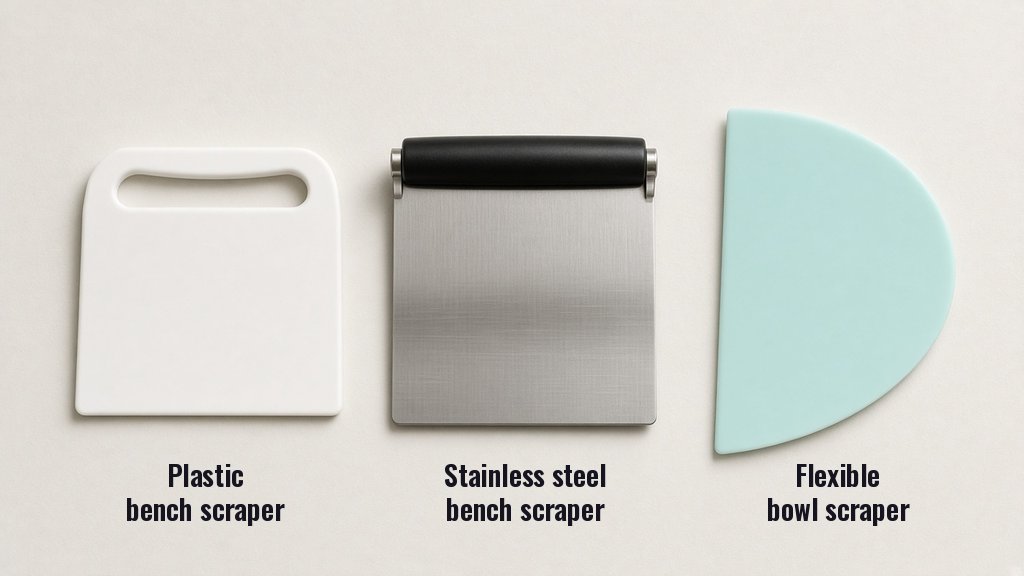
- Plastic bench scraper: a firm, straight-edged scraper for dividing and lifting dough and tidying the worktop. Choose one that feels rigid enough for the job.
- Stainless steel bench scraper: a rigid blade with a comfortable handle, useful for cutting portions and getting underneath dough. Check that your worktop is suitable for a metal edge.
- Flexible bowl scraper: a bendy scraper with a curved edge that follows the inside of a mixing bowl. Use it to gather dough or mixture from the sides; it is not the same as a rigid bench scraper.
How to use a bench scraper
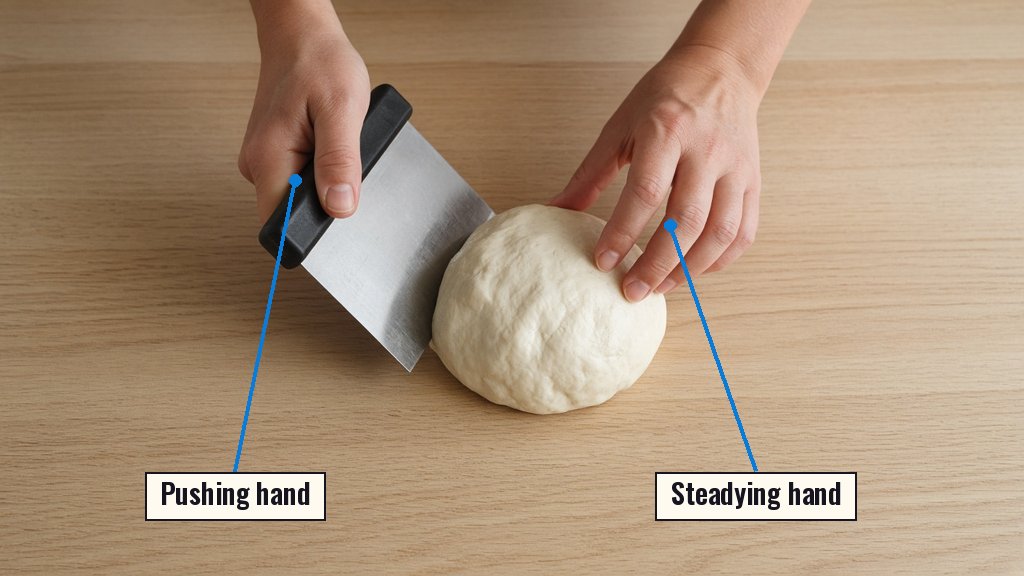
- Scrape and lift: grip the handle edge with one hand and push the blade along the board, sliding it underneath the dough to loosen and lift it.
- Cut: push the straight edge down through the dough to divide it into portions, rather than pulling and tearing it.
- Shape: use short, controlled movements to tuck and turn the dough. The other hand only lightly steadies or guides it with the fingertips; it does not provide the pushing force.
- Clean up: scrape loose flour and dough scraps together, then wash the work surface as usual.
BuyingChoosing a scraper
- Look for a comfortable grip and a smooth, straight working edge.
- Choose rigid plastic or stainless steel for the bench; a flexible curved scraper for the bowl.
- Check the maker’s advice for your work surface. Metal can scratch delicate surfaces.
Clean & safeCare
- Wash off dough before it dries hard, then dry the scraper.
- Follow the maker’s cleaning instructions; do not assume every handle is dishwasher-safe.
- Replace plastic that is cracked or badly damaged, and keep scrapers away from hot pans.
A bit of history
The French call the curved bowl scraper a corne, meaning horn, because it was once made from animal horn. Today it is usually plastic, but the job is the same: moving, loosening and cutting dough, and scraping the bench and bowls clean.
Traditional French bakers kneaded by hand in a wooden trough called a pétrin. Their main tool was the raclette or racloir, a metal scraper, sometimes with a short handle, for gathering dough that stuck to the wooden sides. Some kneading chests, known as maies, even had a small drawer to keep the scrapers in. To divide the dough into pieces, the baker used a coupe-pâte: a simple iron blade, with or without a handle.
Today’s bench scraper is usually a small sheet of stainless steel with a handle of wood or plastic, or simply a rolled edge. It goes by plenty of names: dough scraper, dough cutter, bench knife and board scraper among them.