

Know How · Techniques
Stocks and the mother sauces
A stock is a flavoured liquid made by gently simmering bones, vegetables and aromatics. In classical cookery five mother sauces — béchamel, velouté, espagnole, tomato and hollandaise — are the starting point for many others. Here are the four kitchen stocks, how long to simmer them, Chef Col’s rules for a clear stock, the three roux, and the five sauces with the recipes we already have on the site.

The four essential kitchen stocks
A stock (fond) is left unsalted so it can be reduced later without becoming too salty. Bones, a mirepoix of vegetables and a bouquet garni do the flavouring; time and a gentle simmer do the rest. Of the four, only Brown Stock has a recipe on the site so far. White stock, fish fumet and vegetable stock are coming soon.
-
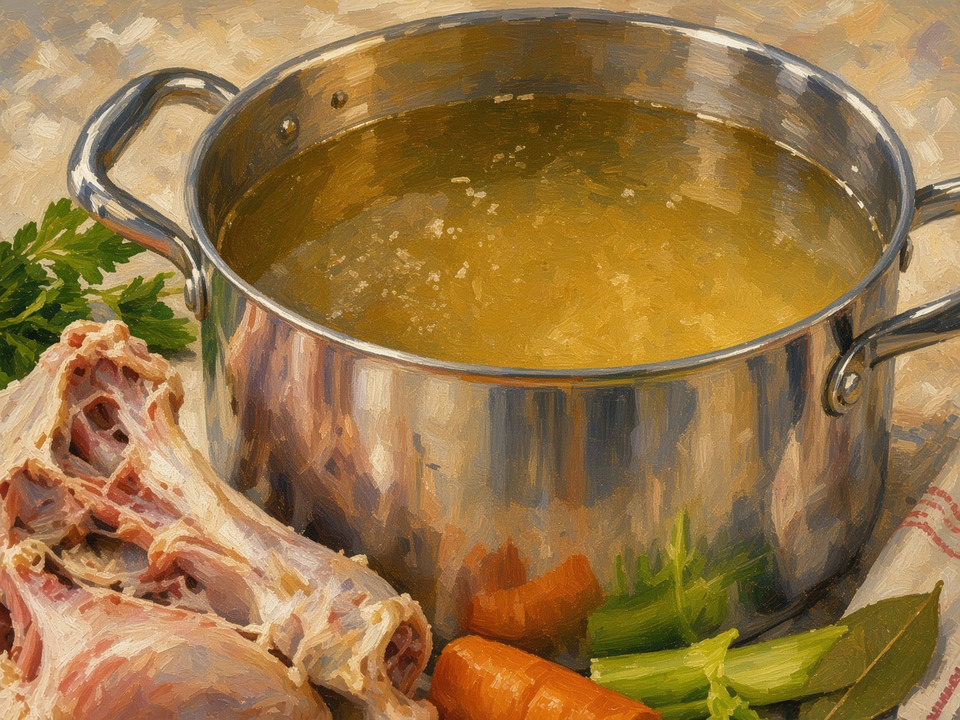
Illustration White stock (fond blanc)
Ingredients: Raw veal, beef or chicken bones; white mirepoix; bouquet garni.
Simmer: Chicken 3–4 hours; veal or beef 6–8 hours.
Uses: Velouté, poaching liquids, risottos.
Recipe coming soon.
-
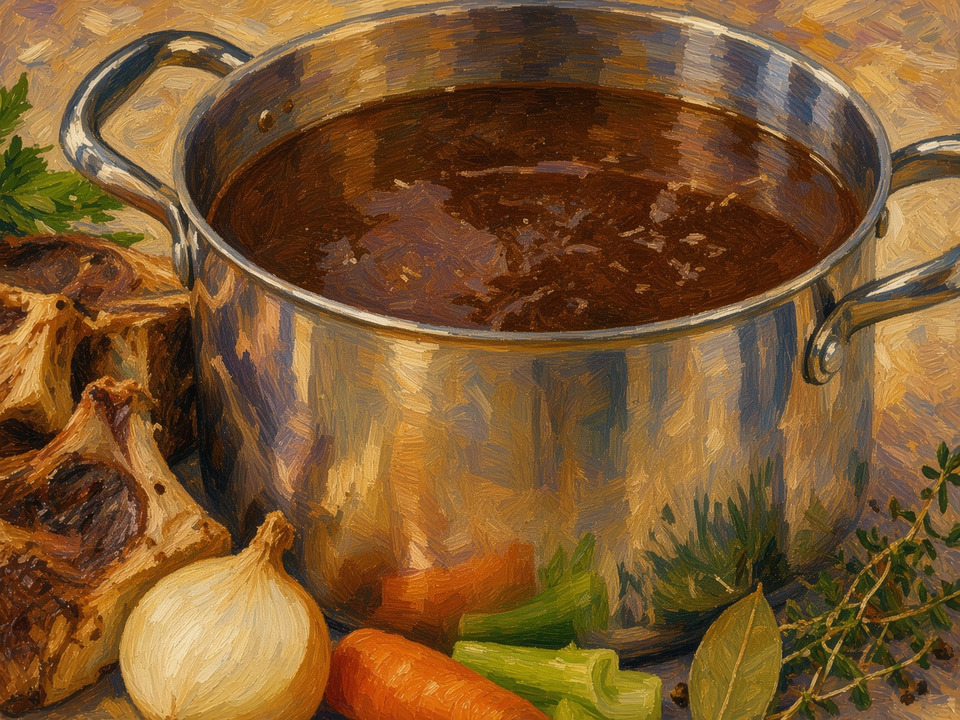
Illustration Brown stock (fond brun)
Ingredients: Roasted bones, browned mirepoix, tomato purée, bouquet garni.
Simmer: 6–8 hours.
Uses: Espagnole, demi-glace, gravies and stews.
-
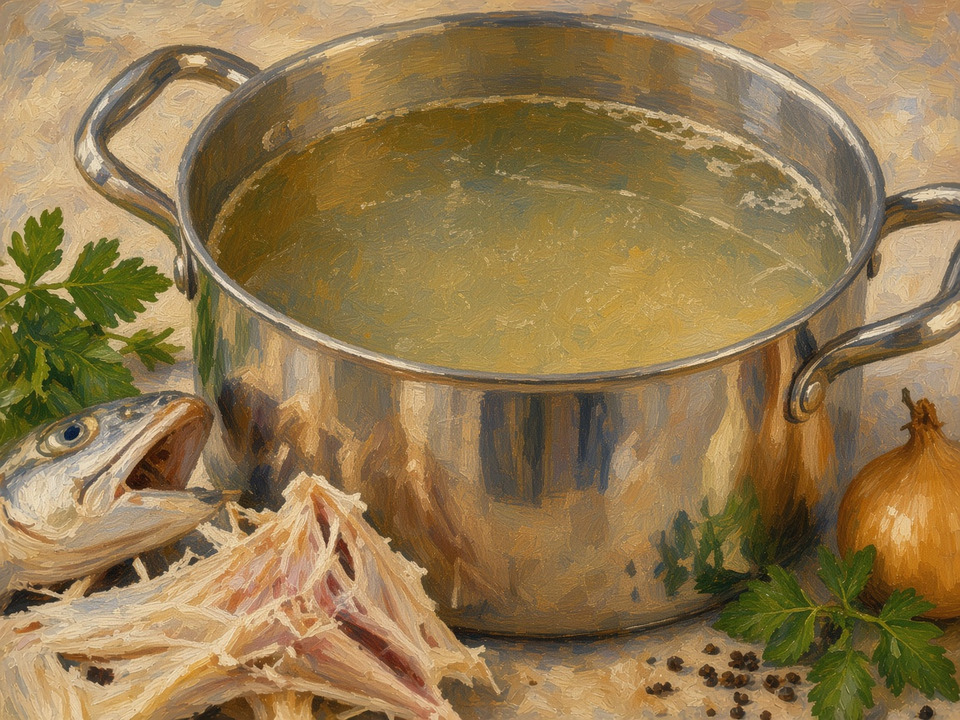
Illustration Fish stock (fumet)
Ingredients: White fish bones and heads, onion, white wine, parsley stalks.
Simmer: 20–30 minutes.
Uses: Fish velouté, white wine sauces, chowders.
Recipe coming soon.
-
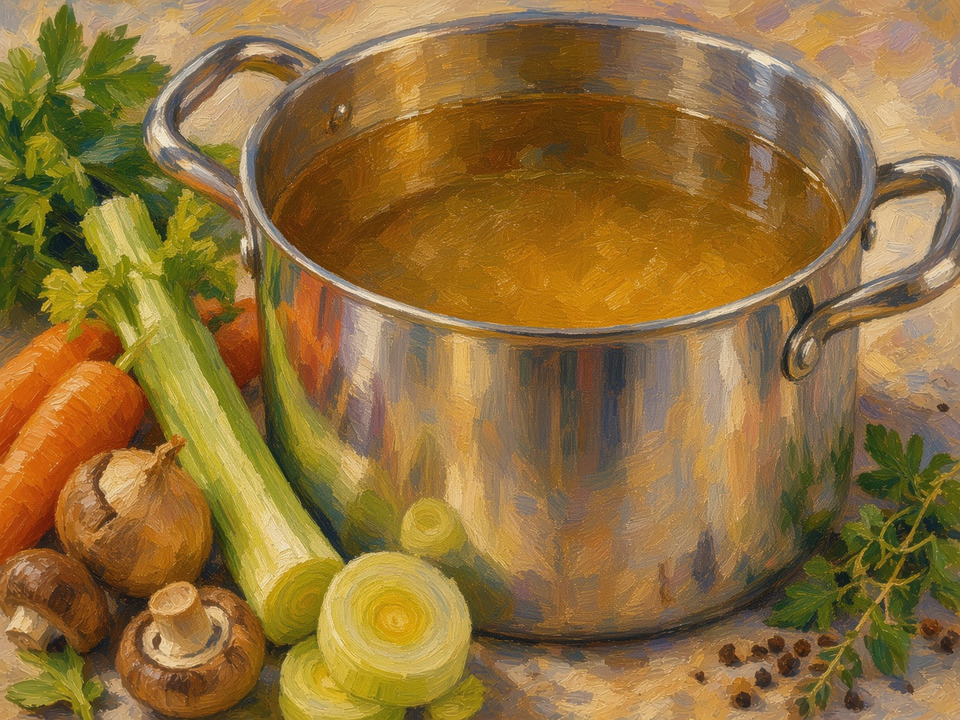
Illustration Vegetable stock
Ingredients: Onion, carrot, celery, leek, mushrooms, peppercorns, herbs.
Simmer: 45–60 minutes.
Uses: Vegetarian gravies, grain dishes, light sauces.
Recipe coming soon.


Chef Col’s golden rules for stock
- Start with cold water. That lets proteins and impurities rise gradually so you can skim them.
- Never boil a stock. Keep it at a gentle simmer; a rolling boil can cloud it.
- Skim regularly, especially in the first part of the cooking.
- Keep fish stock brief. About 20 to 30 minutes is enough. Longer cooking makes it bitter and cloudy.
The three roux
A roux is equal weights of fat and flour, cooked together. It is the thickener for three of the five mother sauces. Times are a guide — they depend on the heat and the size of the batch.
| Roux | Time | Used for |
|---|---|---|
| White | 2–3 minutes | Béchamel |
| Blond | 4–5 minutes | Velouté |
| Brown | 15–20 minutes | Espagnole |
The five mother sauces
These are the classical starting points. From each, a family of derivative sauces is made by adding cheese, stock, wine, herbs or a garnish. We link only to recipes and pages that are already on the site; the others will follow.
-
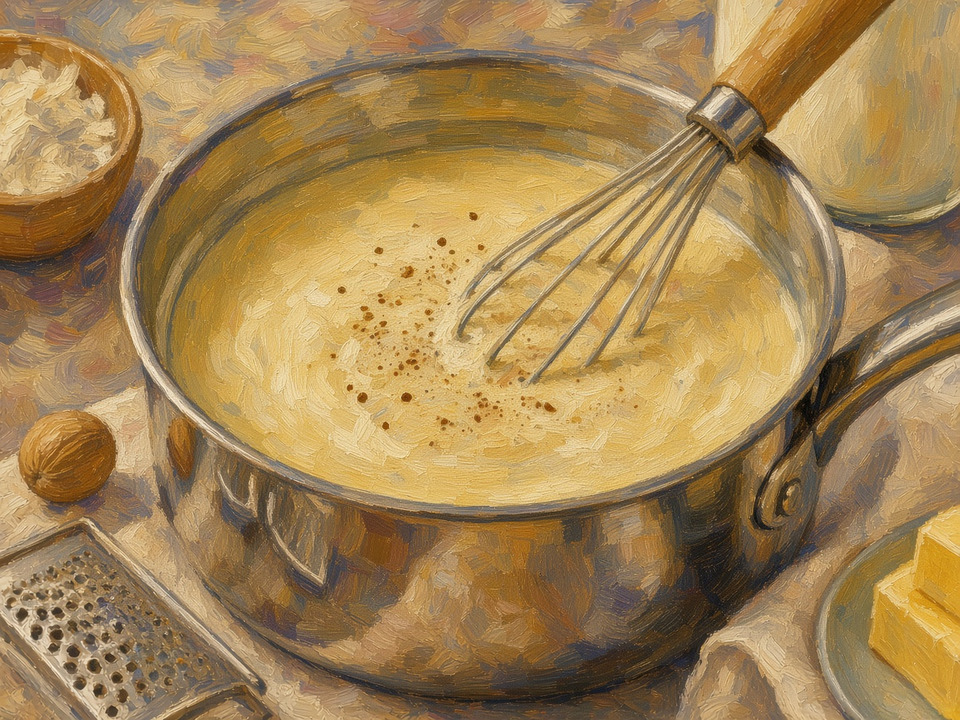
Illustration Béchamel
Base: Warm milk infused with onion clouté (an onion studded with a clove and a bay leaf).
Thickener: White roux.
Derivatives: Mornay, Soubise, mustard sauce. See also sauces made from béchamel.
-
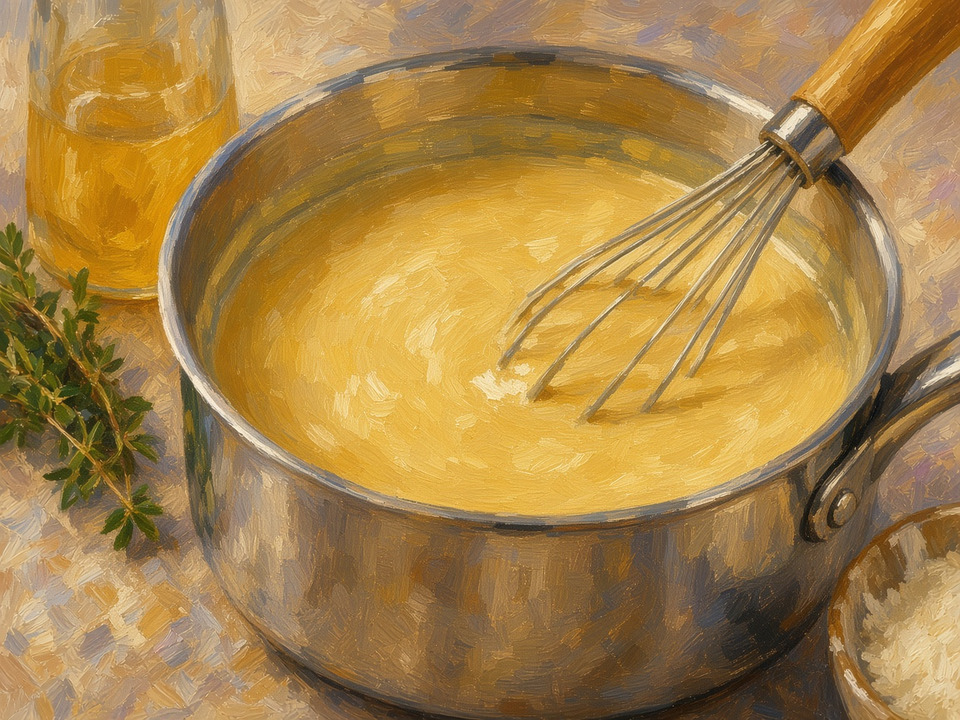
Illustration Velouté
Base: A light white stock — chicken, veal or fish.
Thickener: Blond roux.
Derivatives: Suprême, Allemande, Bercy.
-
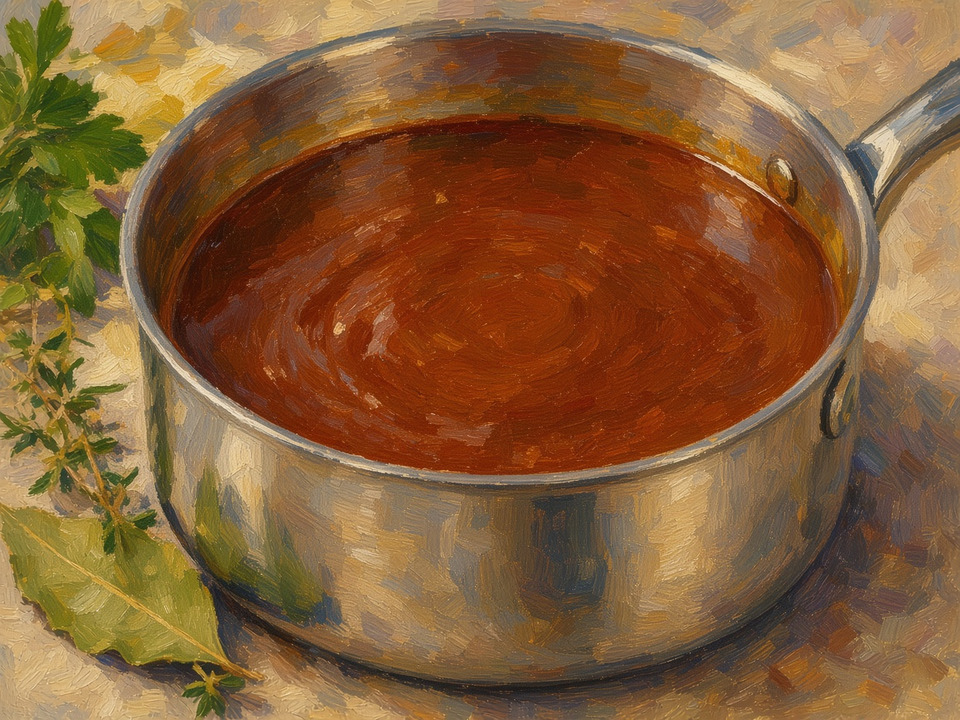
Illustration Espagnole
Base: Rich brown stock and tomato purée.
Thickener: Brown roux.
Derivatives: Demi-glace, Bordelaise, Chasseur. There is also a quick demi-glace.
-
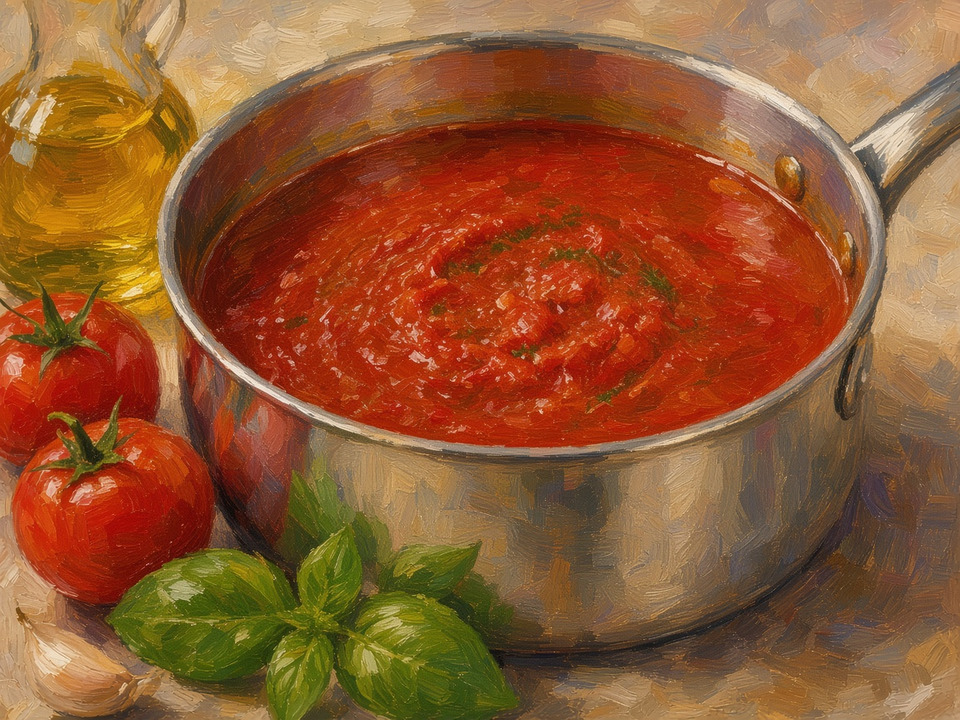
Illustration Sauce tomate
Base: Tomatoes, white stock, aromatics.
Thickener: Blond roux or reduction.
Derivatives: Portugaise, Provençale, Creole.
-
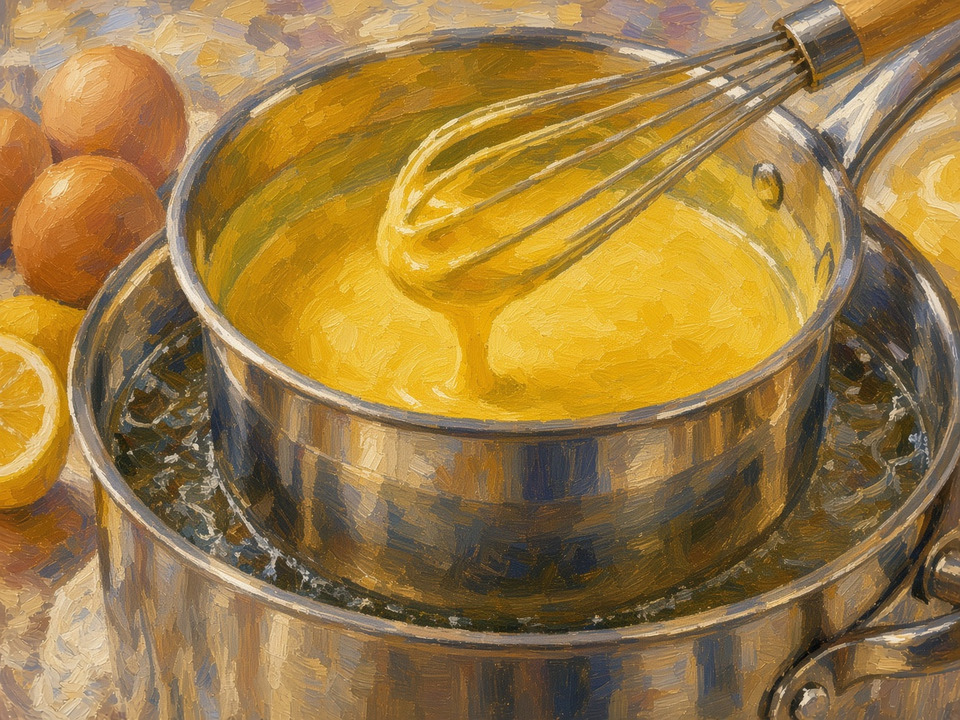
Illustration Hollandaise
Base: An acidulated vinegar reduction.
Thickener: Egg yolk and clarified butter — not a roux.
Derivatives: Béarnaise, Mousseline, Maltaise.


See also
Sources
This guide follows the classical five mother sauces as set out by Escoffier and taught in professional kitchens, and points to the Cookeryonline recipes we already have. Stock timings are the usual professional ranges, not the result of a kitchen trial on this page.