

Christmas cookery · guide
How to cook ham
Everything you need for a perfect ham: choosing smoked or unsmoked gammon, whether to soak it, boiling times by weight, baking and four of the best glazes, and our two ham recipes.
- Smoked or unsmoked
- Times by weight
- 4 glazes
- Make ahead

Gammon, ham and bacon: what to buy
- Gammon or ham?Gammon is the hind leg of the pig, cured like bacon and sold raw. Once it is cooked it is called ham. Bacon joints (collar, forehock) are cured from other cuts and cook the same way.
- Smoked or unsmokedBoth are widely sold. Unsmoked is milder and sweeter and is the usual Christmas choice; smoked has a deeper, bacony flavour that suits maple or cola glazes.
- Dry-cured or brinedDry-cured joints are rubbed with salt and have the best texture and shrink least. Most supermarket gammon is wet-cured (brined) and mild. Avoid joints labelled “with added water”: they shrink and can be spongy.
- Boneless or on the boneA boneless, tied joint is easiest to cook and carve. A half leg on the bone has more flavour and looks spectacular, but needs a very big pan and about 25% longer.
- How much to buyAllow 200–250 g of raw boneless gammon per person, or 300–350 g on the bone, and more if you want leftovers. A 2 kg boneless joint feeds 8.
- Welfare and flavourPork from outdoor-reared or rare-breed pigs, carefully fed, makes noticeably better ham. Look for British outdoor-bred or free-range labels.
Want to know about Parma, Serrano, Bayonne and other cured hams? See our types of ham pages.
SaltTo soak or not to soak?
Most gammon sold today is mild-cured and does not need soaking. Traditional and dry-cured joints can be very salty, so test first:
- Cut a thin sliver from the raw joint and simmer it in water for 2–3 minutes.
- Taste it. If it is pleasantly seasoned, cook the joint as it is.
- If it is too salty, soak the joint in plenty of cold water in the fridge for 12–24 hours, changing the water once or twice.
Short of time? Put the joint in cold water, bring it to the boil, pour the water away and start again with fresh water. If you plan to bake a ham without boiling it first, soaking is especially worthwhile.
SafetyIs it cooked?
Use a probe thermometer: the centre of the joint should reach 68°C. Without one, a skewer pushed into the thickest part should slide in with little resistance and the juices should run clear.
Remember the ham keeps cooking as it cools in its liquid, so lift it out sooner if you like it very firm.
Boiling (simmering) a gammon
- Cover with cold water
Put the joint in a large pan, cover with cold water and bring slowly to the boil. Taste the water: if it is very salty, drain and start again with fresh water. Skim off the grey scum.
- Add aromatics
Add a halved onion, carrots, celery, bay leaves, peppercorns and a few cloves. A bottle of dry cider, an apple, star anise or allspice berries all add flavour.
- Simmer gently
Half-cover and keep the water barely trembling, never boiling hard, which makes the meat tough and stringy. Top up with boiling water to keep the joint covered.
- Time it by weight
Allow 20 minutes per 500 g plus 20 minutes if serving straight from the pot; 20 minutes per 500 g if it is going on to be baked and glazed. See the table below.
- Cool in the liquid
Turn off the heat and leave the ham in its liquid for 30 minutes so it stays moist. Then lift it out and peel off the rind while warm, leaving a layer of fat.
- Save the stock
Strain the cooking liquid. Taste it first (dilute if salty), then use it for pea and ham soup, lentils or parsley sauce. It freezes for 3 months.
Simmering times for a boneless gammon joint
| Weight | Serving straight from the pot | Going on to be baked & glazed | Serves |
|---|---|---|---|
| 1 kg | 1 hr | 40 min | 4 |
| 1.5 kg | 1 hr 20 min | 1 hr | 6 |
| 2 kg | 1 hr 40 min | 1 hr 20 min | 8 |
| 2.5 kg | 2 hr | 1 hr 40 min | 10 |
| 3 kg | 2 hr 20 min | 2 hr | 12 |
| 4 kg | 3 hr | 2 hr 40 min | 16 |
| 5 kg | 3 hr 40 min | 3 hr 20 min | 20 |
Above 5 kg, add 15 minutes for each extra 500 g. On the bone, add about 25%. Joints under 1.5 kg: allow 25 minutes per 500 g. Always check with a probe (68°C in the centre).
Baking and glazing
- Heat the oven
Heat the oven to 200°C (fan 180°C, gas 6) and line a roasting tin with a double layer of foil to catch the sticky glaze.
- Skin, score and stud
Peel off the rind, leaving 5 mm–1 cm of fat. Score the fat in a diamond pattern without cutting into the meat, and push a clove into each diamond.
- Glaze in two goes
Spoon or brush over half the glaze and bake for 15 minutes, then add the rest and bake for 15–25 minutes more, basting every 5–10 minutes and turning the tin.
- Watch the edges
Sugary glazes catch quickly. Cover loosely with foil if the edges are getting too dark.
- Rest and carve
Rest for at least 15 minutes, then carve across the grain into slices. Serve hot or cold.
No pan big enough?Oven-only method
Soak the joint if needed, then wrap it loosely in foil with 150 ml cider or water in a roasting tin. Bake at 180°C (fan 160°C, gas 4) for about 30 minutes per 500 g, until it reaches 68°C in the centre. Unwrap, remove the rind, score, stud and glaze as above. Baste regularly so a small joint does not dry out.
Cooked a day or two ahead?Glazing a cold ham
Let it come to room temperature for an hour, then warm it loosely covered with foil at 180°C (fan 160°C) for 20–30 minutes before glazing, so it is hot right through (60°C in the centre). In the US, where hams are usually sold fully cooked, heat them the same gentle way to about 50°C, then glaze.
Four glazes, plus some quick ideas
- 1. Honey and mustard4 tbsp runny honey, 2 tbsp wholegrain mustard, 2 tbsp demerara sugar. Stir together. The classic.
- 2. Marmalade and orange150 g thin-cut marmalade, zest and juice of 1 orange, 1 tbsp wholegrain mustard, 1 tbsp demerara. Warm and bubble until syrupy.
- 3. Maple and mustard150 ml pure maple syrup, 2 tbsp wholegrain mustard, 1 tbsp each Worcestershire and soy sauce. Runny: spoon over and baste often.
- 4. Cola and black treacleBoil 500 ml full-sugar cola down to 100 ml, add 2 tbsp black treacle; spread on, then pat on 2 tsp mustard powder mixed with 2 tbsp demerara.
Quick ideas: apple juice and honey; soy sauce, brown sugar and dry sherry; or honey with a splash of sherry vinegar. For a crumb crust instead of a glaze, spread the fat with mustard, press on fine breadcrumbs mixed with chopped parsley and a little mustard powder, and bake for 15 minutes until golden.
After the feastKeeping cooked ham
- Cool within 2 hours, then wrap in foil or a clean tea towel and keep in the fridge for 4–5 days.
- Sliced ham freezes for up to 2 months; the stock for 3 months.
- Carve only what you need so the rest stays moist.
LeftoversGood ways to use it up
- Pea and ham soup with the stock
- Ham, leek and mustard pie
- Sandwiches with piccalilli or chutney
- Ham and cheese toasties, omelettes or a carbonara
- Ham with Cumberland sauce and jacket potatoes
The recipes
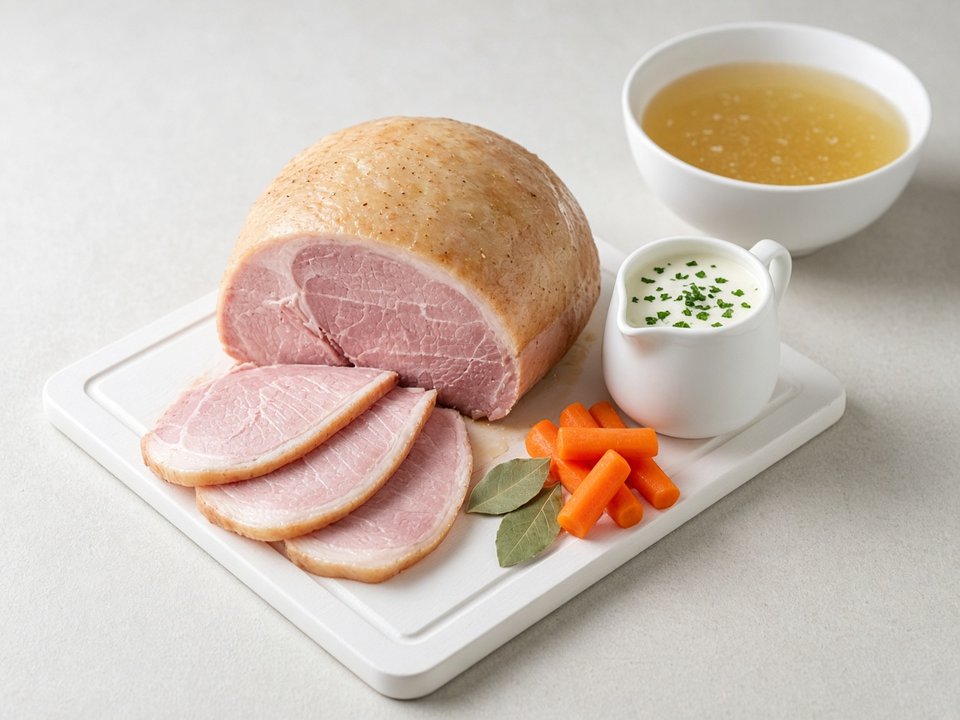
Recipe · serves 8 · with parsley sauceBoiled Ham
A whole gammon joint simmered gently with onion, carrot, celery, bay, cloves and a splash of cider until tender and juicy, cooled in its own broth and served hot with parsley sauce made from the cooking stock, or cold for sandwiches. Covers soaking, timings by weight and what to do with the stock.
The key method
- Test a slice for salt; soak overnight only if it is too salty.
- Cover the gammon with cold water, boil, drain if salty, then add onion, carrot, celery, bay, cloves and cider.
- Simmer gently for 20 minutes per 500 g plus 20 (1 hr 40 min for 2 kg) to 68°C.
- Rest in the liquid for 30 minutes; make parsley sauce with milk and the ham stock.
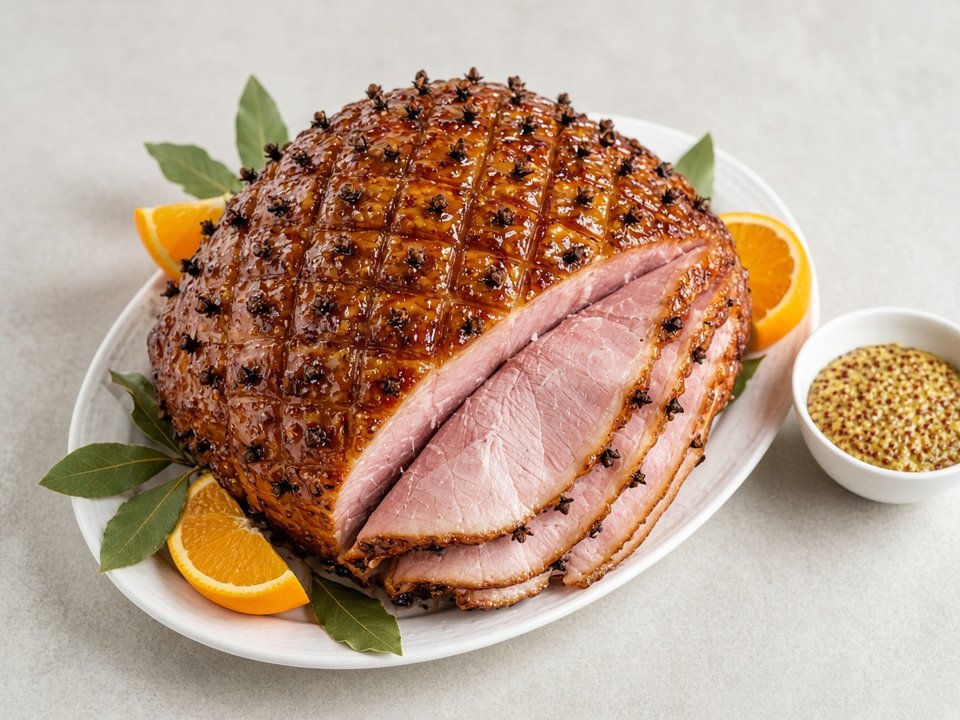
Recipe · serves 10 · four glazesBaked Ham with Glazes
The Christmas centrepiece: a gammon joint simmered until just tender, then skinned, scored, studded with cloves and baked in a hot oven with a sticky glaze. Four tried-and-tested glazes, each set out in full: honey and mustard, marmalade and orange, maple and mustard, and cola and black treacle.
The key method
- Simmer the gammon for 20 minutes per 500 g, then rest it in the liquid.
- Remove the rind, score the fat in diamonds and stud with cloves.
- Bake at 200°C with half the glaze for 15 minutes.
- Add the rest and bake 15–25 minutes more, basting, until sticky and dark.
Glazes
Honey & mustard · marmalade & orange · maple & mustard · cola & black treacle
Full recipe, costs & shopping list →

Rewritten and updated 31 October 2026.