Types of fish and shellfish, how to buy and store fresh fish, what is in season, how to choose sustainable seafood, and all our fish recipes.
131-entry A–Z
Buying & storing
MSC & Good Fish Guide 2026
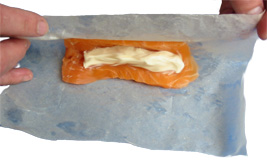
Classic cuts: goujons, en tresse and a paupiette (Cookeryonline archive photos)
Fish is quick to cook, good for you and endlessly varied, but it is also the food people feel least sure about buying. This guide covers what kinds of fish and shellfish there are, how to tell that fish is fresh, what is in season, how to choose seafood that is not being overfished, and how to prepare and cook it. Then pick a recipe.
Eyes and skinWhole fish should have bright, clear, bulging eyes (not sunken or cloudy) and shiny, moist, firm skin with the scales tight.
GillsLift the gill cover: the gills should be bright red or pink, never brown or slimy.
SmellFresh fish smells clean, of the sea or seaweed. A strong “fishy” or ammonia smell means it is old.
FleshPress it gently: it should spring back. Fillets should be neat, firm and translucent, without gaping or browning at the edges.
Smoked fishShould look glossy and smell fresh and smoky. Undyed smoked haddock is pale cream; bright yellow means a dye has been used.
ShellfishBuy live mussels, clams and oysters with tightly closed shells (or ones that close when tapped) and no cracks. Crabs and lobsters should feel heavy for their size.
Frozen fishShould be frozen hard, in undamaged packaging, with no frost or dry, white “freezer burn” patches. Fish frozen at sea can be as good as fresh.
Ask the fishmongerMost fishmongers will scale, gut, fillet and skin a fish for you, and keep the bones and heads for stock. Ask what came in today and where it was caught.
Fridge and freezerStoring fish
In the fridgeEat fresh fish as soon as you can: within a day or two, or by its use-by date. Unwrap it, rinse, pat dry, cover and keep it at the bottom of the fridge, below cooked food.
Keep apartStore raw and smoked fish separately, and keep ready-to-eat seafood (smoked mackerel, cooked prawns, crab) away from raw fish.
Live shellfishKeep mussels, clams and oysters in a bowl covered with a damp cloth in the fridge, not in water or a sealed bag, and cook them within a day.
FreezingFreeze at −18 °C or colder. As a rough guide: white fish and smoked fish up to 3 months, oily fish and shellfish up to 2 months.
ThawingThaw overnight in the fridge, not in water. Thin fillets can be cooked from frozen: add a few minutes and check it is cooked through.
Wild fish, caught in British watersFish through the seasons
Wild fish are at their best outside the breeding season: spawning fish are thin and watery, and catching them puts more pressure on the stock. Seasons only really matter for fresh, wild, local fish: farmed fish, and fish frozen at sea, are much the same all year, and spawning times vary with the sea temperature and how far north the fish is caught. Your fishmonger will tell you what is in good condition. Note that being in season is not the same as being sustainable: mackerel is at its best in summer but is currently red-rated (see below).
Season
At its best
Thin or spawning
Spring Mar–May
Sea trout, crab, the first mackerel; cod coming back into condition after spawning.
Cod and haddock until about April; sea bass in spring.
Summer Jun–Aug
Mackerel and sardines at their fattest, crab, lobster, plaice.
Native oysters, mussels and scallops are spawning (no “R” in the month).
Autumn Sep–Nov
Mussels, oysters and scallops return; haddock, hake, monkfish and sea bass are good. The widest choice of the year.
Winter Dec–Feb
Mussels, oysters and scallops at their best; cod, haddock, brill and turbot; herring (and kippers).
Cod and haddock begin spawning in January; plaice and bream spawn early in the year.
The “R in the month” rule: native oysters are only sold from September to April, and mussels and scallops are plumpest then too. Farmed Pacific oysters and mussels are sold all year.
MSC label & Good Fish GuideChoosing sustainable seafood
On the packThe blue MSC label
The Marine Stewardship Council’s blue fish label means the fish is wild-caught and comes from a fishery that independent auditors have certified against the MSC Fisheries Standard: healthy stocks, limited harm to the wider ecosystem, and good management. The fish is also traced through the supply chain. The label covers the environmental side of fishing only, not working conditions, packaging or carbon footprint. Farmed seafood has its own label, the Aquaculture Stewardship Council (ASC).
OnlineThe Good Fish Guide
The Marine Conservation Society’s Good Fish Guide rates around 130 species of wild and farmed seafood, separately for each place and fishing or farming method, on a five-point scale. The same fish can be a Best Choice from one sea and a Fish to Avoid from another, so check where and how it was caught (it is usually on the label). Ratings are reviewed twice a year.
1Best Choice
2Good Choice
3OK
4Not Recommended
5Fish to Avoid
What the Good Fish Guide said in 2026
Quoted from the Marine Conservation Society’s April and October 2026 updates. These are the charity’s ratings, not ours, and they change: check the guide for the fish in front of you.
CodNo recommended choices for UK-caught cod (April 2026). Most cod sold in the UK comes from Iceland and the North-East Arctic, which the guide rates far better.
MackerelOff the recommended list since April 2025 and red-rated (avoid) from April 2026.
Hake & coleyOctober 2026: North Sea, Celtic Seas and Bay of Biscay hake moved from green to amber (MSC-certified Cornish hake stays green); coley caught around the UK was red-rated, Icelandic coley stays green.
HaddockOctober 2026: North Sea, Skagerrak and Scottish haddock stay green; Icelandic haddock moved to amber.
Langoustine (scampi)April 2026: the only green-rated options are pot- or creel-caught from the North Minch, South Minch and Skagerrak/Kattegat.
Good choices named in 2026North Sea plaice; most sea bass (not from the West of Scotland or West of Ireland); monkfish from the North Sea, Rockall and West of Scotland; Alaska pollock from the Gulf of Alaska or Bering Sea; UK farmed mussels and trout; MSC-certified Jersey lobster and Shetland brown crab; North Sea herring back to green; a new green rating for UK Atlantic bluefin tuna.
Simple rulesAsk what species it is, where it was caught and how. Try something different: gurnard, hake, pollack, dab or megrim instead of the “big five”. Choose line-caught, pot- or creel-caught where you can, and avoid immature fish and fish caught while spawning.
Sources: Marine Conservation Society and Marine Stewardship Council
Rewritten and updated 1 November 2026. Sustainability notes checked against the Marine Conservation Society and MSC on 1 November 2026; kit checked on Amazon.co.uk on 1 November 2026.


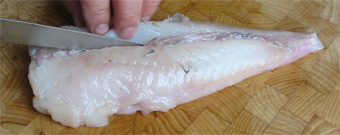 White, oily, flat, roundTypes of fish & seafoodCrustaceans, molluscs and cephalopods, and the classic cuts and folds.
 Knife workPreparing & cooking fishScaling, filleting, pin-boning, mussels, oysters, crab and squid, then grill, poach, steam, bake or fry.
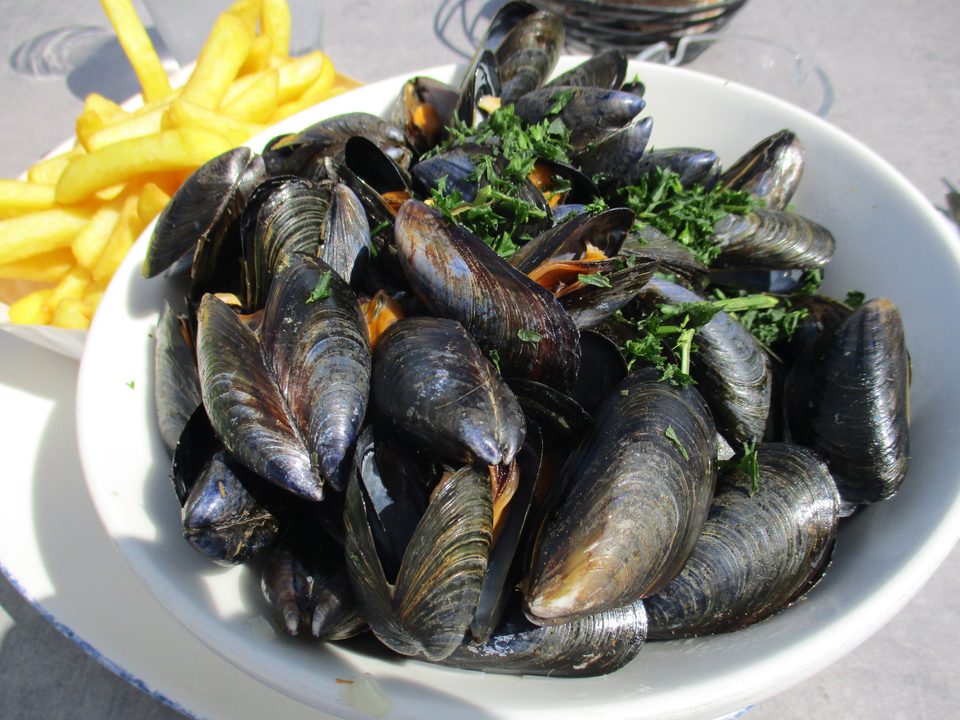 Cook itFish & seafood recipes64 recipes, from fish and chips to moules marinière.