Scaling, gutting and filleting round and flat fish, pin-boning and skinning, mussels, oysters, crab and squid; then the cooking methods and how to tell when fish is done.
Filleting knife, tweezers and fish slice · kit tiles link to similar products on Amazon (affiliate links)
A fishmonger will do all of this for you, free, if you ask. But it is quick to learn, it saves money on whole fish, and you keep the bones and heads for stock. Work on a clean board with a sharp, flexible knife, keep the fish cold, and wash your hands and board well afterwards.
Step by stepPreparing fish & shellfish
Scaling and gutting
ScaleHold the fish by the tail in a sink or inside a large plastic bag and scrape from tail to head with a scaler or the back of a knife. Rinse.
TrimCut off the fins with kitchen scissors. Cut out the gills if you are cooking the fish whole: they turn bitter.
GutSlit the belly from the vent to the head, pull out the innards, and scrape away the dark blood line along the backbone. Rinse and pat dry. Fishmongers will do all this for you.
Filleting a round fish
Cut behind the headLay the fish on its side and cut down behind the head and gills to the backbone.
Along the backCut along the back from head to tail, just above the backbone, keeping the knife flat against the bones.
Lift the filletWork the blade over the ribs in long strokes, lifting the fillet as you go, then free it at the tail. Turn the fish over and repeat.
TidyTrim off the belly flap and any fin bones. Keep the bones and head (gills removed) for stock.
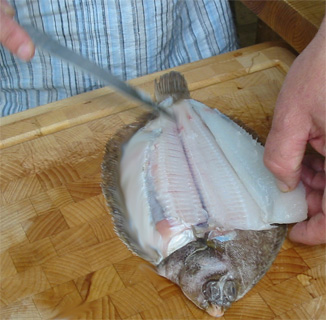
Down the middleLay the fish dark side up and cut down the centre line from head to tail, to the bone.
Two fillets a sideSlide the knife between the flesh and the bones, working outwards from the centre in short, flat strokes, and lift off one fillet; repeat for the other side of the line.
Turn overTurn the fish and take two more fillets from the white side: four in all.
Pin-boning and skinning
Find the bonesRun a finger along the centre of the fillet, head to tail: you will feel a line of small pin bones.
PullPull each bone out with tweezers in the direction it points (towards the head) so the flesh does not tear.
SkinLay the fillet skin side down, tail towards you. Cut down to the skin at the tail, hold the skin firmly (a little salt on your fingers helps), and slide the knife along at a low angle, wiggling the skin rather than the knife.
Mussels and clams
CheckThrow away any with broken shells and any open ones that do not close when tapped on the worktop.
CleanScrub under cold running water, scrape off barnacles, and pull the hairy “beard” towards the hinge to remove it.
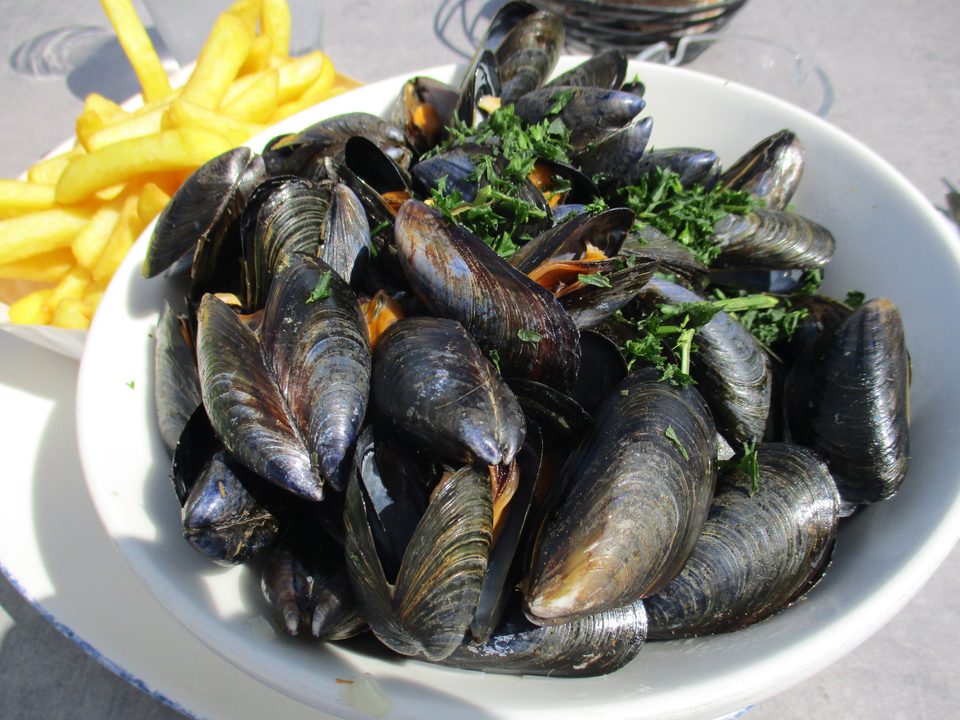
CookSteam in a covered pan with a little wine or water for 3 to 5 minutes, shaking the pan, until they open. Throw away any that stay closed.
Opening oysters
HoldFold a cloth over your hand (or wear a cut-resistant glove) and hold the oyster cup side down, hinge towards you.
Into the hingePush the tip of an oyster knife into the hinge and twist until it pops. Never use an ordinary kitchen knife.
ReleaseSlide the blade along the inside of the top shell to cut the muscle, lift it off, then loosen the oyster from the bottom shell. Keep the juice and pick out any bits of shell.
Dressing a cooked crab
Legs and clawsTwist off the legs and claws; crack them with the back of a heavy knife or crab crackers and pick out the white meat.
Open the bodyPush the body out of the shell from the tail end. Remove and throw away the grey, feathery gills (“dead man’s fingers”) and the stomach sac behind the mouth.
Brown and whiteScoop the brown meat from the shell; cut the body in half and pick out the white meat with a skewer. Serve the two meats separately in the cleaned shell.
Cleaning squid
Head and gutsPull the head and tentacles away from the body; the innards come with them.
Quill and skinPull the clear plastic-like quill out of the body, then peel off the purplish skin and the fins. Rinse inside.
TentaclesCut the tentacles off just in front of the eyes and squeeze out the hard beak. Slice the body into rings, or open it out and score it.
Taking a fillet off a flat fish: keep the knife flat against the bones (Cookeryonline archive photo).
Grill, fry, poach, steam, bakeCooking methods
Method
How
Roughly
Grilling
Preheat the grill to medium-high. Brush the fish with oil or butter and season. Score whole fish at the thickest part so the heat gets in. Thin fillets need not be turned; thicker pieces and kebabs should be turned once.
Fillets 4–8 min; whole fish 8–10 min
Pan-frying
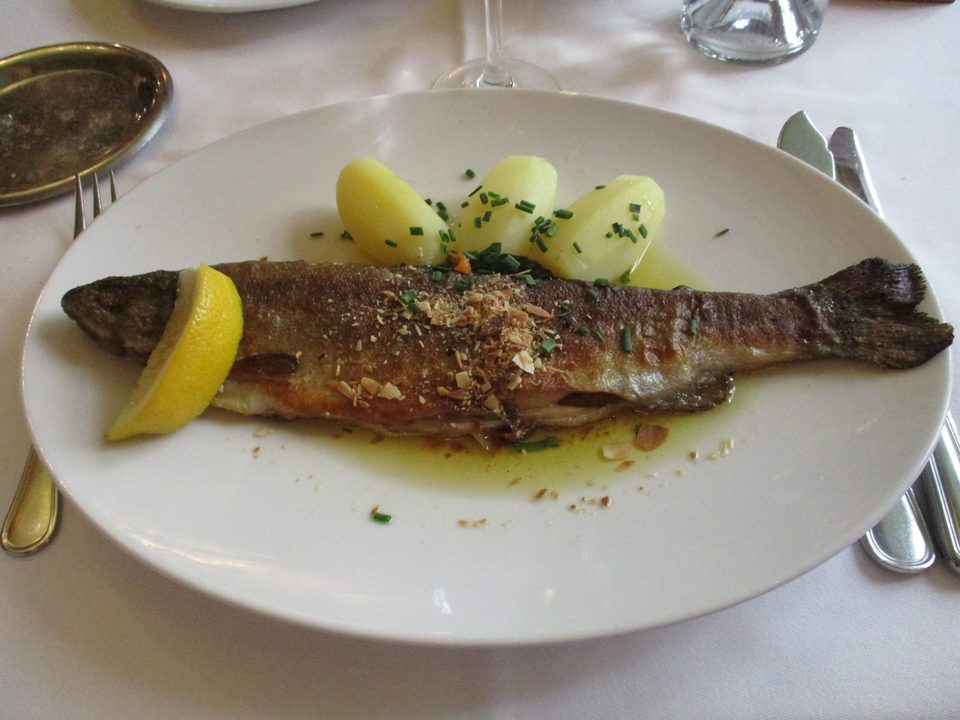
Dust the fish in seasoned flour (or not, for skin-on fillets). Heat a little oil until hot, add the fish skin side down and leave it until the skin is crisp, then turn once and add butter.
Fillets 4–5 min in all
Deep-frying
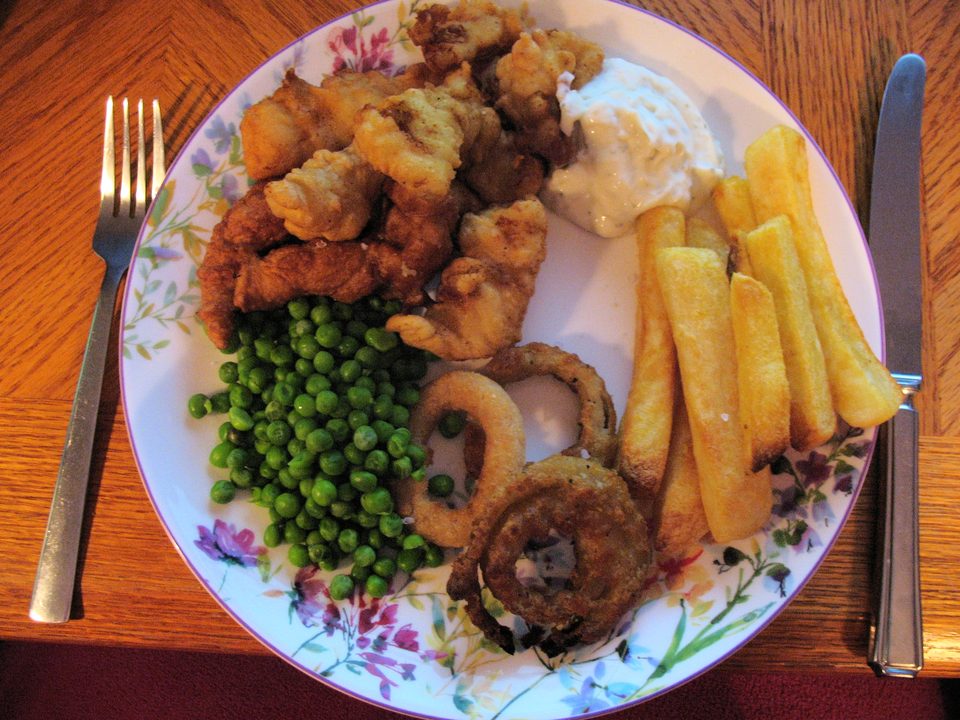
Coat the fish completely, in batter or flour, egg and breadcrumbs, to protect it and stop it absorbing fat. Fry at 180–190 °C (350–375 °F) until golden; drain on kitchen paper. Never fill the pan more than a third full of oil.
4–6 min
Poaching
Cook the fish in liquid kept just below a simmer: court-bouillon, milk, stock, wine or cider. Use the liquid for the sauce. A fish kettle is ideal for a whole salmon.
Pieces 5–15 min
Steaming
Cook over boiling water in a steamer, or between two plates over a pan. No fat is needed, and the fish keeps its flavour and shape. Season and add a little lemon.
Thin fillets 5–10 min; thick pieces 15–20 min
Baking
Lay the fish in an ovenproof dish with herbs, lemon and a little stock, wine or milk, cover and bake; or seal it in a foil or paper parcel (en papillote).
Fillets and small fish 15–20 min at 200 °C (180 °C fan, gas 6)
Microwaving
Put the fish in a covered dish with 2 tablespoons of liquid; cook on medium and leave to stand for 2 to 3 minutes. Follow your microwave maker’s times.
A few minutes
Is it done? Fish is cooked when the flesh turns from translucent to opaque and just flakes when pressed, or when a skewer slides in easily. It goes on cooking for a minute after it leaves the heat, so err on the side of underdone.
The tools that helpFish kit
Kit tiles link to similar products on Amazon (affiliate links). As an Amazon Associate I earn from qualifying purchases.
Rewritten and updated 1 November 2026. Sustainability notes checked against the Marine Conservation Society and MSC on 1 November 2026; kit checked on Amazon.co.uk on 1 November 2026.